

Amazon Doubles Down on Robotics: $100M Indiana Facility Signals Massive Domestic Expansion

In a significant move to fortify its logistics backbone, Amazon has announced a $100 million investment to construct a state-of-the-art, 585,000-square-foot advanced manufacturing facility in Greenwood, Indiana. This ambitious project, expected to be fully operational by 2028, is designed to serve as a critical hub for the production of proprietary hardware that powers the e-commerce giant’s sprawling North American fulfillment and robotics network.
The announcement, which promises to bring 300 skilled manufacturing and engineering jobs to the region, represents more than just a new building; it is a clear declaration of Amazon’s intent to localize its robotics supply chain, reduce reliance on international logistics, and accelerate the integration of AI-driven automation into its day-to-day operations.
The Core Facts: Strengthening the Robotic Backbone
The Greenwood facility is engineered to be a beacon of modern industrial design. Integrating advanced fabrication, high-precision robotic welding, and automated powder coating under a single roof, the site will leverage Amazon Web Services (AWS) and proprietary AI-powered smart manufacturing systems.
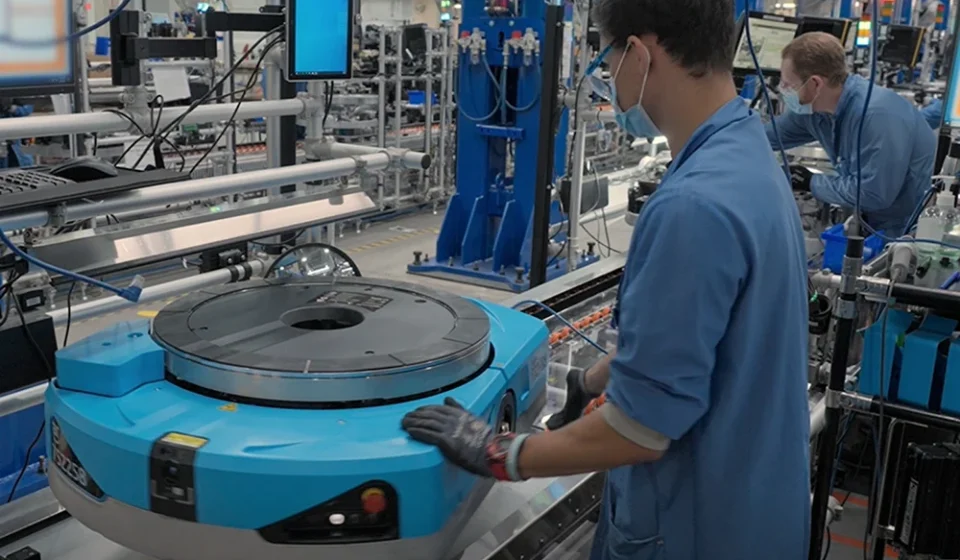
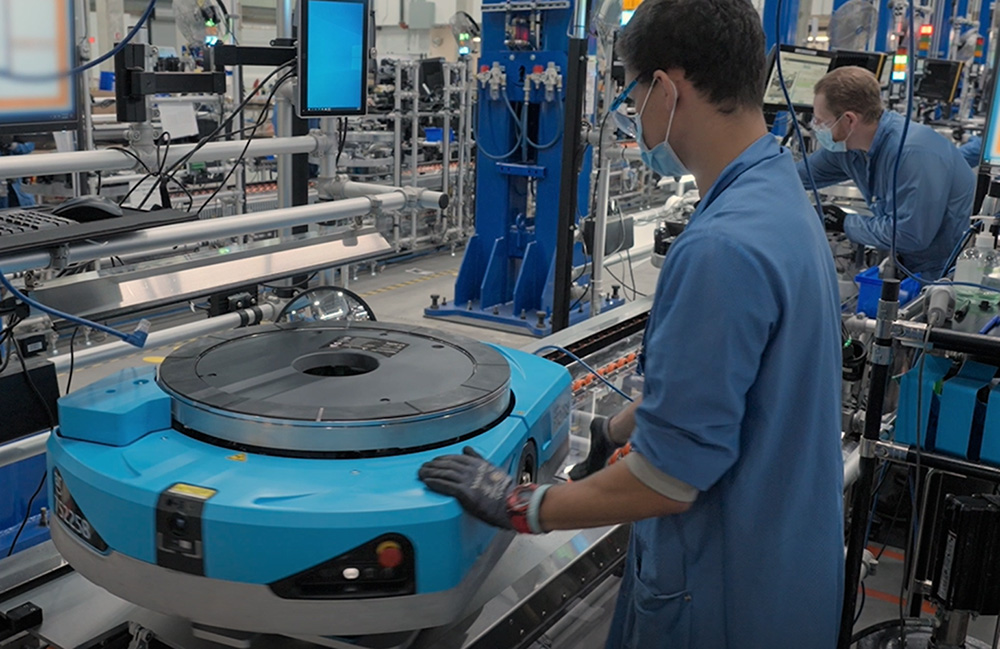
By centralizing these processes, Amazon aims to streamline the production of its next-generation robots—such as the Proteus mobile robot—which have become integral to the company’s warehouse efficiency. These machines, which handle tasks ranging from stowing and picking to complex sorting, currently support approximately 75% of all customer orders processed globally. With over one million robots already deployed across more than 300 facilities worldwide, the Greenwood site will act as a primary engine for sustaining this massive, evolving fleet.
A Chronology of Strategic Growth
Amazon’s journey into proprietary robotics manufacturing has been a long-term, deliberate climb rather than a sudden pivot.
- The Foundation (2012–2020): Following the landmark acquisition of Kiva Systems in 2012, Amazon began an intensive period of internal R&D, establishing its primary robotics manufacturing nerve center in Massachusetts.
- The Scaling Phase (2021–2024): The company reached a milestone of one million robots produced in the U.S. during this period. However, global supply chain disruptions forced a strategic rethink of how and where these machines were built.
- The Decentralization Pivot (2025–2026): In August 2026, Amazon announced a new robotics manufacturing facility in Texas, signaling the beginning of a broader domestic footprint expansion.
- The Indiana Expansion (2026–2028): The announcement of the Greenwood, Indiana site marks the latest chapter in this expansion. By 2028, the site is slated to come online, creating a bi-coastal and central U.S. manufacturing map that enhances Amazon’s internal logistics resilience.
Supporting Data: Why Indiana?
Amazon’s selection of Greenwood, Indiana, was not a matter of chance. In its official statement, the company highlighted several key factors that make the state an ideal candidate for high-tech manufacturing:
- Workforce Readiness: Indiana boasts a long-standing heritage in automotive and industrial manufacturing, providing a deep pool of talent for skilled engineering and assembly roles.
- Logistics Infrastructure: With its central location and robust highway and rail networks, Indiana serves as the "Crossroads of America," allowing Amazon to distribute its robotic components efficiently to fulfillment centers across North America.
- Economic Climate: The company cited a competitive cost structure and a business-friendly environment as primary drivers for the $100 million capital injection.
- Operational Density: The ability to co-locate manufacturing with AI-driven smart systems allows Amazon to iterate on robot designs faster, reducing the time from prototype to warehouse deployment.
Implications: Beyond the Warehouse Walls
The implications of this investment extend far beyond the borders of Indiana. As Amazon refines its manufacturing processes, it is simultaneously broadening its robotic footprint in the consumer-facing sector.
The Evolution of Delivery
The company’s recent acquisition of RIVR, a specialist in quadruped (four-legged) wheeled robots, suggests that Amazon is looking to bridge the "last-yard" delivery gap. Having retired its internal "Scout" delivery robot program in 2022, the company is clearly eager to find a new, more effective solution for doorstep automation. By integrating RIVR’s technology—backed by investment from Bezos Expeditions—Amazon is signaling that it still views autonomous delivery as a critical component of its future.
Prime Air and Aerial Automation
Parallel to its ground-based robotic efforts, Amazon is scaling its Prime Air service. With plans to reach 500 cities and towns in the U.S. by the end of 2026, the company is aiming for a sixfold increase in its drone delivery footprint. The synergy between the manufacturing efficiency gained in Greenwood and the high-tech requirements of drone assembly indicates a company preparing for a highly automated logistics future.
Official Perspective and Future Outlook
Industry observers note that Amazon’s shift toward "smart manufacturing" is a direct response to the increasing complexity of its fulfillment network. By bringing fabrication and AI-powered assembly in-house, the company is effectively insulating itself from global market volatility.
"Amazon is no longer just a retailer that uses robots; they are a Tier-1 robotics manufacturer," notes one industry analyst. "The Greenwood facility is the physical embodiment of the company’s transition into a technology infrastructure firm."
As the company prepares for this expansion, it is also engaging with the wider robotics community. Bhavana Chandrashekhar, a senior manager of applied science at Amazon Robotics, is scheduled to speak at the upcoming RoboBusiness conference in Santa Clara. Her keynote, "Beyond the Demo: AI in Production Robots," is expected to provide deeper insight into how Amazon intends to marry sophisticated software with the hardware being churned out in its new domestic factories.
The Road to 2028: A New Industrial Era
The $100 million investment in Greenwood is a cornerstone of a broader, multi-year strategy to redefine the speed and efficiency of e-commerce. As Amazon continues to scale, the role of human workers is shifting from manual labor to high-level system management, maintenance, and engineering.
While critics have often pointed to the disruption of traditional labor markets by automation, Amazon argues that its facilities—like the one planned for Indiana—are creating "new collar" jobs. These roles require a higher level of technical proficiency, moving the workforce into a future where humans and robots operate in concert.
As the company breaks ground in Indiana, it faces the dual challenge of meeting the aggressive production quotas required for its North American network while proving that its, at times, controversial approach to automation can coexist with the needs of the communities it serves. With the 2028 launch date on the horizon, the eyes of the global logistics industry remain fixed on the Hoosier State.
Amazon’s trajectory suggests that the "warehouse of the future" is not a distant concept; it is being built today, one weld, one circuit, and one robot at a time. The next two years will be critical in determining whether this massive capital expenditure translates into the seamless, near-instant delivery experience that the company promises to its millions of Prime members.