





Mitigating Oxygen Corrosion in Industrial Water Systems: A Comprehensive Guide to Boiler Feedwater and Condensate Protection

By Brad Buecker, SAMCO Technologies
Published: August 11, 2026
Main Facts: The Hidden Threat of Oxygen Corrosion in Industrial Plants
Industrial water system corrosion remains one of the most complex, pervasive, and costly challenges facing power generation and manufacturing facilities. While previous installments in this series examined general corrosion, microbiologically influenced corrosion (MIC), and localized pitting fundamentals, this installment turns its attention to the catastrophic damage inflicted by dissolved oxygen.
Localized corrosion mechanisms—such as those driven by oxygen attack—pose severe threats to structural integrity. They frequently result in rapid, through-wall penetrations of pipes, tubes, and pressure vessels. These failures can shut down entire unit processes, cause catastrophic production losses, and, in worst-case scenarios, jeopardize employee safety.
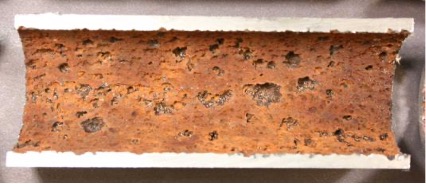
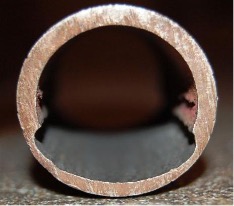
Mild carbon steel serves as the indisputable workhorse material for industrial water networks. Prized for its high tensile strength and cost-effectiveness compared to exotic alloys, mild steel is ubiquitous in condensate piping, boiler waterwall tubes, and various ancillary water system components. However, its Achilles’ heel is its high susceptibility to oxygen-induced degradation. When dissolved oxygen interacts with iron, it triggers an electrochemical cascade that converts structural metal into soluble ferrous hydroxide, which ultimately oxidizes into destructive iron oxide (rust). Left unchecked, these corrosion byproducts form localized tubercles that restrict flow, accelerate under-deposit attack, and eventually plug critical lines.
Chronology of Corrosion: Understanding the Mechanisms of Oxygen and Carbonic Acid Attack
To effectively combat industrial water system degradation, plant operators must understand the chronological sequence of chemical reactions and operational vulnerabilities that trigger system failures.
1. The Fundamental Oxygen Attack
The corrosion process begins at the microscopic level. Iron enters solution at active anodic sites through an oxidation reaction, releasing electrons that migrate to cathodic areas to react with dissolved oxygen (reduction).
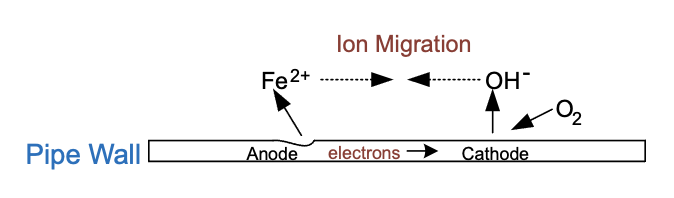
- The Anodic Reaction: $Fe rightarrow Fe^2+ + 2e^-$
- The Cathodic Reaction: $O_2 + 2H_2O + 4e^- rightarrow 4OH^-$
The net result is continuous metal loss at the anodes and the formation of soluble ferrous hydroxide ($Fe(OH)_2$). As this compound migrates into oxygen-rich zones, it further oxidizes into complex hydrated iron oxides, commonly known as rust ($Fe_2O_3 cdot xH_2O$). In piping networks, these rust deposits accumulate into tubercles, creating differential aeration cells that dramatically accelerate localized pitting underneath the deposits.
2. The Condensate Wild Card: Carbonic Acid Grooving
While boiler feedwater is heavily monitored, industrial condensate return lines face a secondary chemical threat: carbonic acid attack. Carbon dioxide ($CO_2$) leaks into steam systems or enters via chemical carryover from boiler water. When this gas dissolves in condensed steam, it forms carbonic acid ($H_2O_3$).

Although carbonic acid is classified as a weak acid, it is fully capable of carving deep grooves into carbon steel piping. Furthermore, the localized drop in pH caused by carbonic acid actively strips away protective oxide layers, compounding the destructive impact of any residual dissolved oxygen present in the condensate network.
Supporting Data: Engineering Controls and Chemical Treatment Strategies
Because complete elimination of air ingress is virtually impossible across miles of industrial piping, atmospheric storage tanks, and equipment interfaces, plants must rely on a multi-layered defense strategy combining mechanical deaeration and chemical conditioning.

Mechanical Deaeration
The first line of defense in the boiler feedwater system is the mechanical deaerator. In a standard spray- or tray-type deaerator, makeup water and return condensate enter near the top of the vessel, cascading downward through a series of spray nozzles and trays. Here, they encounter high-velocity steam injected from below in a counter-current flow.
A properly operating deaerator strips dissolved gases from the water, bringing the liquid temperature to within a few degrees of saturation and successfully reducing dissolved oxygen (D.O.) concentrations down to a target threshold of 7 parts-per-billion (ppb) in the storage tank.
Oxygen Scavengers and Reducing Agents
To push dissolved oxygen levels from 7 ppb down to near-zero and passivate exposed metal surfaces, operators feed specialized reducing agents into the feedwater stream. Common options include:
- Catalyzed Sodium Sulfide ($Na_2SO_3$): Inexpensive and non-toxic, but adds total dissolved solids (TDS) to boiler water and decomposes into corrosive sulfur dioxide ($SO_2$) and hydrogen sulfide ($H_2S$) at pressures exceeding 600 psi.
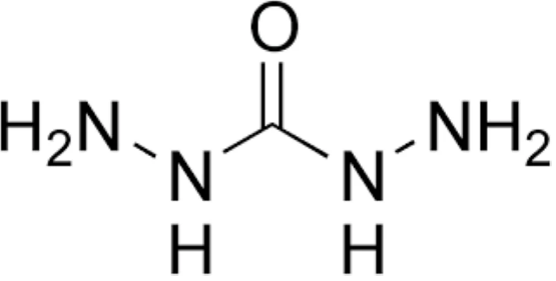
- Carbohydrazide [$(NH_2NH)_2CO$]: Developed as a safe, stable replacement for hydrazine (a suspected carcinogen). Carbohydrazide safely breaks down into nitrogen and water, generating hydrazine in-situ as feedwater temperatures rise.
- Erythorbate: Structurally nearly identical to Vitamin C (ascorbic acid), this compound is frequently utilized as an oxygen scavenger in food and beverage processing plants where traditional chemical additives are strictly prohibited.
Alkalizing Amines for pH Control
To prevent general corrosion across water- and steam-side metal surfaces, feedwater pH must be maintained in a moderately alkaline range (typically upper-8 to mid-10, adjusted for specific system metallurgies and pressures). Alkalizing amines—small-chain organic molecules containing an ammonia functional group—are standard for this application.

Selection of an appropriate amine or amine blend depends on volatility, basicity, and thermal stability. In high-pressure units equipped with superheaters and reheaters, certain amines can thermally decompose into organic acids if not carefully managed.
Film-Forming Products
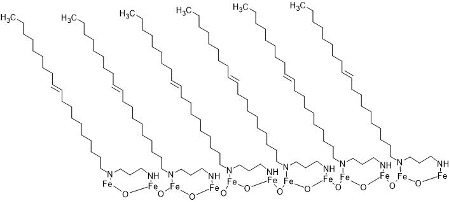
For complex condensate return networks, modern film-forming amines (FFAs) and related film-forming products have experienced a major resurgence. These advanced compounds feature molecular chains with active nitrogen or non-amine sites that chemically bond to carbon steel surfaces. Their hydrophobic tails extend outward, creating an impenetrable barrier against both dissolved oxygen and carbonic acid attack. However, successful deployment requires rigorous residual monitoring to prevent under- or over-feed scenarios.
Official Industry Standards and Guidelines
Due to the catastrophic financial and safety risks associated with boiler and pressure vessel failures, industrial facilities do not operate in a vacuum. Adherence to recognized industry standards is essential for maintaining asset integrity.
Organizations such as the Association for Materials Protection and Performance (AMPP)—formerly known as the National Association of Corrosion Engineers (NACE)—provide exhaustive guidelines, training certifications, and failure analysis protocols for industrial water systems. Additionally, engineering societies like the American Society of Mechanical Engineers (ASME) and specialized working groups, including the International Water Conference and the Electric Utility & Cogeneration Chemistry Workshop, continually update operational guidelines for water treatment chemistry, metallurgy selection, and corrosion monitoring.
Plant managers are strongly advised to consult with certified water treatment experts and leverage technical resources from organizations like AMPP when designing, operating, or troubleshooting high-pressure steam generation networks.
Implications for Industrial Operations and Maintenance
The failure to properly control dissolved oxygen and secondary corrosive agents in industrial water networks carries severe operational and economic consequences.

- Unplanned Outages: Through-wall pitting in boiler tubes or condensate lines can trigger catastrophic ruptures, forcing emergency shutdowns that cost facilities millions of dollars in lost production time.
- Capital Expenditure: Premature degradation of piping, heat exchangers, and pressure vessels necessitates accelerated asset replacement schedules, draining maintenance budgets.
- Safety Hazards: High-pressure steam and hot water leaks present extreme burn, scalding, and structural collapse hazards to plant personnel.
- The Role of Online Instrumentation: Chemical treatment programs are only as effective as the monitoring systems supporting them. Facilities must invest in reliable online instrumentation—coupled with well-trained personnel capable of interpreting real-time data—to track iron and copper concentrations, monitor oxygen scavengers, and verify amine residuals.
Looking Ahead
While normal operation introduces significant corrosion challenges, severe degradation frequently occurs during unit shutdowns, prolonged idleness, or layup periods when stagnant water and ambient moisture collect in vulnerable areas. The next installment of this series will examine the critical protocols required to safeguard industrial water systems during layup and offline periods.


