






U.S. Retail Imports Defy Expectations as September Shapes Up to Be Busiest Month of 2026

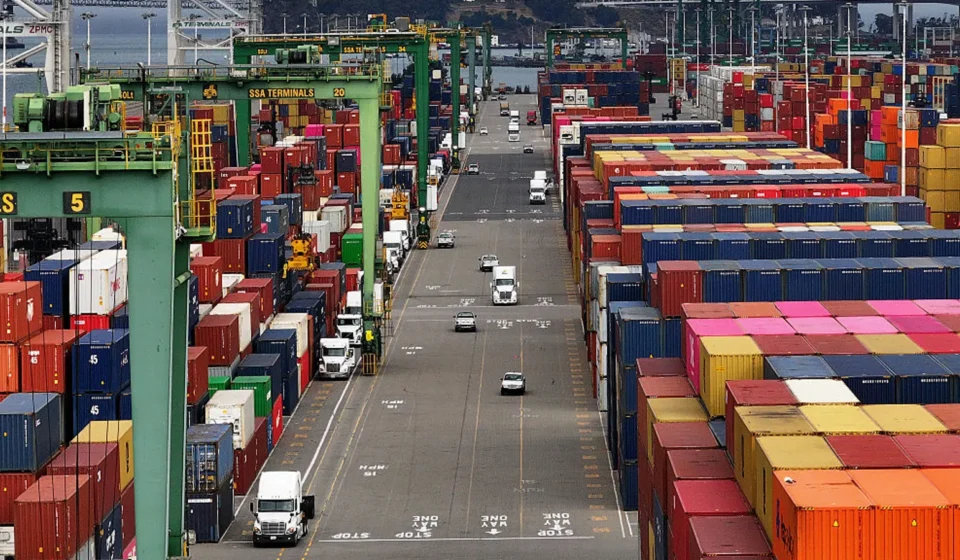
WASHINGTON — Contrary to early-season predictions that major shipping lines and retail giants would see an early tapering of demand, U.S. import volumes are continuing to shatter expectations. According to the latest data released by the National Retail Federation (NRF) and Hackett Associates via the Global Port Tracker, containerized cargo volume is now projected to crest in September, pushing the peak shipping season further into the autumn calendar than initially anticipated.
Despite a complex macroeconomic and geopolitical landscape marked by shifting tariff policies, stubborn inflation, fluctuating fuel prices, and ongoing international conflicts, American consumers continue to spend, and supply chains are straining under the weight of persistent demand.
Main Facts
The overarching narrative of the late-summer and early-fall shipping season is one of unexpected resilience. Major container ports across the United States are handling volumes that defy historical seasonal norms.
- The September Crest: September is now forecast to be the busiest month of the year for major U.S. retail ports, with total volumes expected to reach an impressive 2.31 million Twenty-Foot Equivalent Units (TEUs). This represents a substantial 9.6% year-over-year increase compared to September 2025.
- Resilient Consumer Demand: Retail sales have maintained a steady upward trajectory, forcing logistics managers to continuously revise inventory forecasts upward.
- Shifting Peak Timelines: While initial industry forecasts predicted that aggressive "frontloading"—a phenomenon where shippers moved goods early to hedge against potential port congestion, strikes, or regulatory shifts—would cause the peak season to burn out by August, cargo momentum has stubbornly refused to fade.
- Localized Records: Individual ports are confirming this national trend. The Port of Los Angeles, the nation’s busiest gateway, reported handling 955,907 TEUs in August alone—a 6% jump above its five-year historical average—capping off the most robust three-month stretch in the port’s storied history.
Chronology of the 2026 Peak Shipping Season
To understand how the current logistics landscape unfolded, it is necessary to examine how forecasts have evolved over the course of the year:
- Spring 2026: Shippers began aggressively frontloading inventories amid widespread anxieties regarding potential tariff adjustments under trade policy revisions, potential labor friction, and persistent concerns over international shipping lanes affected by geopolitical conflicts in the Middle East.
- Early August 2026: In an August 7 update, the NRF and Hackett Associates released data indicating that the early peak season was actively winding down. Analysts projected that while August would remain strong at an estimated 2.29 million TEUs, volumes would experience a steady, predictable decline through the remainder of the calendar year as retailers completed their holiday stockpiling early.
- Early September 2026: On September 9, the Port of Los Angeles released operational data for August, revealing record-breaking numbers that completely contradicted expectations of an early slowdown. Executive Director Gene Seroka highlighted the unprecedented summer momentum driven by early holiday shipments and robust consumer buying patterns.
- Mid-September 2026: The updated Global Port Tracker report published on September 14 officially revised previous projections. Analysts acknowledged that imports had not slowed as anticipated, naming September as the new apex for inbound container volume rather than August.
Supporting Data: The Global Port Tracker Forecast
The numbers compiled by the National Retail Federation and Hackett Associates paint a clear picture of high-volume import activity stretching well into the final quarter of 2026, followed by a gradual normalization heading into early 2027.
- September 2026: 2.31 million TEUs (Up 9.6% Year-over-Year) — Projected annual peak.
- October 2026: 2.11 million TEUs (Up 1.7% Year-over-Year).
- November 2026: 2.00 million TEUs (Down 0.9% Year-over-Year).
- December 2026: 2.03 million TEUs (Up 1.1% Year-over-Year).
- January 2027: 2.09 million TEUs (Up 1.0% Year-over-Year).
While year-over-year figures show minor contractions in specific months like November, overall import volumes are consistently hovering at or above the two-million TEU threshold—a level that historically represented heavy peak performance but has now become the baseline for modern retail logistics.
Official Responses and Industry Insights
Industry leaders and analysts have expressed both surprise and cautious optimism regarding the persistence of the 2026 import surge.
Ben Hackett, founder of Hackett Associates, pointed out that the current volume defies typical economic headwinds. "Imports have remained buoyant over the past three months despite geopolitical conflicts, changing tariff policies, and rising inflation and fuel prices," Hackett stated in the release.
However, Hackett also offered a word of caution regarding the physical health of the supply chain. While cargo is generally moving, the sheer volume is beginning to introduce operational friction. "Retail sales remain strong and cargo is moving relatively smoothly, although there are reports of vessel delays and increased times required for cargo to move through the supply chain," he noted.
At the port level, the sentiment is defined by record-shattering achievements. Gene Seroka, Executive Director of the Port of Los Angeles, emphasized the exceptional nature of the summer performance during a September 9 briefing.

"We’ve put together an exceptionally strong summer in Los Angeles," Seroka said. "Resilient consumer demand, early holiday shipments, and a broad mix of cargo have all contributed to that strength."
Seroka also highlighted a nuanced shift in historical shipping timelines. Traditionally, ocean peak shipping season runs deep into the autumn, often cresting during the first or second week of November. However, due to the aggressive frontloading strategy executed by cargo owners earlier in the year, Seroka projects that the operational peak for West Coast gateway hubs will effectively wrap up by the end of September, shifting the nature of fourth-quarter logistics from frantic importing to steady distribution and localized fulfillment.
Implications for Supply Chain Stakeholders
The unexpected prolongation of the import peak carries significant implications for various sectors of the global supply chain:
1. Carriers and Vessel Operators
Ocean carriers have enjoyed sustained high utilization rates across transpacific trade lanes well past the traditional summer window. This prolonged demand has helped insulate lines against sudden spot-rate drops, though it has also heightened vessel scheduling reliability challenges as turnaround times at major terminals lengthen due to high yard density.
2. Warehousing and Intermodal Rail
With imports peaking in September and holding above two million TEUs monthly through the rest of the year, domestic warehousing markets face sustained occupancy pressures. Intermodal rail networks and drayage truckers must maintain maximum capacity to clear marine terminals efficiently, preventing the kind of gridlock seen during previous supply chain crises.

3. Retailers and Inventory Management
Retailers are navigating a delicate balance. While early inventory arrival ensures that shelves will be well-stocked for the critical winter holiday shopping season, holding excess inventory longer incurs higher carrying costs—especially in an environment influenced by elevated fuel and transportation expenses. Furthermore, retailers must remain agile in response to potential shifts in consumer spending prompted by ongoing inflationary pressures.
As the industry moves through the final weeks of September, supply chain professionals will be watching closely to see if the forecasted cooling trend in October materializes, or if consumer resilience continues to rewrite the rules of modern logistics.