




Waymo Targets 2027 for Japan’s First Commercial Driverless Taxi Service in Tokyo

By Stewart Burnett
Major global cities like Tokyo, London, and Munich are increasingly defined by the silent hum of autonomous test vehicles navigating their complex thoroughfares. Yet, despite extensive mapping, regulatory engagements, and countless miles logged in test configurations, none of these metropolitan giants have yet carried a single paying, driverless passenger.
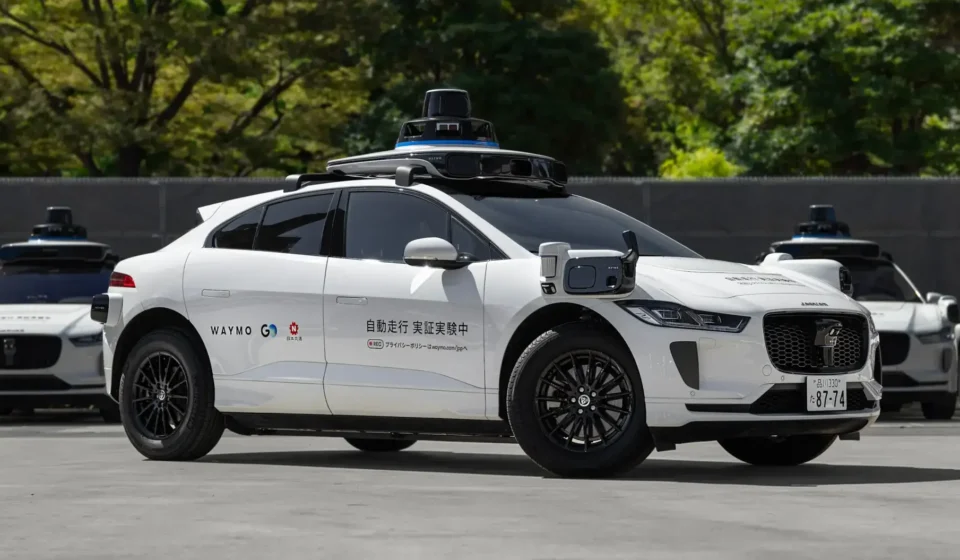
That milestone, however, now has a firm target. On September 15, autonomous driving pioneer Waymo—operating in a high-stakes consortium with Japan’s leading taxi app, Go, and legacy fleet operator Nihon Kotsu—announced its intention to launch Japan’s first commercial driverless taxi service in Tokyo. Slated for 2027, the initial rollout will deploy a dedicated fleet of roughly 100 Jaguar I-Pace electric vehicles across select central wards.
Marking Waymo’s historic commercial foray into the Asian market, the initiative underscores the complex interplay between Silicon Valley software engineering and centuries-old local transport traditions. While the technical capabilities of autonomous driving systems (ADS) have evolved exponentially, the physical, legal, and cultural frameworks required to deploy them commercially remain the ultimate proving ground.
Main Facts of the Consortium and Deployment
The backbone of the Tokyo deployment rests on a tripartite division of labor carefully structured to comply with stringent Japanese transport laws. Under national regulations, only a licensed, certified taxi operator is legally permitted to carry fare-paying passengers.
To navigate these constraints, the partners have divided operational duties precisely:
- Waymo supplies the core technology stack: the autonomous driving system, the physical vehicles, the operating platform, and advanced fleet management software.
- Nihon Kotsu manages physical depot operations, vehicle maintenance, and assumes primary legal responsibility for any potential incidents or accidents occurring during driverless operations.
- Go controls the digital consumer-facing dispatch application, coordinating the service with Japan’s broader, highly organized taxi industry.
Crucially, rides will be bookable through both the native Go application and Waymo’s own app. This move represents a strategic evolution for Waymo, marking the first time outside the United States that the company has committed to distributing its service entirely through a partner’s primary consumer platform rather than relying solely on its proprietary interface.
Historically, Waymo has experimented with hybrid models—such as its past deployment partnership with Uber in select U.S. cities—though it has increasingly favored an independent, go-it-alone operational approach domestically. The pivot back to a deeply integrated local partnership in Tokyo highlights the unique regulatory and cultural barriers facing foreign tech entrants in Japan.
Chronology of Waymo’s Tokyo Expansion
Waymo’s path to the 2027 commercial target has been methodical, reflecting the immense care required to introduce driverless technology to one of the world’s most densely populated and intricate urban environments.
- December 2024: Waymo formally established its physical presence in Tokyo, marking what executives termed the company’s first international road trip.
- Throughout 2025: Specially equipped vehicles spent the year manually mapping seven central wards of Tokyo. During this phase, local human drivers from Nihon Kotsu sat behind the wheel to record road layouts, signage nuances, and complex traffic patterns.
- Late 2025 to 2026: Following manual mapping, the fleet transitioned into supervised autonomous testing. Waymo vehicles logged thousands of miles across narrow neighbourhood roads, tight alleys, and dense pedestrian crowds under the watchful eye of safety drivers.
- March 2026: At a high-profile industry briefing in Tokyo, Waymo Chief Product Officer Saswat Panigrahi offered an upbeat assessment of the timeline, noting that a fully driverless service was “not years away” and was progressing “on a scale of months.” Simultaneously, corporate funding filings in February indicated groundwork was being laid for expansions into Tokyo and London within 2026.
- September 15, 2026: The official announcement of the 2027 commercial target, pairing the timeline directly with the necessity of securing formal regulatory approvals.
While the 2027 target does not technically constitute a delay—given that no firm public date had been previously established—the cautious tone struck in recent announcements reveals the sobering reality of navigating bureaucratic clearance.
Supporting Data and Competitive Landscape
Waymo’s timeline comes amid a flurry of activity in Japan’s burgeoning autonomous mobility sector. While Western media often focuses on U.S. deployments in cities like San Francisco and Phoenix, Japanese automakers and domestic startups are aggressively staking their own claims to the robotaxi market.
- Nissan’s Pilot: Earlier in January, Nissan completed a localized pilot in Yokohama utilizing five Serena minivans equipped with onboard safety monitors, explicitly targeting its own commercial launch by 2027. Nissan has also announced plans to run autonomous taxi pilots in collaboration with British autonomous driving startup Wayve as early as late 2026.
- Nuro’s Entry: Backed by heavyweights Toyota and Nvidia, delivery robotics firm Nuro began testing operations in Tokyo earlier in 2026, marking its very first operational market outside the United States.
- Honda’s Ambitions: Honda has likewise explored dedicated robotaxi services, aligning with the Japanese government’s push to solve acute labor shortages within the public transport and taxi sectors.
Compared to its international strategies, Waymo’s Tokyo approach stands in stark contrast to its European plays. In London—where a 2026 launch was announced in October 2025—and Munich, targeted for late 2027, Waymo is pursuing a much more direct, centralized model via a local subsidiary.
However, progress in Europe has encountered its own hurdles. In Munich, Waymo held zero local driving permits at the time of its announcement, trailing established competitors like Mobileye, Volkswagen, and Wayve, which already hold Level 3 autonomous testing permits in Germany. In London, it has yet to secure permits for fully driverless operation, meaning early deployments there will rely on onboard safety drivers.
Official Responses and Strategic Implications
The decision to embed itself within Nihon Kotsu’s century-old operational framework and Go’s digital ecosystem rather than forging a standalone path speaks volumes about Waymo’s strategic calculus.
Industry analysts suggest that Waymo’s leadership recognized early on that technical excellence alone would not suffice in Japan. Trust—both regulatory and cultural—is arguably the most difficult hurdle to clear in a society that highly values institutional heritage, passenger safety, and social harmony. By partnering with Nihon Kotsu, a brand trusted by generations of Tokyo commuters, Waymo immediately mitigates the friction of foreign tech intrusion.
“Securing the necessary permits and licences requires deep, transparent collaboration with national ministries and local municipal governments,” noted a transport policy observer close to the negotiations. “Using the wording of contingent timelines is not the language of a company expecting swift, rubber-stamp clearance. It is the cautious idiom of an enterprise that understands it is rewriting Japanese transport history.”
Furthermore, the integration of the Go app leverages an existing digital habit for millions of Japanese citizens. Rather than forcing consumers to download a novel, unfamiliar foreign app, the Waymo-powered Jaguar fleets will flow seamlessly into the daily ride-hailing routines of Tokyo’s urban professionals.
Looking Ahead: The Road to 2027
As Waymo, Nihon Kotsu, and Go prepare for the 2027 launch window, all eyes will be on Japanese regulatory bodies. The Ministry of Land, Infrastructure, Transport and Tourism (MLIT) holds the ultimate authority over how autonomous systems will be classified, insured, and monitored on public roads.
If successful, the Tokyo project will do more than simply deploy 100 electric vehicles into the world’s most sophisticated megalopolis. It will establish a blueprint for how global autonomous giants can successfully integrate into legacy transit ecosystems abroad—proving that the future of mobility relies just as much on localized partnership and cultural alignment as it does on artificial intelligence and machine learning.