




In an era where the automotive and packaging industries are demanding unprecedented levels of precision, flatness, and surface integrity from metallic strips, Redex USA has stepped forward with a groundbreaking innovation. The company has officially launched "Levelflex," a modular multi-zone tension leveler engineered specifically for continuous processing lines. By integrating advanced mechanics with high-precision control, the system promises to redefine how aluminum alloys and other critical materials are prepared for the rigors of modern manufacturing.
The Core Innovation: Technical Specifications and Functionality
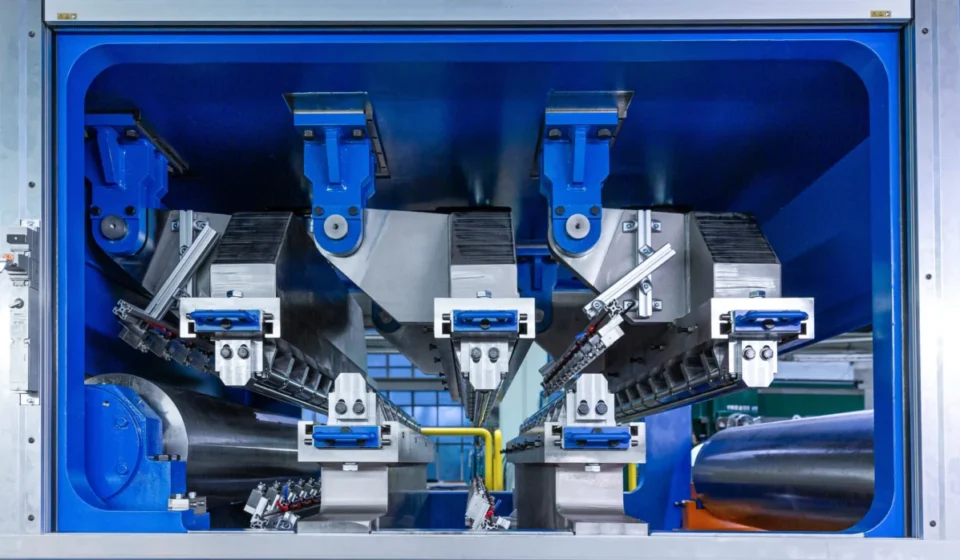
At the heart of the Levelflex system is a sophisticated approach to material deformation. Tension leveling, a critical process in strip manufacturing, involves stretching a metal strip beyond its yield point to eliminate internal stresses and physical distortions such as wavy edges or center buckles.
The Levelflex system distinguishes itself by its ability to stretch material to up to 95% of its yield strength. This high-intensity, controlled deformation allows the system to rectify even the most stubborn flatness defects. Unlike conventional leveling methods, which often rely on mechanical bending over multiple rollers to "work out" the distortions, Levelflex utilizes precise tension zones. This reduces the mechanical strain on the material, minimizes the number of required leveling passes, and drastically cuts down on material scrap—a primary concern for manufacturers aiming for sustainable production.
Modular Flexibility
The "Levelflex" name is derived from its inherent modularity. Available in two distinct configurations, the system is designed to be highly adaptable to existing infrastructure. Whether a facility is managing thin-gauge aluminum for beverage cans or high-strength, lightweight alloys for automotive body panels, the modularity ensures that the equipment can be scaled and tuned to meet specific line speeds and material thicknesses.
Chronology of Development: From Concept to Industrial Implementation
The journey toward the release of Levelflex represents a multi-year investment by Redex into R&D regarding strip processing dynamics.
- Phase 1: Identifying the Gap (2022–2023): Redex engineers identified a recurring challenge in the market: as automotive manufacturers shifted toward thinner, high-strength aluminum to meet fuel efficiency mandates, traditional leveling technology was struggling to maintain consistent flatness without compromising the surface finish.
- Phase 2: Prototyping and Simulation (2024): Utilizing Finite Element Analysis (FEA) and proprietary tension-mapping software, the team at Redex modeled the stress distribution across the strip. This led to the development of the multi-zone tensioning concept, which allows for dynamic adjustments across the width of the strip.
- Phase 3: Beta Testing (2025): The system underwent rigorous testing in controlled environments, specifically targeting its interaction with automotive-grade alloys. These trials validated that the system could achieve near-perfect flatness while maintaining the integrity of the surface, which is critical for subsequent coating adhesion.
- Phase 4: Commercial Launch (September 2026): With the formal introduction of the Levelflex series, Redex USA positioned itself as a leader in the high-end metal processing equipment sector, readying the system for integration into global production lines.
Supporting Data: Why Precision Matters in Modern Manufacturing
To understand the impact of the Levelflex, one must look at the physical demands placed on modern metal strips. In the automotive industry, "class-A" surface finishes are not merely aesthetic; they are indicators of structural health. Any imperfection in the flatness of a sheet can lead to inconsistencies during the stamping process.
The Science of Flatness
When a strip passes through a line, it is subject to varying thermal and mechanical stresses. If a strip is not perfectly level, the following issues occur:
- Coating Adhesion Failure: In coating lines, uneven material leads to inconsistent paint or lacquer thickness. Levelflex ensures a uniform topography, allowing for optimal chemical bonding.
- Downstream Forming Issues: In press shops, non-flat material causes "springback" or unpredictable forming results. By correcting these issues at the coil processing stage, manufacturers can reduce the rejection rate of stamped parts.
- Scrap Reduction: By achieving the desired flatness in fewer passes, the material undergoes less "cold work," preserving its mechanical properties and reducing the likelihood of edge tearing or cracking.
Official Perspectives and Industry Implications
The introduction of Levelflex is being framed by industry analysts as a strategic move to address the "quality bottleneck" in continuous processing. By focusing on the intersection of coating, heat-treatment, and leveling, Redex is targeting the most high-value segments of the metal supply chain.
Impact on Automotive and Can Stock Markets
The demand for high-strength aluminum in the automotive sector—driven by the shift toward Electric Vehicles (EVs)—requires materials that are lighter yet stronger. Levelflex is uniquely suited for these "advanced high-strength steels" (AHSS) and aluminum alloys. Furthermore, in the can stock industry, where gauge reduction is a constant drive for cost savings, the ability to process extremely thin, sensitive materials without surface degradation is a competitive advantage.

"Levelflex is not just a machine; it is a solution to the tightening tolerances of our customers," says a spokesperson for Redex USA. "By allowing operators to achieve superior flatness with less mechanical intervention, we are enabling our clients to produce higher-quality end products while simultaneously reducing their carbon footprint through reduced scrap and energy-efficient operation."
Technical Deep-Dive: The Mechanics of the Multi-Zone System
The multi-zone nature of the Levelflex allows for granular control. Traditional levelers often apply a uniform force across the width of the strip. However, real-world strips rarely have uniform stress distribution due to irregularities in the rolling process.
Levelflex utilizes individual actuators that adjust the tension in specific zones across the strip width. This is akin to "tuning" the flatness of the strip in real-time. The system’s controller processes data from sensors downstream, feeding back information to the tensioning modules to make millisecond adjustments. This closed-loop control system is what elevates Levelflex from a standard leveler to an intelligent processing system.
Future Outlook: Digital Transformation and Industry 4.0
As manufacturing moves toward Industry 4.0, the Levelflex is designed with connectivity in mind. The system is compatible with modern diagnostic suites, allowing for predictive maintenance. By monitoring the tension load and mechanical resistance over time, the system can alert operators to potential wear or calibration shifts before they manifest as defects in the product.
This shift toward "smart manufacturing" is consistent with the broader goals of Redex USA. By digitizing the leveling process, they are providing plant managers with a wealth of data that can be used to optimize energy consumption and throughput, ensuring that the Levelflex remains a relevant asset for years to come.
Conclusion
The introduction of the Levelflex by Redex USA marks a significant advancement for continuous processing lines. By combining modular architecture with the precision of multi-zone tension control, Redex has provided a robust answer to the complexities of modern material processing. For manufacturers involved in the production of automotive components or aluminum can stock, the Levelflex offers a path to higher yields, better quality, and a more sustainable operation.
As the industry continues to evolve, the focus on precision at the processing stage will only intensify. With the Levelflex, Redex USA has not only addressed current market challenges but has also established a new benchmark for what is possible in strip leveling technology. For those looking to upgrade their production capabilities, the technical specifications and operational advantages of the Levelflex offer a compelling argument for a transition toward more intelligent, modular processing solutions.
For detailed technical specifications, configuration options, or to request a consultation regarding your specific production line requirements, visit the official Redex USA website.
Summary of Key Advantages
- Efficiency: Achieves superior flatness with fewer passes, optimizing line speed.
- Quality: Ensures consistent surface and edge integrity, critical for downstream automotive forming.
- Versatility: Modular design accommodates a wide variety of material types and gauges.
- Sustainability: Reduced material scrap through high-precision deformation control.
- Technological Integration: Built for the future of smart, data-driven manufacturing.