




Nissan Global Performance and Production Forecast to 2030: Navigating "The Arc" and the Electrification Transition

By Jonathan Storey
Published by Automotive World
Introduction
The global automotive industry is undergoing its most profound transformation in a century, driven by the dual pressures of electrification and shifting geopolitical dynamics. At the center of this maelstrom sits Nissan Motor Co., Ltd. Once a pioneer in the mass-market electric vehicle (EV) space with the Leaf, the Japanese automaker has spent the last several years restructuring its global operations, rebalancing its alliance with Renault, and fighting to maintain market share in volatile regions.
This comprehensive analysis forecasts Nissan’s global production output and strategic performance through 2030. Drawing on manufacturing data, regional policy changes, and Nissan’s own mid-term business plans, this report maps out how the automaker intends to navigate the remainder of the decade.
Main Facts: The Structural Blueprint to 2030
Nissan’s production strategy between now and 2030 is anchored by two major corporate roadmaps: the updated Ambition 2030 long-term vision and The Arc, a transitional mid-term business plan launched in early 2024. The core objective of these strategies is to bridge the gap between traditional internal combustion engine (ICE) manufacturing and a highly localized, electrified future.
                  NISSAN'S STRATEGIC ROADMAP

   [ Nissan NEXT ]  -->  [     The Arc     ]  -->  [ Ambition 2030 ]
     (2020-2023)            (2024-2026)              (2027-2030)
   • Rationalization      • Growth & Recovery      • High Electrification
   • Capacity Cuts        • 30 New Models          • Solid-State Batteries
   • Profit Focus         • Regional Pivots        • Global Scalability
Key Production and Financial Targets
- Volume Recovery: Nissan aims to increase its global sales by 1 million units by the end of fiscal year 2026 (compared to FY2023 levels), targeting a steady operating profit margin of over 6%.
- Model Offensive: The automaker plans to launch 30 new models globally by 2026, of which 16 will be electrified (EVs and e-POWER hybrids) and 14 will be ICE vehicles.
- Electrification Mix: By 2026, electrified vehicles are projected to account for 40% of Nissan’s global sales mix, rising to 60% or more by 2030.
- Production Localization: To mitigate tariff barriers and logistics costs, Nissan is shifting toward localized "ecosystems." Key manufacturing hubs in the US, Europe, Japan, and China will increasingly source batteries and powertrain components locally.
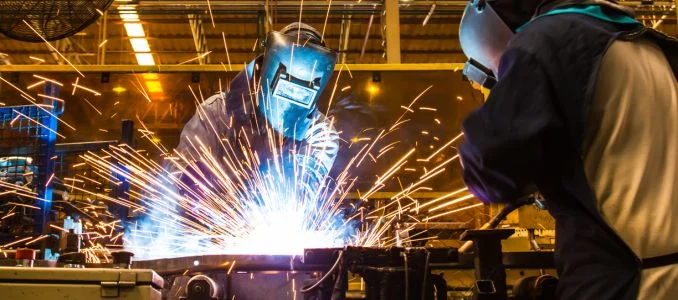
- Manufacturing Innovation: Nissan is deploying its "Intelligent Factory" initiative, which leverages artificial intelligence, IoT, and modular assembly techniques (such as gigacasting) to reduce vehicle assembly times by 20% and production costs by up to 30%.
Chronology: Nissan’s Strategic Evolution (2020–2030)
Understanding Nissan’s trajectory to 2030 requires examining the pivotal milestones that have reshaped the company since its restructuring phase began in 2020.
2020 ── Nissan NEXT plan launched; global production capacity cut by 20%.
  │
2021 ── "Ambition 2030" unveiled, committing ¥2 trillion to electrification.
  │
2023 ── Renault-Nissan Alliance rebalanced; cross-shareholdings equalized at 15%.
  │
2024 ── "The Arc" mid-term plan launched to boost sales by 1M units by FY2026.
  │
2026 ── Target: 30 new models launched; 40% global electrification mix achieved.
  │
2028 ── Commercial launch of All-Solid-State Batteries (ASSB).
  │
2030 ── Ambition 2030 fully realized; global EV/e-POWER production exceeds 60%.
2020–2023: Rationalization and "Nissan NEXT"
Following the turbulence of the late 2010s, Nissan launched the "Nissan NEXT" transformation plan in May 2020. This phase was defined by aggressive cost-cutting and capacity rationalization. The company reduced its global production capacity by 20% to approximately 5.4 million units annually, closed underutilized plants (including facilities in Barcelona, Spain, and Indonesia), and streamlined its product portfolio by 20% to focus on core profitable models.
2023: Rebalancing the Alliance
In late 2023, Nissan and Renault Group finalized a historic restructuring of their 24-year-old alliance. The cross-shareholding was equalized at a flat 15% each, removing the asymmetrical control that had long caused friction. This governance change freed Nissan to pursue independent regional partnerships, most notably its exploratory collaboration talks with Honda and Mitsubishi in 2024 regarding EV platforms and software.
2024–2026: "The Arc" and Market Recovery
Launched in March 2024, "The Arc" serves as a bridge between rationalization and long-term growth. This phase focuses on refreshing the product lineup, optimizing regional manufacturing footprints, and rolling out modular manufacturing processes to lower the break-even point of electric vehicle production.
2027–2030: Scale and Next-Generation Technology
The final phase of the decade will see the commercialization of Nissan’s proprietary All-Solid-State Batteries (ASSB), scheduled for pilot production in Yokohama by 2024 and full market launch by 2028. ASSBs are expected to double energy density, halve charging times, and bring battery pack costs down to $75 per kWh, making EVs cost-competitive with ICE vehicles.
Supporting Data: Regional Production Forecasts to 2030
To evaluate Nissan’s capacity to meet its 2030 targets, we must break down production forecasts across key global regions. Historically, Nissan’s production has been highly exposed to geopolitical shocks and supply chain disruptions. The forecast to 2030 indicates a significant realignment of regional volumes.
Table 1: Nissan Global Production Forecast by Region (Million Units)
| Region | 2023 (Actual) | 2025 (Forecast) | 2027 (Forecast) | 2030 (Forecast) |
|---|---|---|---|---|
| Japan | 0.82 | 0.85 | 0.90 | 0.95 |
| North America | 1.10 | 1.25 | 1.35 | 1.40 |
| China | 0.79 | 0.75 | 0.72 | 0.70 |
| Europe | 0.28 | 0.35 | 0.42 | 0.50 |
| Rest of World | 0.45 | 0.50 | 0.56 | 0.65 |
| Total Global Output | 3.44 | 3.70 | 3.95 | 4.20 |
Source: Automotive World Forecast Database / Industry Estimates
Regional Analysis and Powertrain Mix
1. North America (United States & Mexico)
North America remains Nissan’s primary engine for revenue. The Canton, Mississippi, and Smyrna, Tennessee, plants are undergoing extensive retooling to support localized EV assembly. By 2030, North American production is forecast to reach 1.40 million units.
NISSAN NORTH AMERICA: POWERTRAIN MIX FORECAST (2024 vs 2030)

2024:  [ ICE / Mild Hybrid: 85% ] [ e-POWER: 10% ] [ BEV: 5% ]
2030:  [ ICE / Mild Hybrid: 40% ] [ e-POWER: 25% ] [ BEV: 35% ]
The pivot toward e-POWER (Nissan’s proprietary series-hybrid technology) and pure battery electric vehicles (BEVs) is critical to meeting tightening US Corporate Average Fuel Economy (CAFE) standards and qualifying for Inflation Reduction Act (IRA) tax credits.
2. China
China represents Nissan’s most challenging market. The rapid rise of domestic electric vehicle manufacturers (such as BYD and Geely) has eroded the market share of foreign joint ventures. Nissan’s partnership with Dongfeng is pivoting toward localized EV development specifically tailored to Chinese consumers. Production is expected to contract slightly and stabilize around 700,000 units annually by 2030, with a heavy emphasis on plug-in hybrids (PHEVs) and localized BEVs.
3. Europe
Nissan’s Sunderland plant in the United Kingdom is a cornerstone of its European strategy. Under the "EV36Zero" initiative, Sunderland is transforming into a flagship EV manufacturing hub, integrating vehicle assembly, battery production (via partner AESC), and renewable energy generation. European production is projected to grow to 500,000 units by 2030, with the region expected to be 100% electrified (BEV-only) for new passenger car sales ahead of the EU’s 2035 mandate.
4. Japan
Domestic production will serve as the technological testing ground for Nissan’s advanced manufacturing techniques. The Tochigi and Oppama plants will maintain a steady output of approximately 950,000 units by 2030, serving as the global export hub for high-end e-POWER models and early-generation solid-state battery EVs.
Official Responses: Corporate Strategy and Leadership Alignment
Nissan’s executive leadership has repeatedly emphasized that the company’s survival and growth depend on agility, financial discipline, and a willingness to break with past dogmas.
Executive Perspectives
Speaking at the launch of "The Arc" business plan, Makoto Uchida, Representative Executive Officer and President/CEO of Nissan, highlighted the necessity of a balanced transition:
"In the face of extreme market volatility, Nissan is taking decisive action guided by our new plan to ensure sustainable growth and profitability. We cannot rely solely on a rapid transition to EVs where market infrastructure is lacking; instead, we must deploy a balanced portfolio that includes our advanced e-POWER hybrid technology alongside battery electric vehicles. This pragmatic approach will allow us to protect our margins while scaling up our electrified manufacturing capabilities."
Addressing the critical challenges in the Chinese market, Stephen Ma, Chief Financial Officer of Nissan, noted:
"The competitive landscape in China has changed faster than anyone anticipated. Our strategy there is not about chasing unprofitable volume. We are optimizing our production capacity to match actual demand, reducing fixed costs, and accelerating the localization of software and powertrain technologies to match the speed of the Chinese market."
Furthermore, Nissan’s engineering leadership has defended the company’s timeline for solid-state batteries. Hideyuki Sakamoto, Executive Vice President responsible for Manufacturing and Supply Chain Management, commented:
"Our Yokohama pilot facility is on track. All-solid-state batteries represent a paradigm shift in EV production. By bringing this technology in-house, we are not only securing our supply chain but also redefining the packaging, safety, and performance parameters of our future vehicle architectures."
Implications: Strategic Outcomes and Industry Outlook
Nissan’s performance and production trajectory to 2030 will have far-reaching implications for the global automotive supply chain, competitive dynamics, and the broader industry transition to zero-emission mobility.
                     IMPLICATIONS MATRIX

   Supply Chain              Partnerships              Competitiveness
   • Localized "Gigacells"   • Honda/Mitsubishi        • Cost reduction via
   • Reduced reliance on      collaboration on          gigacasting
     critical mineral        software & platforms      • Pragmatic hybrid/EV
     monopolies                                         mix protects margins
1. Supply Chain Localization and Battery Joint Ventures
Nissan’s shift toward localized battery production—exemplified by its deep partnership with AESC—will reduce its vulnerability to shipping disruptions and trade tariffs. By establishing gigafactories in close proximity to assembly plants in the US, UK, and Japan, Nissan is building a resilient regional supply chain. This strategy minimizes exposure to geopolitical tensions surrounding battery material processing, which remains heavily concentrated in East Asia.
2. The Honda-Nissan-Mitsubishi Alliance
The exploratory partnership announced in 2024 between Nissan, Honda, and Mitsubishi Motors could redefine Japanese automotive competitiveness. By collaborating on core software platforms, autonomous driving technologies, and standardized EV structural components, these manufacturers can achieve economies of scale that rival global giants like Toyota and Volkswagen. For Nissan, this alliance could significantly lower the R&D costs associated with next-generation software-defined vehicles (SDVs).
3. Financial Viability and Capital Allocation
Nissan’s disciplined capital expenditure strategy under "The Arc" is designed to prevent the cash-burn crises that have plagued other legacy OEMs during their EV transitions. By continuing to generate strong cash flow from highly profitable ICE and hybrid SUVs (such as the Rogue/X-Trail and Qashqai), Nissan can self-fund its ¥2 trillion ($13 billion) electrification investments. This financial balancing act is critical to maintaining its investment-grade credit rating and ensuring long-term shareholder value.
4. Competitive Positioning Against Chinese OEMs
As Chinese automakers expand their footprint into Europe, Southeast Asia, and Latin America, Nissan’s defensive strategy will rely heavily on its brand equity, extensive dealer networks, and localized manufacturing footprints. While Chinese OEMs hold a temporary cost advantage, Nissan’s introduction of solid-state batteries in 2028 and the rollout of modular manufacturing platforms could level the playing field by the turn of the decade.
Conclusion
Nissan’s journey to 2030 is not a straightforward race toward total electrification, but rather a calculated, multi-speed transition. By leveraging its e-POWER hybrid technology as a financial buffer, restructuring its global manufacturing footprint to prioritize regional resilience, and betting heavily on game-changing solid-state battery technology, Nissan aims to secure its position in the future automotive landscape. While significant headwinds remain—particularly in the hyper-competitive Chinese market—the strategic clarity provided by "The Arc" and "Ambition 2030" offers a credible roadmap for sustainable growth and technological leadership.