



Falls remain the most persistent and lethal threat in the industrial landscape. Despite decades of technological advancements in personal protective equipment (PPE), falls from elevation continue to lead the Bureau of Labor Statistics’ "Fatal Four" list in construction, consistently accounting for the highest number of work-related fatalities.
For safety professionals, the persistent challenge is not a lack of awareness, but a gap in implementation. It is no longer sufficient to merely provide hardware; organizations must move toward a holistic, behavioral, and structural safety culture. By integrating the industry-standard "ABCs" of fall arrest systems with the "SAFE" model, companies can shift from passive compliance to active, life-saving risk mitigation.
The Persistent Hazard: Why Traditional Methods Fall Short
The construction, manufacturing, and maintenance sectors operate under the shadow of gravity. Every day, thousands of workers scale ladders, scaffolds, and rooftops, often relying on equipment they may not fully understand or trust.
Historically, the industry has relied on a hardware-centric approach. If a worker has a harness and a lanyard, the assumption is that they are "protected." However, this mindset ignores the reality of human error, environmental stressors, and the critical importance of post-fall logistics. A harness is only as effective as the anchor it is tied to, and an anchor is only as safe as the training of the individual who selected it.
Data from the Occupational Safety and Health Administration (OSHA) suggests that while most fall-related incidents involve a failure of equipment, a significant majority involve a failure of procedure. Whether it is an improper connection, a lack of rescue planning, or the failure to inspect gear, the common denominator is a breakdown in the systemic approach to safety.
Chronology of Safety: From Basic PPE to Integrated Systems
The evolution of height safety can be categorized into three distinct eras:
- The Compliance Era (1970s–1990s): Following the inception of OSHA, the focus was purely on minimum standards. If the law required a rail or a simple belt, that was the extent of the safety program.
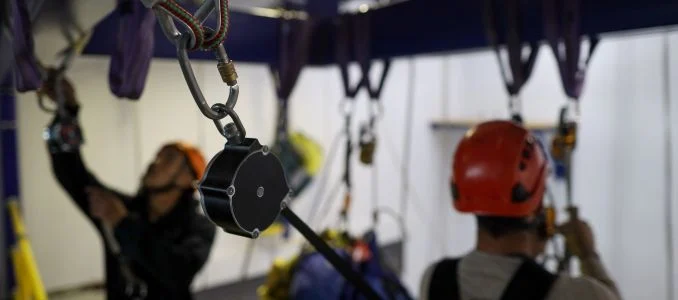
- The Hardware Era (1990s–2010s): This period saw the standardization of the ABCs—Anchor, Body Wear, and Connector. Engineering advancements in shock-absorbing lanyards and self-retracting lifelines (SRLs) revolutionized the market, providing better protection than ever before.
- The Resilient Culture Era (Present): We are currently in a shift toward the "Total Safety" model. This approach acknowledges that equipment is merely one part of a complex human-machine interface. This era prioritizes behavioral training, real-time hazard assessment, and pre-planned emergency responses.
The ABCs: The Technical Foundation
To understand the modern approach, one must first master the technical fundamentals. OSHA’s ABCs serve as the physical baseline for any Personal Fall Arrest System (PFAS).
A – Anchor: The Bedrock of Safety
The anchor is the most critical component of the PFAS. It is the point of attachment that must withstand the immense kinetic energy of a falling body. OSHA regulations are stringent here: for non-engineered systems, an anchor point must support at least 5,000 pounds of force per worker. If an anchor is selected by a "qualified person" as part of an engineered system, it may have different load requirements, but it must still be capable of maintaining a safety factor of at least two.

B – Body Wear: The Interface
The full-body harness is the worker’s primary interface with the fall protection system. Beyond merely wearing it, a worker must understand proper fit. A harness that is too loose can cause internal trauma during a sudden stop, while one that is too tight can cause circulation issues. Proper donning—ensuring the sub-pelvic strap is positioned correctly and the D-ring is between the shoulder blades—is a daily prerequisite.
C – Connector: The Bridge
The connector links the body wear to the anchor. This category includes lanyards, shock absorbers, SRLs, and carabiners. The selection here depends on the "fall clearance"—the distance between the anchor point and the ground or the next level. If the connector allows for a fall distance greater than the available clearance, the system is fundamentally flawed, regardless of the quality of the gear.
The SAFE Model: A Framework for Culture
While the ABCs handle the physics of a fall, the SAFE model addresses the human and procedural elements. SAFE stands for Secure, Attachment, Fall Arrest and Rescue, and Emergency Preparedness.
Secure (The Mindset)
"Secure" refers to the pre-work environment. It involves a job-site hazard assessment conducted before a single tool is lifted. Is the work surface stable? Are there environmental hazards like high winds or electrical lines? Securing the site means identifying risks that PPE cannot mitigate, such as tripping hazards or unstable scaffolding.

Attachment (The Methodology)
Attachment is about the physical act of connecting. It involves the "100% tie-off" rule. It forces workers to consider the angle of the fall—the "swing fall" hazard. If a worker is attached to an anchor point off to the side, a fall will result in a pendulum motion, potentially causing them to strike walls, structures, or machinery. Proper attachment requires selecting anchor points that minimize lateral movement.
Fall Arrest and Rescue (The Contingency)
This is where most organizations fail. Many assume that once a fall is arrested, the work is done. In reality, the most dangerous phase of a fall is the aftermath. Suspension Trauma—a condition where blood pools in the legs due to prolonged suspension in a harness—can lead to loss of consciousness and death in as little as 10 to 15 minutes. A fall protection program without a specific, practiced rescue plan is, by definition, incomplete.
Emergency Preparedness (The Execution)
This involves training the team on how to respond when the worst occurs. Do workers have access to a rescue pole? Is there an automated external defibrillator (AED) on-site? Have local emergency services been alerted to the work being performed at height? Preparedness is the final layer of the safety net.
Supporting Data and Industry Insights
Recent longitudinal studies in industrial safety indicate a direct correlation between "Integrated Safety Training" and a reduction in lost-time injuries (LTIs). According to the National Safety Council, for every dollar invested in proactive safety training, companies see a return of approximately four dollars in reduced insurance premiums, lowered medical costs, and increased productivity.

Furthermore, site audits conducted over the last five years have shown that sites using the SAFE framework alongside the ABCs report:
- A 40% increase in the identification of near-misses.
- A 25% reduction in equipment replacement costs due to better inspection protocols.
- A significantly higher "Safety Climate Score" reported by frontline workers.
Official Responses and Regulatory Implications
Regulatory bodies, including OSHA and the European Agency for Safety and Health at Work (EU-OSHA), have been increasingly emphasizing the role of the "Qualified Person." The legal implications of a fall are severe; in the event of an investigation, the burden of proof rests on the employer to demonstrate that not only was equipment provided, but that it was suitable, inspected, and that the worker was competent in its use.
Safety professionals are now being urged to move away from "check-the-box" training. Instead, regulators are looking for evidence of competency-based assessment. This means that workers should not only be trained in the theory of fall protection but must demonstrate proficiency in a real-world or simulated environment before being authorized to work at height.
Implications for the Future of Industrial Safety
The move toward an integrated approach (ABCs + SAFE) represents a maturation of the industry. It acknowledges that technology has reached a plateau—we have reached a point where harnesses and SRLs are as reliable as they can realistically be. The remaining frontier for accident prevention is the human element.

The Role of Technology
Looking ahead, the integration of IoT (Internet of Things) devices in fall protection is on the horizon. Smart harnesses equipped with impact sensors that notify supervisors the moment a fall occurs can drastically reduce the time between an incident and rescue.
The Cultural Shift
Ultimately, the goal is to foster a culture where safety is not viewed as an impediment to progress, but as a prerequisite for it. When a worker understands that their anchor, their harness, and their rescue plan are all part of a single, unified strategy, their confidence increases. A confident worker is a more focused worker, and a focused worker is significantly less likely to make the errors that lead to falls.
As we look toward 2026 and beyond, the message to safety managers is clear: The equipment is the baseline, but the culture is the ceiling. By combining the technical rigor of the ABCs with the proactive, systemic approach of the SAFE model, organizations can move beyond mere compliance to a state of true operational resilience. Protecting workers at height is not just about keeping them off the ground; it is about ensuring that every individual who leaves for work in the morning returns home in the evening, fully intact.