





Navigating the New Frontier: How the FCC’s Robotics Ruling is Reshaping Automation Procurement

In the fast-evolving landscape of global supply chains and industrial automation, the July 2026 announcement by the Federal Communications Commission (FCC) stands as a watershed moment. By designating specific foreign-made advanced robotic systems—including sophisticated mobile and legged platforms—as potential cybersecurity and competitive risks, the FCC has fundamentally altered the calculus for U.S. businesses. As procurement departments scramble to evaluate their current fleets and future investment strategies, a critical question remains: How does a company ensure its automation stack remains secure, compliant, and resilient in an era of heightened geopolitical scrutiny?
To address these pressing concerns, a premier industry panel featuring leadership from Vecna Robotics, Locus Robotics, and the Association for Advancing Automation (A3) will convene for a free, interactive webinar on Tuesday, October 27, 2026, at 2:00 p.m. ET. This session aims to cut through the regulatory noise, providing actionable insights for stakeholders navigating this new, complex landscape.
The Genesis of the FCC Ruling: A Chronology of Risk
The road to the July 2026 determination was paved by years of mounting concerns regarding the interconnected nature of modern industrial hardware. Unlike the isolated machines of the early 2000s, today’s robots are hyper-connected nodes within enterprise networks.
- Pre-2024: The U.S. robotics industry experiences a massive influx of cost-effective, foreign-manufactured mobile platforms. These systems, while efficient, often utilize proprietary software stacks with opaque data-handling practices.
- 2024–2025: Cybersecurity analysts begin highlighting the "backdoor" potential in connected robotics, noting that sophisticated mobile robots possess sensors (LiDAR, high-definition cameras) and network access that could potentially expose sensitive facility layouts and proprietary operational data.
- July 2026: The FCC issues its formal determination. The ruling targets advanced robotic devices that the agency deems to pose an unacceptable risk to U.S. national security, restricting the import of new models. This action signals a shift from purely trade-based policy to a national security-first approach regarding industrial technology.
- October 2026: With the industry reeling from the immediate impact, companies are now facing the reality of "stranded assets"—robotic systems that may become difficult to service, patch, or integrate as the regulatory noose tightens.
Understanding the "Connected System" Paradigm Shift
A primary focus of the upcoming webinar is the fundamental difference between legacy automation and modern, connected robotic systems. During the session, experts will unpack why the FCC’s ruling is not merely a bureaucratic hurdle but a necessary correction to the way robots are integrated into corporate infrastructure.
"Connected systems are not just machines; they are data-gathering, network-reliant endpoints," says one industry insider. "If your robot is constantly communicating with a server in a jurisdiction with limited data transparency, you are effectively opening a window in your firewall that you cannot control."
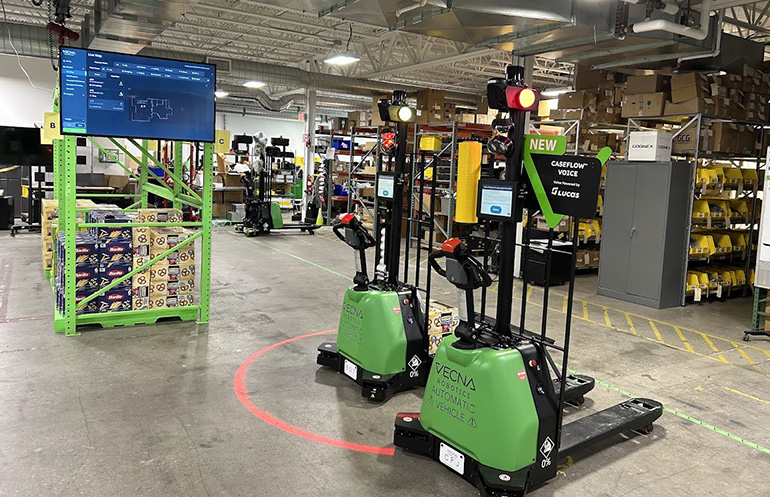
The webinar will explore the "trust architecture" of robotics. Attendees will learn to differentiate between:
- Isolated Automation: Hard-coded, air-gapped systems with minimal external communication.
- Connected Industrial IoT (IIoT): Robots that utilize cloud-based fleet management, requiring robust encryption and localized data sovereignty.
- High-Risk Autonomous Platforms: Advanced systems, often sourced from nations with state-directed technology mandates, that may possess hidden telemetry capabilities.
Panelist Perspectives: Industry Titans Weigh In
The panel features a trio of experts with distinct perspectives on the intersection of technology, policy, and manufacturing.
Karl Iagnemma: Scaling Innovation with Security
As the CEO of Vecna Robotics, Karl Iagnemma brings a unique pedigree to the discussion. With a Ph.D. from MIT and a track record that includes founding nuTonomy—the pioneering driverless car software firm acquired by Aptiv—Iagnemma has spent his career at the edge of autonomy. Under his guidance, Vecna has maintained a commitment to U.S.-based manufacturing, insulating the company from the direct supply chain shocks caused by the recent FCC ruling. His insights will focus on the importance of "sovereign hardware" and the long-term cost-benefit analysis of domestic sourcing versus foreign procurement.
Rick Faulk: Navigating Enterprise Strategy
Rick Faulk, CEO of Locus Robotics, offers a lens sharpened by over 30 years of executive management at tech giants like Cisco and WebEx. His experience in high-growth technology sectors provides him with a deep understanding of how to manage massive, global deployments while maintaining rigorous security standards. Faulk is expected to discuss how to conduct a "robotics audit," helping procurement leaders assess their existing fleet’s vulnerability and how to effectively transition away from non-compliant vendors without disrupting warehouse operations.
Aaron Prather: The Macro-View of Market Intelligence
Representing the Association for Advancing Automation (A3), Aaron Prather acts as the bridge between raw policy and industrial practice. With two decades of experience in R&D and standardization, Prather is tasked with translating complex regulatory language into actionable business strategy. His role on the panel is to provide a systemic view of the industry, offering data-driven insights into how the FCC ruling is shifting the "reshoring" conversation and what it means for the future of U.S. robotics competitiveness.

Strengthening the Supply Chain: Actionable Advice for Buyers
What should a company actually do if they have already invested in restricted or potentially risky technology? The webinar will provide a tactical checklist for attendees, focusing on three core pillars:
1. The Vendor Audit
Buyers should stop asking, "How much does it cost?" and start asking, "Where is the data going?" The panelists will provide a list of critical questions that procurement teams should submit to their technology providers, including:
- Where is the firmware developed and maintained?
- Does the system require a persistent connection to a non-U.S. server?
- What is the provider’s policy on data access by foreign state actors?
2. Supply Chain Diversification
The era of single-source dependency is over. The panel will discuss how to hedge against future regulatory changes by diversifying the robotics ecosystem. This involves building relationships with domestic manufacturers and opting for "modular" robotics, where hardware can be swapped or updated without replacing the entire software stack.
3. Future-Proofing Investments
Investing in automation is a multi-year commitment. The panelists will share their outlook on how the FCC’s ruling might evolve, offering predictions on whether the current restrictions are a floor or a ceiling. Understanding the trajectory of U.S. trade policy is essential for avoiding the "sunk cost" trap, where companies find themselves tethered to obsolete or prohibited technology.
Implications for the U.S. Robotics Industry
The FCC ruling is not solely a negative development; for the U.S. robotics industry, it represents a massive opportunity. As the barrier to entry for foreign, low-cost competition rises, the value proposition of domestic, high-security, and high-reliability robotics becomes clearer.

"The U.S. has a chance to define what ‘trusted automation’ looks like on a global stage," says the panel organizers. The webinar will conclude with a forward-looking discussion on how the American robotics sector can fill the void left by restricted foreign imports. By prioritizing R&D, focusing on cybersecurity-by-design, and leveraging the strengths of a domestic supply chain, U.S. companies have the opportunity to set the global standard for what a secure, autonomous warehouse should look like.
Register Today: Preparing for the Future
The webinar is sponsored by Vecna Robotics, a leader in the movement toward secure, U.S.-manufactured material handling systems. The event is open to all industry professionals, including warehouse managers, procurement directors, and C-suite executives who are currently weighing their automation strategy.
Event Details:
- Date: Tuesday, October 27, 2026
- Time: 2:00 p.m. ET
- Format: Live broadcast with real-time Q&A; on-demand access available post-event.
- Registration: Register here to secure your spot.
As the regulatory landscape continues to tighten, knowledge is the most powerful tool in an automation buyer’s arsenal. Join the conversation with industry leaders to ensure that your business remains at the cutting edge of innovation, without compromising the security of your most valuable assets. Whether you are currently planning a new deployment or managing a legacy fleet, this session is essential for maintaining compliance and operational continuity in the new era of robotics.