


The Dawn of the Robot Workforce: Inside Boston Dynamics’ New Metaplant Application Center

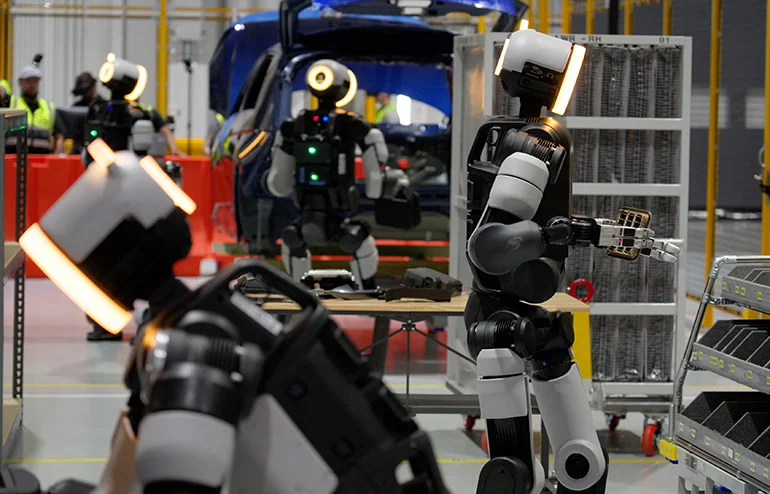
In a move that signals a tectonic shift in industrial automation, Boston Dynamics has officially inaugurated its Robotics Metaplant Application Center (RMAC). Located on the sprawling grounds of the Hyundai Motor Group Metaplant America (HMGMA) near Savannah, Georgia, the facility serves as a sophisticated proving ground for the next generation of Atlas humanoids. By embedding these robots directly into an active automotive manufacturing environment, Boston Dynamics is moving beyond the conceptual phase of robotics, transitioning toward a future where human-centric machines serve as the backbone of global supply chains.
Main Facts: The "Robot Behavior Factory"
The RMAC is not merely a laboratory; it is a "Robot Behavior Factory." Unlike previous research initiatives that relied on controlled, off-site settings, the RMAC operates in the heart of a functioning industrial ecosystem. The primary objective is to refine the Atlas humanoid’s ability to handle the "operational realities" of factory work.
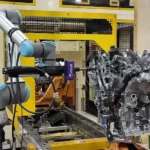
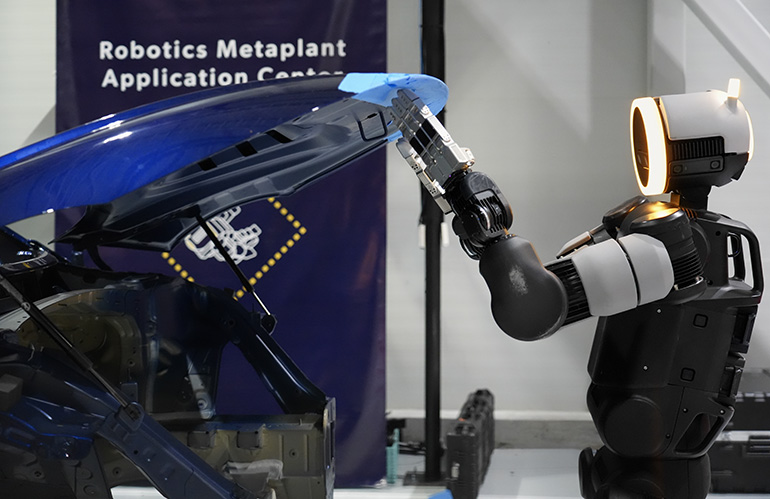
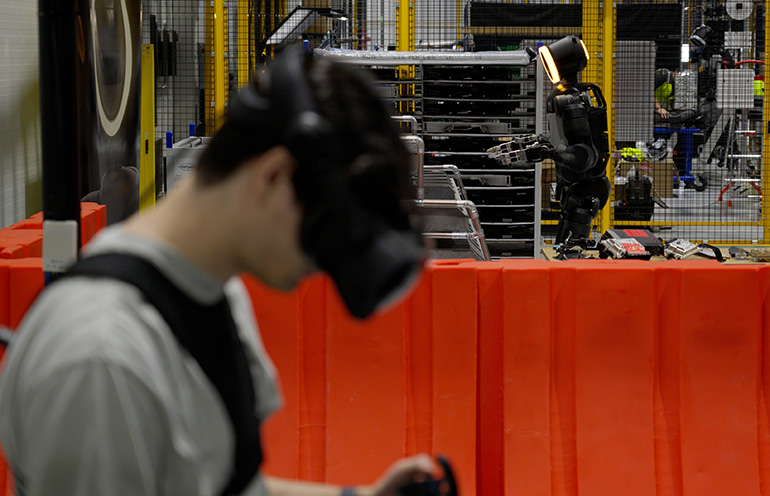
At the RMAC, the robots are subjected to real-world logistics and sequencing tasks. This includes the delicate, dexterous manipulation of automotive components, which requires a high degree of precision and spatial awareness. By using a combination of teleoperation, reinforcement learning in simulation, and Universal Manipulation Interface (UMI) devices, Boston Dynamics is creating a feedback loop where the robots learn, fail, and improve under the watchful eyes of engineers and skilled human pilots.
The facility’s goal is to produce high-quality, diverse data that will eventually enable Atlas to operate with high reliability across various industrial environments. By anchoring this development in a live automotive plant, Boston Dynamics ensures that the robots are not just theoretically capable, but practically integrated into the physical constraints of an assembly line.
Chronology: From Lab Experiments to Mass Deployment
The trajectory of Boston Dynamics under the stewardship of Hyundai Motor Group has been one of accelerated development. The timeline of this transformation is marked by several key milestones:
- 2021-2025: Boston Dynamics focused on refining the mobility and core AI capabilities of the Atlas platform, primarily through smaller-scale, time-boxed deployments. These early trials served as the essential “lessons learned” phase, identifying the requirements for scaling and reliability.
- July 2026: A pivotal moment occurred when Hyundai Motor Group finalized its strategy to cement its leadership in robotics and AI, including the acquisition of the Robotics and AI Institute (RAI).
- September 2026: The official opening of the RMAC in Georgia. This marks the transition from experimental testing to a permanent, data-driven application center.
- 2027 (Projected): Boston Dynamics expects to reach a critical mass of data collection, further refining the "policy evaluations" that allow Atlas to navigate complex factory floors.
- 2028 (Projected): Hyundai aims to reach a production capacity of 30,000 robots annually at a dedicated U.S. facility.
- 2030 (Projected): The target date for the widespread deployment of Atlas into component assembly processes, moving beyond logistics into intricate manufacturing workflows.
Supporting Data: The Scale of Ambition
The sheer scale of the vision shared by Hyundai and Boston Dynamics is unprecedented in the robotics industry. Hyundai has announced plans to deploy 25,000 units of the Atlas humanoid across its global manufacturing network within the next few years.
Supporting this deployment is a massive, multi-faceted data strategy. According to Zack Jackowski, Chief Product and Technology Officer at Boston Dynamics, the company is already seeing that their original design assumptions for the production version of Atlas are remarkably accurate. The focus now is on "application-level" data: how to modify fixtures, optimize packaging for robotic handling, and build support processes that allow humans and robots to coexist safely and productively.
The physical footprint of the RMAC is also set to grow exponentially. While the first phase is currently operational, the company has confirmed that a new building—expanding the facility’s capacity by ten-fold—will open next year. This expansion is designed to support the transition of Atlas from logistics tasks to more strenuous, repetitive, and heavy-lifting roles that currently pose ergonomic challenges to human workers.

Official Responses and Strategic Vision
The leadership at Boston Dynamics remains bullish on the role of robotics in the future economy. Zack Jackowski emphasized that the RMAC is the manifestation of a shared ambition: to amplify human potential by offloading dangerous or monotonous tasks.
"Together with Hyundai Motor Group, we are pioneering physical AI at enterprise scale," Jackowski stated. He underscored the importance of the partnership, noting that the data gathered from previous deployments of the Spot quadruped and the Stretch robot have provided a foundation of "institutional learning" that is vital for the current humanoid rollout.
Regarding concerns over organizational changes—such as the acquisition of the Robotics and AI Institute (RAI)—Jackowski maintained a clear separation. "Boston Dynamics has one of the largest and strongest robotics AI teams in the world," he noted. "The move [regarding RAI] has no impact on us. We are focused on the industrial-scale, high-quality data we are generating here at RMAC, which is going to significantly increase our development velocity."
Implications: A New Era for Manufacturing
The implications of the RMAC’s work extend far beyond the automotive sector. By proving that humanoid robots can be successfully integrated into the rigorous, high-speed environment of an auto plant, Boston Dynamics is setting a blueprint for other industries.
1. Reshoring and Productivity
The ability to automate tasks previously deemed too dexterous or unpredictable for traditional robots allows companies to reconsider their manufacturing footprints. As Brendan Schulman, VP of Policy and Government Relations at Boston Dynamics, will discuss at the upcoming RoboBusiness 2026 conference, the use of robots is a critical component of "Reshoring." By lowering the cost of production through advanced robotics, manufacturers can move operations closer to their end markets without sacrificing competitiveness.
2. Industry-Wide Applications
While automotive is the initial focus, the lessons learned at the RMAC are being applied to discussions with customers in aerospace, semiconductors, food and beverage, and life sciences. The "behavioral library" being built at the RMAC—the specific ways an Atlas robot interacts with parts, tools, and human colleagues—is transferable knowledge. As these robots become more adept at navigating complex industrial spaces, the barrier to entry for other sectors will drop significantly.
3. The Future of Work
The central thesis of this project is not the replacement of human labor, but its augmentation. The goal is to move humans away from the most strenuous and injury-prone tasks, allowing them to take on more oversight, management, and higher-level technical roles within the factory. As the RMAC continues to churn out data, the "Robot Behavior Factory" is effectively teaching a new workforce how to adapt to the ever-changing, dynamic nature of modern manufacturing.
As Boston Dynamics and Hyundai look toward 2030, the RMAC stands as a symbol of the next industrial revolution. It is a place where the theoretical promise of AI meets the hard, unforgiving reality of the production line, forging a future where machines and humans operate in tandem to achieve unprecedented levels of productivity. With a tenfold expansion on the horizon and a massive global deployment strategy in motion, the era of the humanoid worker has officially begun.