

The Hidden Threat: Unmasking the Destructive Reality of Pitting Corrosion in Industrial Water Systems

By Brad Buecker, Senior Technical Consultant, SAMCO Technologies
Published May 19, 2026
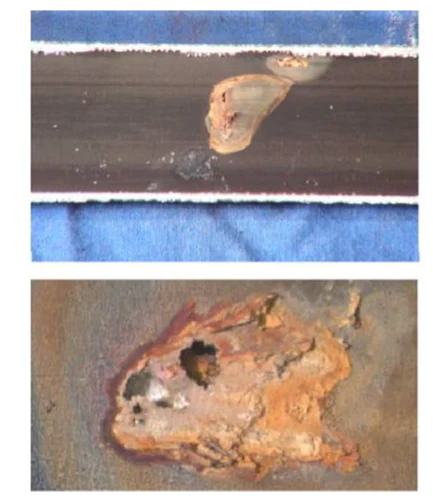
In the intricate world of industrial water treatment, general corrosion is often viewed as a background nuisance—a slow, predictable thinning of metal that engineers can account for with corrosion allowances. However, localized corrosion presents an entirely different, more volatile threat. Among these, pitting corrosion stands out as the most insidious and potentially catastrophic mechanism in industrial water systems. Unlike general corrosion, which affects large surface areas, pitting is a concentrated, aggressive assault that can lead to rapid, premature equipment failure.
Understanding the nuances of pitting is not merely an academic exercise; it is a fundamental requirement for the longevity and reliability of power plants, refineries, and chemical processing facilities. As we continue this series on major corrosion issues in industrial water systems, we must move past "knee-jerk" engineering assumptions and embrace a data-driven approach to material selection and environmental management.
The Myth of "Stainless" Reliability
A recurring challenge in the industry is the persistent, erroneous belief that specifying "stainless steel" is a universal panacea for corrosion issues. In many engineering offices, when a system experiences water-side failures, the reflexive response is to simply upgrade to 304 or 316 stainless steel.

This mindset is fundamentally flawed for several reasons. First, the term "stainless" is a misnomer; while these alloys are highly resistant to oxidation, they are not "stain-free" or impervious to chemical attack. Second, there are dozens of grades of stainless steel, each with distinct metallurgical properties suited to specific environments. Selecting the wrong grade—or failing to consider the concentration of aggressive species like chlorides—can lead to disaster.
History is littered with examples where improperly specified 304 or 316 stainless steel condenser tubes failed in as little as three weeks. The misconception that these materials provide a "silver bullet" solution often obscures the underlying electrochemical reality: once a pit is initiated, the environment inside the pit becomes significantly more aggressive than the bulk solution, creating a self-sustaining cycle of localized destruction.
The Electrochemistry of the Pit
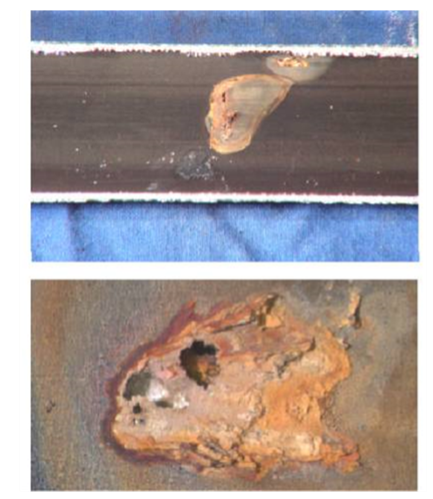
To understand why pitting is so devastating, one must look at the fundamental electrochemistry of the metal surface. A pit acts as a stationary anode. Once the protective passive oxide layer—typically formed by chromium in stainless steel—is breached, the metal inside the pit begins to dissolve rapidly.
Because the pit is a confined space, it remains stagnant. The accumulation of metal ions inside the pit leads to a drop in pH and an increase in local chloride concentration. This autocatalytic process means that the pit effectively "digs its own hole," penetrating deeply into the metal wall long before the exterior surface shows any significant damage. In many cases, a vessel or tube may appear structurally sound upon superficial inspection, only to suffer a sudden, through-wall breach.
Chronology of Engineering Oversight: The Case for Careful Specification
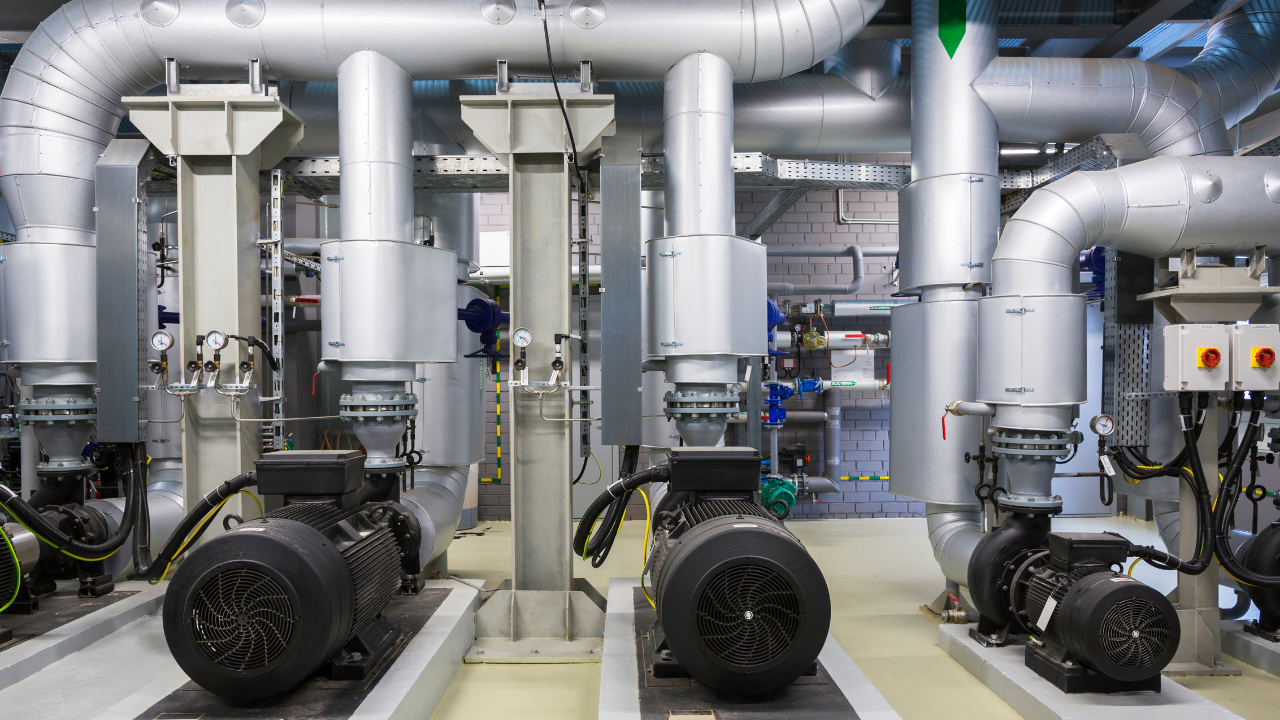
During my tenure at an EPC (engineer, procure, construct) firm, I observed a repetitive and dangerous pattern. Design engineering firms would frequently specify 304L or 316L stainless steel for steam surface condenser tubing in combined-cycle power plants.
The oversight was consistent: these plants utilized recirculating cooling systems with cooling towers. The fundamental purpose of a cooling tower is to facilitate heat transfer through evaporation, a process that naturally "cycles up" the water. As evaporation occurs, the concentration of dissolved solids, including chlorides, increases significantly—sometimes by a factor of four, five, or even six.

In arid regions, these concentration cycles can climb even higher. Design engineers often failed to account for these elevated chloride levels, which frequently exceeded the threshold for 304L and even 316L stainless steel. This lack of awareness transformed standard, off-the-shelf design specifications into ticking time bombs for future maintenance departments.
Supporting Data: The Pitting Resistance Equivalent Number (PREn)
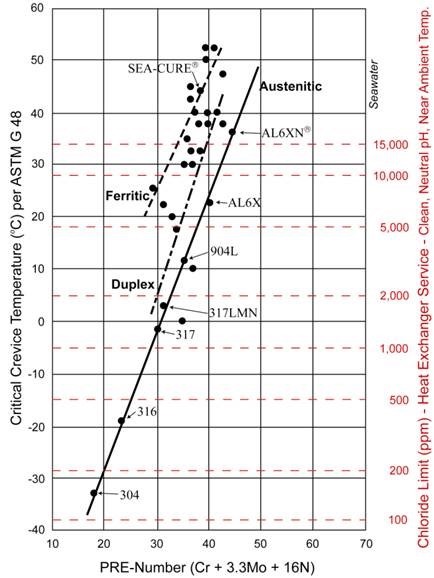
Resistance to chloride-induced pitting should be the primary metric when evaluating materials for water-cooled heat exchangers. Industry professionals rely on the Pitting Resistance Equivalent Number (PREn) as a quantitative benchmark.
The PREn formula is defined as:
PREn = %Cr + 3.3(Mo) + 16(N)
This formula highlights the critical role of chromium, molybdenum, and nitrogen in fortifying an alloy against chloride attack. Notably, nickel—the primary alloying element of the 300-series austenitic stainless steels—provides negligible resistance to chloride pitting. For environments with high chloride content, such as brackish or seawater, standard 300-series steels are inadequate. In these instances, ferritic or super-ferritic alloys, such as SEA-CURE®, are required to prevent premature failure.

Real-World Implications: The WFGD Scrubber Failure
The consequences of ignoring these parameters were vividly illustrated in a wet flue-gas desulfurization (WFGD) system at a coal-fired power plant. Illinois coal is known for its chlorine content, which, upon combustion, forms soluble chloride salts in the plant’s scrubbers.
The project designers chose 904L stainless steel for the quencher vessel. While 904L is a high-performance alloy, it has a recommended maximum chloride limit of approximately 3,500 ppm. In practice, the chloride concentrations in this scrubber often soared past 10,000 ppm. The resulting pitting was severe and persistent. Even after attempts to apply organic protective coatings to the quencher walls, the environment proved too aggressive, ultimately forcing an expensive and unplanned replacement of the infrastructure.

Sulfides: A Unique and Lethal Impurity
While chlorides are the most common culprits, sulfide ions (S²⁻) represent an even more potent threat to industrial equipment. Sulfides are not typically a concern in standard freshwater, but they are prevalent in groundwaters and are a primary concern in petroleum refining, where hydrogen sulfide (H₂S) is a constant threat.
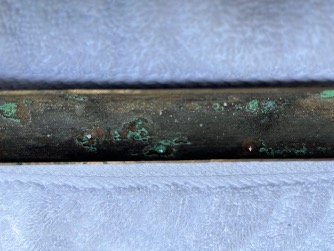
A striking example of sulfide-induced failure involved a condenser replacement project. The plant replaced aging Admiralty brass tubes with a 90-10 copper-nickel alloy, widely considered more robust. Within just 18 months, the new tubes suffered multiple through-wall penetrations. Forensic investigation revealed that the culprit was a sulfide-containing lubricant used during the manufacturing process. Because the lubricant was not fully removed prior to shipping, it triggered thousands of localized attacks across the tube surfaces. This serves as a stark reminder that corrosion management must extend beyond operation and into the quality control of manufacturing and fabrication.
Manganese: The "Varnish" of Death
Perhaps one of the most counterintuitive corrosion mechanisms is manganese-influenced pitting. Even in systems with very low dissolved manganese—as low as 0.02 ppm—chlorination can oxidize the manganese into manganese dioxide (MnO₂). This creates a thin, varnish-like deposit on heat exchanger surfaces.
This deposit is not merely an aesthetic issue; it is strongly cathodic to the underlying metal. This creates an electrochemical cell that drives severe localized corrosion. 304 and 316 stainless steels, as well as various copper alloys, are highly susceptible to this phenomenon. The cycle is self-perpetuating: chlorine, added to combat biological growth, actually accelerates the formation of the MnO₂ layer, which then facilitates the pitting of the base metal.

Moving Toward Proactive Management
The lesson from these examples is clear: corrosion is a multifaceted, chemically complex phenomenon that cannot be solved by a "one-size-fits-all" approach to material selection.
Recommendations for Plant Management:
- Engage Technical Experts: Consult with corrosion specialists during the design phase. Do not rely on generic specifications that may not account for the specific chemistry of your cooling water.
- Understand Your Chemistry: Regularly analyze your water chemistry, including chloride and manganese levels. The "cycling up" effect of cooling towers must be calculated with precision.
- Audit Manufacturing Quality: As seen in the sulfide-lubricant case, failures can originate at the factory. Ensure that all components are cleaned and handled according to industry standards.
- Leverage Industry Resources: Organizations such as the Association for Materials Protection and Performance (AMPP) offer invaluable standards and research that can prevent millions of dollars in unnecessary maintenance costs.
In future installments of this series, we will explore other localized corrosion mechanisms, such as stress corrosion cracking (SCC) and corrosion fatigue, and examine the monitoring and control techniques essential for modern industrial reliability. By moving away from reactive, "knee-jerk" responses and toward a deep, analytical understanding of metallurgy and chemistry, plant personnel can ensure the longevity and safety of their critical systems.
Corrosion does not happen by accident; it is the result of specific chemical and physical interactions. By mastering those interactions, we can stop the pit before it ever begins to form.