


Scaling the Ceramic Frontier: Lithoz Reports Explosive 40% Growth as Additive Manufacturing Enters the Serial Production Era

The landscape of industrial additive manufacturing is undergoing a profound shift. Once relegated to prototyping and niche laboratory applications, ceramic 3D printing is rapidly ascending to the status of a core production technology. Leading this transition is Vienna-based Lithoz, which has officially announced a 40% year-over-year surge in ceramic material revenue at the close of the second quarter of 2026.
This milestone is more than just a financial data point; it is a clear indicator that the "Ceramic 3D Factory" model—a term coined by the company to describe its sprawling network of industrial and academic partners—has moved from theoretical potential to mass-production reality. With its Lithography-based Ceramic Manufacturing (LCM) technology increasingly integrated into the supply chains of the world’s most regulated industries, Lithoz has upwardly revised its revenue expectations for the remainder of 2026.
The Anatomy of Growth: Main Facts and Drivers
The 40% growth in material revenue is primarily fueled by a fundamental change in how Lithoz’s customers interact with its CeraFab technology. According to company reports, the trend is moving away from single-machine R&D setups toward the deployment of massive, multi-printer "print farms."
A critical statistic provided by the company highlights this consolidation: more than half of the entire global installed base of CeraFab systems is currently operated by just one-fifth of the total customer base. This indicates that a core group of high-volume, professional contract manufacturers is scaling their output to meet the demands of serial production. These manufacturers are not merely adding machines; they are integrating the LCM process into their standard operational workflows, creating a recurring and growing demand for specialized ceramic feedstocks.
Strategic Market Penetration
The growth is anchored in three primary domains:

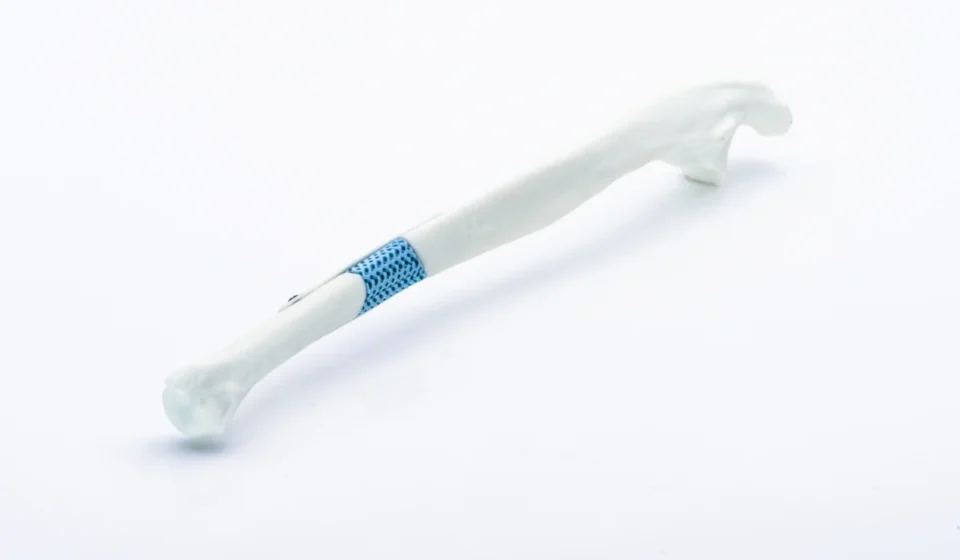
- Medical Technology (MedTech): The push for patient-specific, resorbable implants has reached a tipping point, driven by increased access to long-term clinical data.
- High-Performance Thermal Management: Industries such as semiconductor manufacturing and data-center cooling are turning to advanced ceramics to solve heat dissipation challenges.
- Aerospace and Defense: The adoption of LCM by industry giants, most notably Safran Aircraft Engines, for the production of complex turbine blade casting cores, has provided the validation necessary to push ceramic printing into the mainstream of aerospace supply chains.
A Chronology of Success: From R&D to ISO Validation
The current performance of Lithoz is the culmination of a multi-year strategy focused on quality, certification, and process reliability.
In early 2025, the company achieved a critical breakthrough by securing ISO 13485 certification for its quality management system regarding material production. This was not merely a bureaucratic achievement; it served as a "golden ticket" into the medical device industry. By proving that their materials could be manufactured with the repeatability and traceability required for human-implantable devices, Lithoz effectively removed one of the largest barriers to adoption in the healthcare sector.
Following this certification, the latter half of 2025 and the first two quarters of 2026 saw a surge in clinical validation projects. The publication of successful clinical studies—most notably a study involving 14 patients that reported a 92% success rate for beta-TCP implants—provided the evidence-based confidence that medical practitioners and hospital systems required to shift from traditional manufacturing to 3D-printed ceramic alternatives.
Simultaneously, industrial partnerships deepened. The collaboration with companies like Steinbach AG served as a blueprint for other contract manufacturers, demonstrating that the LCM process could be scaled efficiently while maintaining strict industrial standards.
Supporting Data: Diversifying the Portfolio
While alumina and zirconia remain the "bread and butter" of Lithoz’s material revenue, the most significant growth is currently occurring in the specialized material segment. Lithoz now boasts a portfolio of over 20 distinct ceramic materials, with aluminium nitride, calcium phosphates, and silica-based ceramics showing the fastest individual growth rates.

The Rise of Aluminium Nitride
The surge in demand for aluminium nitride is directly tied to the global demand for advanced thermal management. With a thermal conductivity of 211 W/m K and a coefficient of thermal expansion that allows for seamless integration with silica-based components, this material is becoming essential for:
- Semiconductor Manufacturing: Where precision and thermal stability are paramount.
- Data Center Cooling: As AI and high-performance computing continue to generate massive heat loads, traditional cooling methods are reaching their physical limits.
- Propulsion Systems: Where extreme temperature fluctuations require materials that won’t degrade under stress.
The MedTech Momentum
The growth in calcium phosphate is perhaps the most human-centric aspect of the company’s success. As surgeons and bioengineers become more familiar with the benefits of patient-specific implants—which promote better osseointegration and reduce the risk of rejection compared to off-the-shelf metallic or plastic components—the demand for LCM-printed structures has skyrocketed. The "clinical evidence" feedback loop is now self-sustaining: as more implants are used, more data is generated, leading to higher confidence and even broader clinical adoption.
Industrial Casting Cores
The shift in silica-based ceramics is a testament to the industrialization of the sector. By enabling the production of highly complex casting cores that would be impossible to manufacture using traditional injection molding or subtractive methods, Lithoz is helping aerospace engineers design more efficient turbine blades. The adoption of this technology by Safran is widely viewed as a signal to the broader aerospace market that LCM is no longer a "future" technology, but an "active" one.
Official Responses and Executive Vision
Dr. Johannes Homa, CEO of Lithoz, views these figures as a vindication of the company’s long-term strategy of "material-first" innovation.
"We are not only continuously improving and revalidating our materials," Dr. Homa stated in a recent press briefing. "We’ve even developed a good number of customized materials for customers now persistently scaling their production to greater volumes."

Dr. Homa emphasized that the company’s focus on the "Ceramic 3D Factory" was a deliberate attempt to move away from selling printers as standalone tools and toward providing an ecosystem. Regarding the importance of their regulatory milestones, he noted: "Reaching ISO 13485 certification for our quality management in material production was a big milestone and proved to be a powerful door opener to many demanding industries; even the most tightly regulated industries can now profit from our technology."
Implications for the Future of Additive Manufacturing
The implications of Lithoz’s 40% revenue jump extend far beyond the company’s balance sheet. It signals a maturation of the additive manufacturing (AM) industry as a whole.
1. The Shift to Serial Production
The data confirms that the era of "3D printing as a prototype tool" is effectively over in the ceramic sector. When companies like Steinbach AG expand their print farms, they are doing so based on long-term contracts for mass-produced parts. This transition requires a level of process control, material consistency, and supply chain reliability that, until recently, was considered a significant challenge for AM.
2. The Rise of "Institutional Filters"
As the industry scales, we are seeing the emergence of what analysts call "institutional filters"—regulatory hurdles and quality standards that separate hobbyist-grade technologies from industrial-grade solutions. By achieving ISO 13485 and focusing on validated materials, Lithoz has positioned itself on the "industrial" side of this filter, effectively securing its role as a preferred vendor for high-stakes applications.
3. The Future of Material Customization
The fact that Lithoz is actively developing customized materials for its clients suggests that the "one size fits all" era of AM materials is also coming to an end. In the future, the competitive advantage will lie not just in the printer, but in the proprietary material formulations that provide specific thermal, biological, or mechanical properties tailored to the end user’s application.

Looking Ahead
As 2026 progresses, the market will be watching to see if Lithoz can maintain this growth trajectory. With the "Ceramic 3D Factory" network expanding into new territories and the demand for high-performance materials showing no signs of slowing down, the company is well-positioned to remain at the vanguard of the ceramics industry.
The success of Lithoz serves as a compelling case study for other additive manufacturing players: by combining rigorous quality standards, a commitment to clinical and industrial validation, and a focus on high-volume, recurring material usage, the path to truly industrial-scale 3D printing is clear. The question is no longer whether ceramic 3D printing can be used for serial production, but rather, which industries will be the next to fully embrace the technology.