





The Human Infrastructure: Why the U.S. Energy Transition Depends on a Massive Workforce Mobilization

Artificial intelligence, data centers, and advanced automation are dominating headlines, but beneath the digital surface, a physical reality remains: AI cannot power your air conditioner, nor can it lay the miles of transmission cable or maintain the grid infrastructure required to support an electrified future. As the United States undergoes a massive energy transition, the most significant bottleneck is not silicon or software—it is human capital.
The Center for Energy Workforce Development (CEWD) estimates that the U.S. must recruit and train a staggering 32 million new energy workers over the next decade to meet projected load growth. This looming labor shortage has catalyzed a new, aggressive strategy: regional collaboration. By moving beyond individual utility silos, the energy industry is attempting to build a unified talent pipeline that spans states, labor unions, and educational institutions.
The Magnitude of the Challenge: 32 Million Reasons to Act
The energy sector is currently facing a "triple threat" of workforce volatility: an aging demographic of experienced workers nearing retirement, a surge in demand driven by data centers and industrial electrification, and a rapid shift toward renewable energy sources that require entirely new skill sets.
The CEWD, a nonprofit consortium that serves as the industry’s central nervous system for workforce strategy, is spearheading the response. Its mission is to transform the energy sector from a collection of fragmented employers into a cohesive, "big-tent" ecosystem. The goal is simple in theory but monumental in execution: to create a sustainable, scalable, and diverse talent pipeline that can handle the massive infrastructure build-out required by 2035 and beyond.
Chronology of a Crisis and Response
The necessity for a coordinated workforce strategy has been building for years, but the tipping point arrived in early 2026.
- 2024: The U.S. Department of Energy releases its annual Energy & Employment Report, highlighting that while the energy sector is growing, the rate of specialized skill acquisition is lagging behind capital investment.
- Early 2026: Utility companies across the U.S. report record-high demand from hyper-scale data centers, necessitating multi-billion-dollar grid hardening and expansion projects.
- June 2026: The CEWD identifies a need for regionalization to solve local hiring deficits.
- July 2026: The launch of the Ohio Energy Workforce Consortium (OEWC) and the Northeast Energy Workforce Consortium (NEWC) marks a shift toward state-specific, industry-wide collaborative hiring models.
These consortia are designed to be the "boots on the ground," moving past the limitations of individual corporate recruiting to engage directly with technical colleges, high schools, and underrepresented communities.
Supporting Data: The Case of Ohio
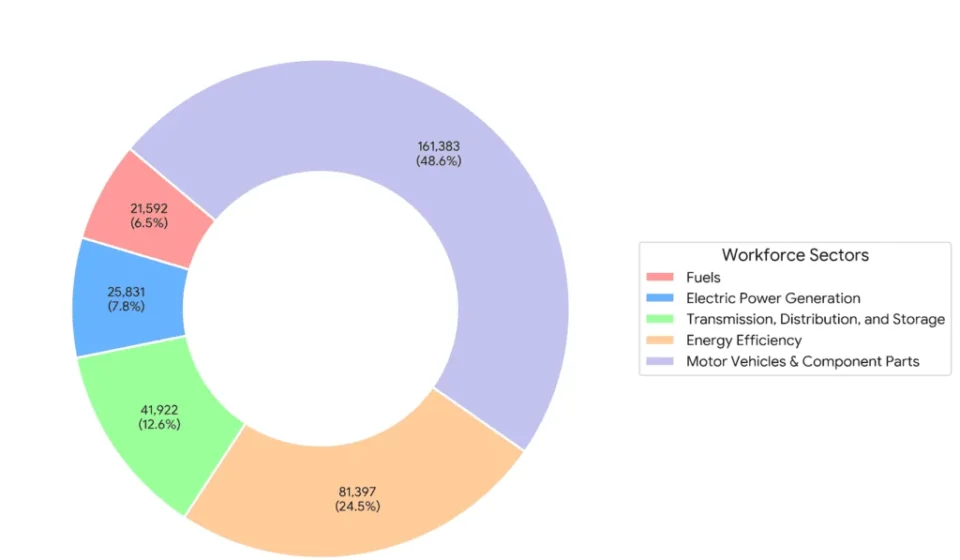
Ohio serves as a critical case study for the national workforce dilemma. According to the 2025 U.S. Energy & Employment Report, Ohio boasted over 332,000 energy workers in 2024, representing roughly 6% of the state’s total employment. However, that figure is poised to swell significantly.

The state is currently seeing a convergence of three major drivers:
- Infrastructure Investment: Ohio utilities have committed tens of billions to transmission upgrades to accommodate new, high-load industrial clients.
- Legacy Energy Strength: A massive, long-standing oil and natural gas sector continues to contribute tens of billions to the state GDP, requiring a constant stream of maintenance and engineering talent.
- Renewable Expansion: With over 3,600 megawatts of installed solar capacity and growing, the state is shifting its workforce needs toward specialized electrical and structural construction roles.
The OEWC—supported by industry giants like AEP, Duke Energy, FirstEnergy, and Siemens—is designed to ensure that these three sectors do not cannibalize each other’s talent pools, but rather grow the total number of qualified workers available to the state.
Official Perspectives: The "Big-Tent" Strategy
Missy Henriksen, executive director of the CEWD, emphasizes that there is no "silver bullet" for the talent gap. Instead, the industry must adopt a multi-pronged approach that targets different demographics simultaneously.
"We focus on national workforce solutions that can support local action and implementation," Henriksen told Factor This. "From programs that bring more awareness and access to energy careers to Veterans through our ‘Troops to Energy Jobs’ initiative, and women through ‘Hire PowHER,’ we are reaching into every corner of the labor market."
The strategy also includes high-level partnerships with national organizations such as the National Urban League and UnidosUS. These pre-apprenticeship programs are vital for connecting underserved communities with stable, high-paying roles that require everything from GEDs to advanced engineering degrees.
In the Northeast, the urgency is echoed by industry leaders. Celeste Schneider, NY Chief People Officer at National Grid, notes that the competition for skilled labor is no longer just against other utilities; it is against the entire construction and technology sector.
"The demand for a skilled energy workforce goes far beyond National Grid’s needs," Schneider said. "By collaborating across the industry, we can bring an increased scope and scale to successful training and education programs—moving away from simply a highly trained and skilled pipeline to a robust energy workforce ecosystem."

Daniella Piper, executive vice president and chief innovation officer at the New York Power Authority (NYPA), added that the transition is ultimately about reliability and equity. "Addressing the energy challenges of today depends not just on having the latest technology in place; it depends on people. By working together, we are ensuring that every region has a pipeline of diverse, skilled workers to draw from."
The Skill Gap: What Does the Future Need?
When asked which roles are currently the hardest to fill, the consensus among industry experts points to a clear hierarchy of need:
- Skilled Trades: Lineworkers, electricians, and technicians are in critical demand. These roles are the backbone of the grid but have high barriers to entry due to the length of training required.
- Engineering: Specialized electrical, mechanical, and civil engineers are required to design the complex grid systems of the future.
- Manufacturing & Construction: As the supply chain for renewable components (like transformers, solar modules, and battery storage) is brought back to the U.S., manufacturing and site-construction roles have seen a massive spike in demand.
Implications for the Future of the Grid
The implications of failing to fill these roles are dire. If the industry cannot staff the massive projects currently in the queue, we face a future of deferred maintenance, stalled decarbonization, and grid instability.
However, the "consortium model" offers a hopeful path forward. By standardizing curriculum, creating shared mobile education labs, and aligning with state policymakers, these organizations are lowering the barrier to entry for the next generation.
For the individual, the energy sector is increasingly being marketed as a "forever career." Unlike volatile tech cycles, energy infrastructure is a physical necessity that offers long-term stability, competitive compensation, and the opportunity to perform meaningful work.
As the CEWD continues to expand its footprint to more than 20 states, the message is clear: the energy transition will be built by people. The technology exists to modernize the grid, but without a massive, coordinated effort to recruit and train the next generation of workers, the hardware will remain sitting in warehouses, unable to be installed, connected, or managed.
The energy industry is, for the first time in decades, looking at the human element as its most critical infrastructure asset. The success of this 32-million-person recruitment drive will determine whether the U.S. successfully navigates the complexities of the 21st-century power grid or finds itself struggling to keep the lights on in an era of unprecedented demand.