



Navigating the Post-Transition Era: Global Light Vehicle Production Faces Structural Shifts in July 2026 Update

LONDON — The global automotive manufacturing landscape is undergoing a profound structural recalibration, characterized by a transition away from ideological electrification targets toward pragmatic, multi-energy production strategies. This shifting reality is the cornerstone of the July 2026 Global Light Vehicle (LV) Production update, published by Automotive World.
Co-authored by industry analysts Jonathan Storey and Ian Henry, the comprehensive database and analysis monitor the production health, capacity utilization, and future output trajectories of more than 50 automaker groups, 140 brands, and 1,400 individual vehicle models worldwide.
As original equipment manufacturers (OEMs) navigate a complex matrix of fluctuating consumer demand, evolving regulatory mandates, and geopolitical trade barriers, the July 2026 update provides a critical benchmark for assessing where the global industry stands, how it arrived at this juncture, and where production volumes are headed over the next model lifecycles.
Main Facts: The July 2026 Production Landscape
The July 2026 update reveals an industry operating at a delicate equilibrium. Following years of supply-side disruptions and subsequent demand-driven volatility, global light vehicle production has entered a phase of highly localized, demand-aligned output.
The core findings of the report highlight several critical realities defining current automotive manufacturing:
- Comprehensive Analytical Scope: The update tracks and forecasts production data across more than 50 global manufacturing groups, spanning over 140 active brands and 1,400 individual model lines. This granular level of tracking allows analysts to isolate localized factory disruptions from broader macroeconomic trends.
- Total Industry Volume (TIV) Alignment: Production forecasts in the July 2026 database are strictly aligned with Automotive World’s global TIV outlook. This ensures that factory output projections are grounded in realistic global retail demand rather than relying solely on the optimistic capacity targets often publicized by OEMs.
- Lifecycle-Based Forecasting: Rather than applying flat growth rates, the methodology evaluates each of the 1,400+ models based on its specific position in its product lifecycle. This approach accounts for the natural production ramp-up, peak-volume years, and eventual run-out phases of individual platforms.
- The "Credibility Gap" Factor: A central element of the July 2026 analysis is the qualitative assessment of OEM-stated production targets. In an era where many legacy automakers have deferred their transition to 100% electric lineups, the report weighs stated corporate goals against historical performance, financial viability, and supply chain readiness.
Chronology: The Path to July 2026’s Production Reality
To understand the production dynamics captured in the July 2026 update, it is essential to trace the pivotal shifts in global manufacturing strategies over the preceding six years.
[2020–2022: Semiconductor Crisis] ──► [2023–2024: EV Surge & Price Wars] ──► [2025: The Great Calibration] ──► [2026: Pragmatic Multi-Energy Production]2020–2022: The Era of Supply Constraint and "Value over Volume"
The decade began with unprecedented supply chain chaos, catalyzed by the COVID-19 pandemic and exacerbated by the global semiconductor shortage. During this period, global light vehicle production fell far short of consumer demand. OEMs responded by prioritizing high-margin vehicles—such as large SUVs, premium sedans, and luxury trucks—while idling lower-margin compact car lines. This strategy yielded record profits despite depressed volume, but it created a massive backlog of pent-up market demand.
2023–2024: Supply Recovery and the Electrification Rush
As supply chains normalized and chip supply stabilized, global production volumes rebounded sharply. Simultaneously, automakers poured billions into dedicated electric vehicle (EV) assembly lines, driven by aggressive regulatory timelines in the European Union, China, and the United States. However, by late 2024, the industry hit a bottleneck: early-adopter demand for battery electric vehicles (BEVs) began to saturate, leading to inventory build-ups, aggressive price wars—particularly in China—and underutilized EV production capacity in Western markets.
2025: The Great Calibration and the Hybrid Renaissance
Recognizing that pure-play EV demand was growing more slowly than anticipated due to high purchase costs and lagging charging infrastructure, 2025 became the year of manufacturing flexibility. Major legacy OEMs—including Toyota, Ford, General Motors, and Volkswagen—reconfigured their assembly lines. Dedicated EV platforms were delayed or scaled back, while production lines for hybrid-electric vehicles (HEVs) and plug-in hybrids (PHEVs) were rapidly expanded to meet resilient consumer demand for internal combustion engine (ICE) alternatives.
Mid-2026: The Current State of Pragmatic Production
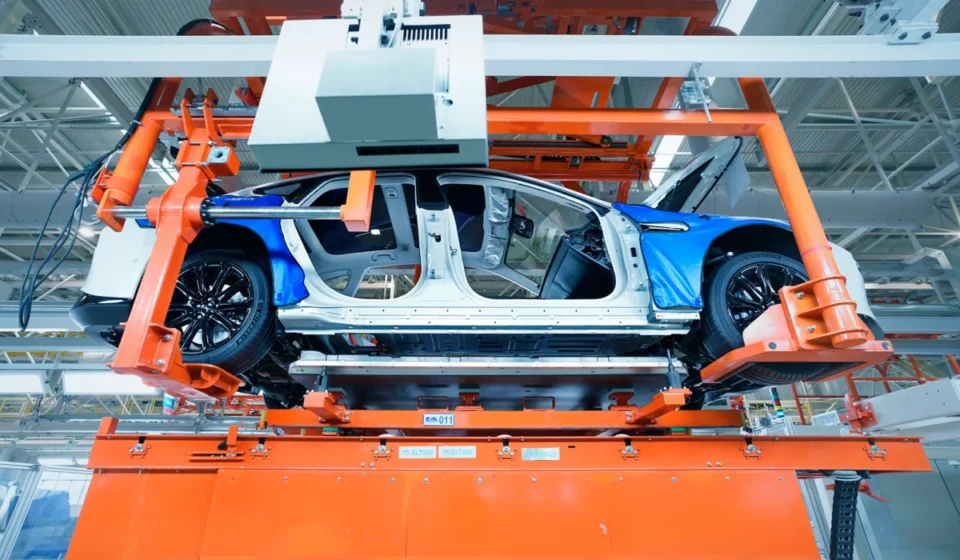
By July 2026, the automotive industry has settled into a highly pragmatic, multi-energy manufacturing cadence. Factory floors are increasingly designed for flexibility, allowing OEMs to adjust the ratio of ICE, hybrid, and BEV models on the same assembly lines in real-time response to market demand. Geopolitical dynamics have also matured, with trade barriers, tariffs, and localized sourcing mandates (such as the U.S. Inflation Reduction Act and EU tariffs on Chinese-made vehicles) dictating where and how vehicles are built.
Supporting Data and Methodology: Deconstructing the Forecast
The July 2026 update relies on a sophisticated forecasting methodology designed by Storey and Henry. The model balances quantitative metrics with qualitative industry intelligence to project output over the medium and long term.
┌────────────────────────────────────────────────────────┐
│               FORECASTING METHODOLOGY                  │
├───────────────────────────┬────────────────────────────┤
│   Quantitative Inputs     │     Qualitative Inputs     │
├───────────────────────────┼────────────────────────────┤
│ • Historical Performance  │ • Initial Market Reception │
│ • Manufacturing Capacity  │ • Internal OEM Competition │
│ • Total Industry Volume   │ • External Trade Barriers  │
│ • Model Lifecycle Stage   │ • OEM Target Credibility   │
└───────────────────────────┴────────────────────────────┘
Quantitative Metrics
The baseline of the forecast is built on historical manufacturing data and verified assembly plant capacities. Each of the 1,400+ models is analyzed through its lifecycle curve, which typically follows an ‘S-curve’ trajectory: a slow ramp-up phase lasting 3 to 6 months, a peak production plateau of 3 to 4 years, and a gradual decline over 1 to 2 years as the model approaches replacement or discontinuation.
Additionally, the model factors in platform commonality. As OEMs increasingly share structural architectures across multiple brands and segments, the success or failure of a single platform can impact the production volume of several seemingly unrelated models.
Qualitative Variables
What sets the Automotive World methodology apart is its integration of qualitative variables, which are particularly crucial for newly introduced platforms or next-generation vehicle architectures. These variables include:
- Initial Market Reception: Early order books and dealership inventory turn rates are analyzed to adjust production schedules before official OEM adjustments occur.
- OEM Target Credibility: The forecast discounts overly ambitious production targets announced by startups or legacy players if they lack the corresponding battery supply agreements, factory tooling, or retail distribution networks to support those volumes.
- Intra-Portfolio and Extra-Portfolio Competition: The analysis evaluates whether a new model will cannibalize existing production lines within the same automaker group or face intense pressure from external market rivals.
Regional Production Variations
The July 2026 data highlights a stark divergence in regional production dynamics:
| Region | Primary Production Focus (July 2026) | Key Drivers |
|---|---|---|
| China | Mass-market BEVs, PHEVs, and global export units. | Highly integrated battery supply chain; domestic price stabilization. |
| Europe | Premium BEVs, mild hybrids, and regulatory-compliant ICEs. | Strict fleet emission targets; high localized energy and labor costs. |
| North America | Large light trucks, full-size SUVs, and expanding HEV/PHEV lines. | Consumer preference for utility; stringent localization requirements under USMCA. |
| Rest of World | Cost-effective ICEs and localized entry-level electrification. | Growth in ASEAN and Indian domestic assembly; infrastructure constraints. |
Industry Perspectives: The Credibility Gap in OEM Targets
A central theme of the July 2026 update is the "credibility gap" between what automakers promise to build and what they actually possess the capacity and market demand to produce.
Historically, OEMs have announced aggressive manufacturing targets to satisfy ESG-focused investors, show compliance with regional emissions mandates, and project technological leadership. However, the data compiled by Jonathan Storey and Ian Henry suggests a significant divergence between these public declarations and actual floor-level manufacturing plans.
Industry analysts note that the rollback of electrification targets observed throughout 2025 and early 2026 has validated a more conservative forecasting approach. Many automakers that once pledged to go "all-electric by 2030" have quietly reinstated engine-assembly tooling and extended the lifecycles of their existing ICE and hybrid architectures.
The July 2026 update accounts for this by adjusting model-by-model forecasts to reflect realistic supply chain constraints, such as raw material availability for batteries, electric motor production capacities, and the slow rollout of high-power public charging networks.
Furthermore, internal competition within OEM portfolios has intensified. As legacy carmakers launch new electric models alongside established internal combustion counterparts, they face the delicate task of managing plant capacity. Over-allocating assembly lines to slow-selling EVs leads to costly plant underutilization, while under-allocating to popular hybrid models results in missed sales opportunities and lost dealer confidence. The Automotive World update serves as an independent corrective to these corporate forecasting biases.
Strategic Implications for the Global Automotive Value Chain
The production adjustments detailed in the July 2026 update carry significant implications for stakeholders across the entire automotive ecosystem, from raw material miners to Tier 1 suppliers, corporate strategists, and retail dealerships.
┌─────────────────────────────────────────────────────────────────┐
│                    VALUE CHAIN IMPLICATIONS                     │
├─────────────────────────────────────────────────────────────────┤
│ • Suppliers: Must maintain dual-track manufacturing lines       │
│ • OEMs: Focus on CapEx efficiency and platform commonality      │
│ • Geopolitics: Trade barriers force localized supply chains    │
│ • Consumers: Greater availability of hybrid and flexible options│
└─────────────────────────────────────────────────────────────────┘
For Tier 1 and Tier 2 Suppliers
Suppliers are bearing the brunt of the industry’s shift toward production flexibility. During the initial EV rush, suppliers were pressured to invest heavily in dedicated electric powertrain components, battery enclosures, and power electronics. With the subsequent resurgence of hybrids and extended lifecycles for ICE models, suppliers must now maintain dual-track manufacturing capabilities.
The July 2026 update provides suppliers with the model-level visibility required to manage their capital expenditure (CapEx), negotiate volume guarantees with OEMs, and avoid stranded assets in underperforming vehicle programs.
For Capital Allocation and OEM Profitability
The transition to flexible, multi-energy assembly lines has altered the economics of automotive manufacturing. OEMs are increasingly focusing on platform commonality—developing architectures that can accommodate pure ICE, hybrid, or fully electric powertrains with minimal changes to the structural chassis.
This approach limits the financial risk of a slow EV transition, but it requires highly sophisticated manufacturing facilities capable of managing complex assembly sequences. The data in the July update highlights which automakers are successfully executing this flexible manufacturing strategy and which are struggling with high structural costs.
Geopolitical Friction and Supply Chain Regionalization
The July 2026 update underscores the end of the hyper-globalized automotive supply chain. High tariffs on Chinese-manufactured vehicles and battery components in both North America and Europe have forced a rapid regionalization of production.
To maintain market share, Chinese OEMs are increasingly building greenfield assembly plants in Europe, Mexico, and the ASEAN region, while Western OEMs are working to source critical minerals and battery components from allied nations. The production data reflects this geographic reshuffling, showing steady growth in localized assembly hubs at the expense of traditional, centralized export models.
Looking Ahead
Ultimately, Automotive World’s July 2026 Global Light Vehicle Production update paints a picture of an industry that has emerged from years of disruptive transition with a renewed focus on manufacturing pragmatism. By aligning production forecasts with realistic demand metrics and evaluating the credibility of OEM targets, the report provides a vital roadmap for navigating an era where flexibility, localization, and balanced powertrain strategies dictate success on the global assembly line.