



The Future of Field Autonomy: Bridging the Gap Between Vehicles and Robotics

The landscape of heavy industry is undergoing a seismic shift. In remote mines, sprawling agricultural operations, and rugged construction sites, the traditional reliance on manual labor is rapidly giving way to sophisticated, autonomous systems. While autonomous vehicles (AVs) have already proven their worth by tackling hazardous environments and improving operational efficiency, industry experts believe we are merely scratching the surface of their potential.
As we look toward the next decade, the convergence of autonomous mobile platforms and specialized robotics is set to trigger a transformation in how we approach outdoor work. Mel Torrie, founder and CEO of Autonomous Solutions Inc. (ASI), is at the forefront of this evolution. As a featured speaker at the upcoming RoboBusiness 2026, Torrie plans to outline a roadmap for a unified, cooperative robotics ecosystem—a shift he believes will redefine productivity and safety in the world’s most challenging environments.
Main Facts: The New Frontier of Field Robotics
The current state of field robotics is characterized by "islands of automation." Individual vehicles operate with high levels of autonomy, but they often function in silos, limited by their specific hardware constraints and narrow operational parameters.
The next generation of field technology, however, will be defined by "cooperative autonomy." This concept moves beyond the vehicle as a standalone entity. Instead, it views the vehicle as a hub within a larger, interconnected ecosystem. According to ASI, the future requires that developers design AVs not just to navigate, but to integrate seamlessly with a fleet of secondary, task-specific robots.
This is not merely an incremental improvement; it is a fundamental architectural change. By creating platforms that can "talk" to one another, share sensor data, and coordinate task distribution in real-time, operators can achieve a level of predictable output that was previously impossible.
A Chronological Evolution of Field Autonomy
To understand where field robotics is headed, one must look at where it began. The trajectory of this industry is a testament to the power of persistent innovation.
The Foundation (2000–2010)
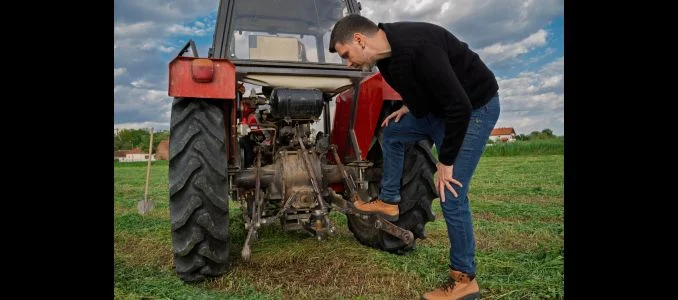
At the turn of the millennium, field automation was in its infancy. Mel Torrie, drawing on his upbringing on a farm in Alberta, Canada—where the desire to automate manual tractor operations served as a primary catalyst for his career—founded ASI in 2000. During this decade, the focus was on proving that rugged, heavy machinery could be controlled remotely or autonomously. The early challenges were primarily hardware-centric: how to make electronics survive the extreme vibrations, dust, and temperature fluctuations of a mining or construction site.
The Integration Era (2010–2020)
As hardware reliability improved, the industry shifted toward vendor-agnostic systems. ASI and other pioneers began developing software stacks capable of being retrofitted onto existing equipment from various original equipment manufacturers (OEMs). This period saw the rise of sophisticated GPS-denied navigation and the first widespread adoption of autonomous haulage systems in the mining sector.

The Ecosystem Shift (2020–Present)
We are currently in the midst of a transition toward total system integration. Modern deployments now focus on fleet management, where human supervisors monitor multiple autonomous units from a centralized control room. The data generated during this period has become the bedrock for the next phase of development: machine-to-machine (M2M) collaboration.
Supporting Data: Why Ecosystems Outperform Individuals
The economic and safety arguments for this shift are compelling. Data from recent deployments indicates that when autonomous vehicles are supported by a collaborative robotics ecosystem, downtime is reduced by an average of 25–30%.
The "symbiosis" that Torrie describes involves two distinct layers:
- The Transport Layer (AVs): These are the high-capacity, heavy-duty platforms that handle the logistics of moving materials, tools, or personnel across vast, uneven terrain.
- The Task Layer (Robotics): These are the intelligent, specialized robots—often smaller, more agile units—that perform the granular work, such as maintenance, environmental sampling, precision inspection, or site mapping.
When these layers are decoupled yet integrated, the system’s utility multiplies. For example, in a mining operation, an autonomous haul truck can act as a mobile "mother ship" for a fleet of inspection drones. The truck provides the battery power and the communication relay, while the drones perform real-time structural analysis of the pit walls. This configuration minimizes the need for human personnel to enter high-risk zones, drastically lowering insurance premiums and workplace injury rates.
Official Perspectives: Insights from Mel Torrie
Mel Torrie’s upcoming session at RoboBusiness 2026, titled "Designing the Robotics Ecosystem for Outdoor Autonomy," is expected to be a watershed moment for the conference. Torrie, who holds an MS in electrical engineering from Utah State University, has spent 28 years researching the intersection of machine intelligence and heavy industry.
In his view, the biggest barrier to progress is not technology—it is architecture. "If you design your systems in a vacuum, you are essentially building a dead-end," Torrie noted in recent discussions. His message to developers is clear: build for interoperability.
Torrie argues that the "vendor-agnostic" approach he has championed at ASI is the only sustainable path forward. By creating software architectures that can communicate across different hardware brands, companies avoid the "sunk cost" of proprietary lock-in. This allows for a modular, "plug-and-play" future where a company can deploy a state-of-the-art sensor suite on a five-year-old tractor or a brand-new autonomous loader with equal ease.
Implications: A Safer, More Productive Future
The implications of this shift are profound, extending far beyond simple efficiency gains.

1. Re-defining Safety
In the most dangerous work environments—such as deep-crust mining or post-disaster cleanup—the primary goal of technology is the complete removal of the human from the immediate danger zone. The ecosystem approach allows for "remote presence" that is far more granular than previous generations of teleoperation. By having a coordinated fleet of robots, operators can gain a 360-degree, multi-perspective view of the site, allowing for proactive, rather than reactive, safety management.
2. The Economic Multiplier
For industries like agriculture and construction, where profit margins are often squeezed by fluctuating commodity prices and labor shortages, the ecosystem model offers a path to price stability. Predictable productivity is the holy grail for project managers. When a fleet of autonomous machines operates as a single, coordinated organism, the variability introduced by human error and fatigue is stripped away, leading to consistent, 24/7 output.
3. Sustainability and Resource Management
Autonomous systems are inherently more fuel-efficient than their human-operated counterparts. They follow optimal paths, manage engine RPMs more precisely, and reduce unnecessary idling. As companies face increasing pressure to meet ESG (Environmental, Social, and Governance) targets, the ability to demonstrate a reduction in carbon footprint through autonomous fleet management becomes a significant competitive advantage.
Join the Conversation at RoboBusiness 2026
As the industry stands on the precipice of this next evolution, RoboBusiness 2026 serves as the vital gathering place for the architects of this future. The event, which is celebrating its 20th anniversary, provides a unique forum for developers, engineers, and executive leadership to align on the technical standards that will govern the next decade of robotics.
Beyond the technical sessions, the conference emphasizes the importance of human connection. The "Mix and Mingle" reception on the opening day remains a cornerstone of the event, offering attendees the chance to share lessons learned from the field—the successes, the failures, and the unexpected challenges of outdoor deployment.
How to Engage
Registration for RoboBusiness 2026 is currently open. Attendees can secure full conference passes, which include access to all keynotes, technical deep-dives, and networking opportunities. Recognizing the importance of academia and collaborative research, the event also offers significant discounts for university groups, trade associations, and corporate teams.
Whether you are a developer working on the next generation of sensor fusion, an OEM looking to integrate autonomy into your existing product line, or an end-user in the agriculture or logistics sectors, the insights shared by leaders like Mel Torrie will be essential for navigating the complex, shifting landscape of modern industry.
The future of field robotics is not about the individual machine; it is about the symphony of intelligence that we create when we bring those machines together. To be part of this dialogue, visit the official RoboBusiness registration portal and prepare for a decade of unprecedented progress.


