

The Human-Centric Frontier: How the University of Michigan is Redefining Manufacturing for the Industry 5.0 Era

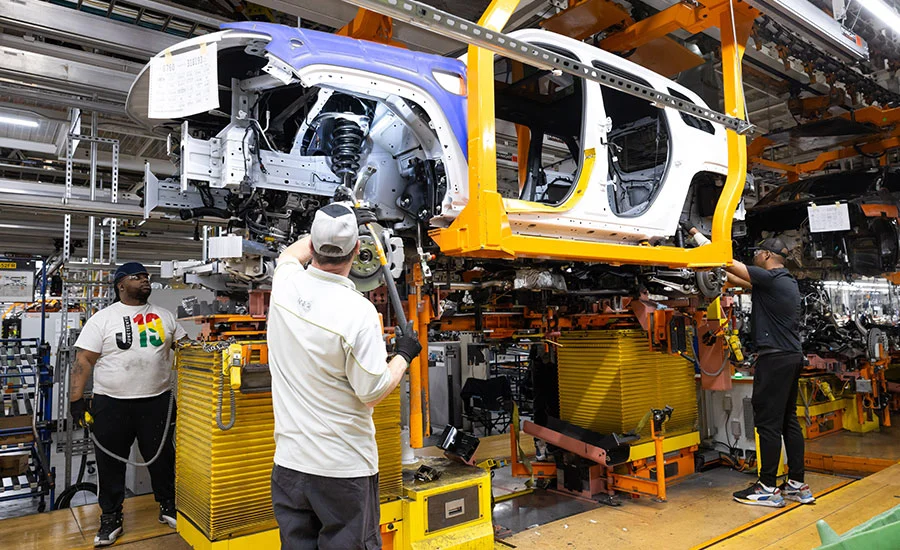
As the global manufacturing landscape undergoes a seismic shift, the traditional focus on pure automation is being challenged by a more nuanced, holistic philosophy. The era of Industry 5.0 is no longer a distant vision; it is a current reality that demands a fundamental transformation in how academic institutions research, teach, and interact with the industrial sector. At the heart of this transition is the University of Michigan’s newly established Advanced Manufacturing Institute (UMAMI), a powerhouse designed to bridge the chasm between theoretical innovation and practical, factory-floor deployment.
The Paradigm Shift: From Industry 4.0 to 5.0
For the past decade, Industry 4.0 has been the north star for the manufacturing sector. Defined by the rapid digitalization of production, the proliferation of the Industrial Internet of Things (IIoT), and the relentless pursuit of hyper-efficiency through automation, it successfully modernized supply chains and production lines. However, as manufacturers faced mounting pressures from labor shortages, environmental crises, and fragile global supply chains, the limitations of this "efficiency-first" model became increasingly apparent.
Dr. Chinedum Okwudire, a professor of mechanical engineering and the visionary director of UMAMI, argues that Industry 5.0 is not a replacement for its predecessor, but a critical "correction."
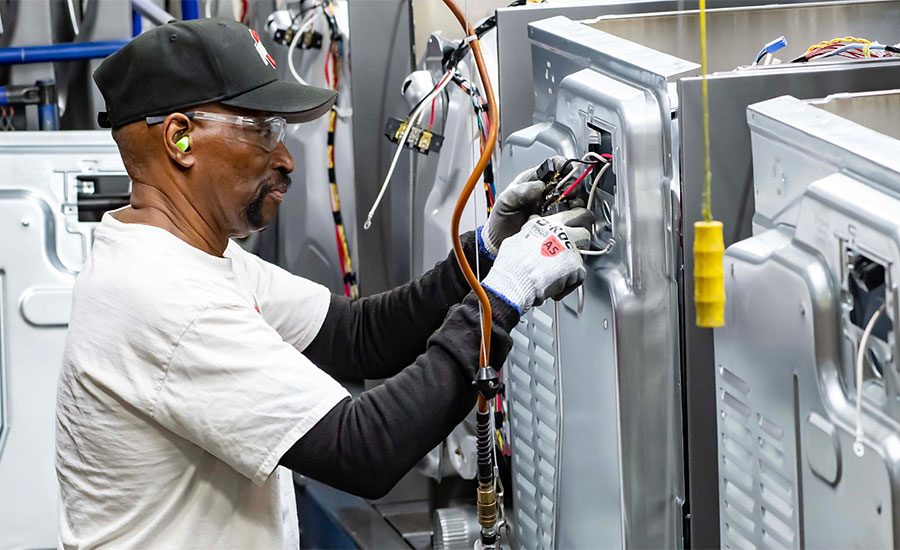
"Industry 5.0 is best understood as a necessary evolution," says Dr. Okwudire. "While Industry 4.0 prioritized digitalization and automation, it was largely silent on the human, sustainability, and resilience dimensions of manufacturing. We are now entering a paradigm where advanced technologies like AI and robotics are not intended to replace the worker, but to augment human expertise. The goal is to build systems that are technologically advanced, yet inherently human-centered and environmentally responsible."
Bridging the "Valley of Death"
One of the most persistent hurdles in manufacturing engineering is the "valley of death"—the treacherous gap between a successful lab experiment and a profitable, scalable industrial application. Many promising technologies fail to make the transition, not because they lack technical merit, but because they struggle to navigate the complex, high-stakes environment of a factory floor where cost, uptime, and reliability are non-negotiable.
UMAMI was conceived specifically to address this failure of technology transfer. By fostering a multidisciplinary environment, the institute breaks down the silos that often separate academic research from industrial reality.
"In manufacturing, this gap is particularly pronounced," notes Dr. Okwudire. "Solutions must perform reliably within complex, high-volume environments. By tightly coupling our research with real-world manufacturing needs, we are creating a feedback loop that ensures our innovations are not just theoretical, but immediately applicable and economically viable."
A Multidisciplinary Ecosystem
The complexity of modern manufacturing requires more than just mechanical engineering prowess. To truly tackle the challenges of sustainability and workforce integration, UMAMI has intentionally pulled expertise from across the University of Michigan’s vast academic ecosystem. The institute integrates:
- The College of Engineering: Providing the technical bedrock of robotics, automation, and material science.
- The Ross School of Business: Offering critical insights into operational strategy, supply chain management, and the economics of technology adoption.
- The Institute for Social Research: Analyzing the behavioral aspects of human-robot collaboration and the sociological impact of automation on the workforce.
- The School for Environment and Sustainability: Ensuring that new production methods prioritize carbon reduction, energy efficiency, and circularity.
This cross-pollination ensures that when a UMAMI researcher proposes a new automated process, the team is already evaluating its environmental footprint, its impact on the human operator’s job satisfaction, and its long-term financial viability for the company.
Chronology of Innovation: A New Educational Model
The University of Michigan’s commitment to this new era of manufacturing is best illustrated by its radical restructuring of its educational programs. Recognizing that traditional Ph.D. paths often lean heavily toward abstract discovery, UMAMI has introduced a pioneering Doctor of Engineering (DEng) degree.
The DEng Distinction
Unlike the traditional Ph.D., which focuses on generating new knowledge for publication, the DEng is an outcome-driven degree. Students in this program are measured by their ability to deliver industrial results. "Success in our DEng program isn’t about how many papers you publish," Dr. Okwudire explains. "It’s measured by return on investment, patents, successful prototypes, and actual deployment within the sponsoring company’s production line."
Supporting Small- and Medium-Sized Enterprises (SMEs)
A critical, often overlooked pillar of the manufacturing economy is the SME sector. These companies frequently lack the internal R&D budgets to keep pace with rapid technological shifts. UMAMI’s manufacturing work-study program serves as an R&D department-for-hire, allowing undergraduate and master’s students to work directly on projects for these firms. This creates a dual benefit: the company gains access to cutting-edge talent and innovation, while the students graduate with a robust portfolio of real-world problem-solving experience.
Infrastructure and Investment: Building the Future
In mid-2026, the University of Michigan demonstrated its commitment to this mission with a $4 million investment into its manufacturing laboratory facilities. The upgrades were not merely cosmetic; they were functional. The new, open-concept lab design includes state-of-the-art additive manufacturing equipment and modular spaces that reflect the collaborative, team-based nature of modern engineering.
"Some of our older spaces were designed for the solo researcher," says Dr. Okwudire. "But today’s manufacturing faculty and students are deeply into teamwork. This new setup allows us to foster a culture of collaboration, where a materials scientist can walk ten feet to speak with a software engineer about a process failure, mirroring the cross-functional reality of a modern factory."
Recognition of Excellence
The success of UMAMI’s approach has not gone unnoticed. In 2026, the American Society of Mechanical Engineers (ASME) awarded Dr. Okwudire and his colleagues the prestigious Donald N. Zwiep Innovation in Education Award. The citation praised the team for "transforming manufacturing education through multi-expert instruction, project-based learning, additive manufacturing, and digitally enabled industry-integrated systems."
This award serves as an official endorsement of the institute’s belief that modern manufacturing is not a solitary endeavor, but a multidisciplinary, global, and highly iterative process.
Implications for the Future of Manufacturing
The establishment of UMAMI and its embrace of Industry 5.0 principles carry significant implications for the future of the global economy:
- Resilience through Adaptability: By prioritizing human-centered design, manufacturers can create production lines that are more adaptable to shocks—whether they be supply chain disruptions or sudden shifts in consumer demand. A machine that is easily repurposed by a skilled operator is far more valuable than a rigid, highly automated line that requires months of reprogramming.
- Sustainability as a Competitive Edge: As environmental regulations tighten, the "green" production methods championed by UMAMI will shift from a moral choice to a survival requirement. Companies that integrate sustainability into the design of their manufacturing systems today will be the ones that thrive tomorrow.
- The New Workforce: The "skills gap" is a common refrain in manufacturing, but UMAMI is addressing it at the source. By training students in multi-expert, project-based environments, they are producing a workforce that is comfortable with ambiguity, capable of working alongside AI, and deeply attuned to the business outcomes of their technical work.
Conclusion
As the manufacturing sector stands at the precipice of a new era, the University of Michigan’s Advanced Manufacturing Institute serves as both a laboratory and a lighthouse. By rejecting the binary choice between "human" and "machine" and instead embracing an integrated, human-centric future, UMAMI is ensuring that the innovations of tomorrow are rooted in the realities of today.
For manufacturers, the message is clear: technology alone is no longer a sufficient strategy for success. To compete in an increasingly volatile global market, companies must embrace a broader vision—one that values the agility of human expertise, the necessity of sustainable practices, and the efficiency of advanced automation. As Dr. Okwudire concludes, "We are preparing students for a new era—one that is digital, interconnected, and rapidly evolving. They will be the ones to lead this change, not just by inventing new tools, but by fundamentally changing how we make things, why we make them, and the impact they have on our society."