




Europe’s Trucking Titans Plead for EU Relief as Chinese Rivals Circle the Market

By Stewart Burnett
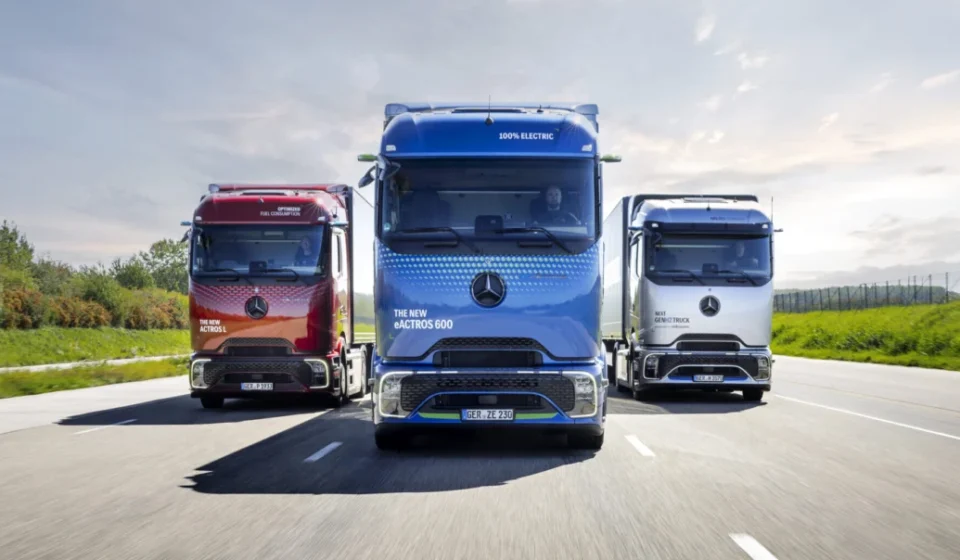
The heavy-duty transport backbone of the European Union is facing an existential crisis. At the recent IAA transportation showcase, the chief executives of Europe’s seven dominant commercial vehicle manufacturers united in a high-stakes appeal to Brussels: delay enforcement of the 2030 carbon dioxide emissions targets by three years, or risk plunging the continent’s industrial base into multibillion-euro ruin.
Representing the collective might of DAF, Daimler Truck, Ford Otosan, Iveco, MAN, Scania, and Volvo Group, these leaders argue that while zero-emission commercial vehicles (ZEVs) are technically ready for production, the surrounding infrastructural and economic ecosystems are lagging disastrously behind. Meanwhile, hungry international competitors—most notably from China—are aggressively stepping into the vacuum, leveraging domestic scale, advanced battery technology, and localized assembly strategies to outpace Europe’s legacy giants on their home turf.
1. Main Facts: The 2030 Crunch and the Regulatory Standoff
At the heart of the controversy is a widening chasm between regulatory ambition and commercial reality. Current European Union regulations mandate that heavy-duty vehicle manufacturers slash new fleet emissions by 43% by 2030, compared to a 2025 baseline. This threshold ratchets upward steeply to a 64% reduction by 2035, culminating in a near-total decarbonization requirement of 90% by 2040. Failure to meet these milestones will trigger punishing financial penalties.
Yet, real-world adoption rates remain stuck in the low single digits. According to data compiled by the European Automobile Manufacturers’ Association (ACEA), zero-emission vehicles accounted for a paltry 2.4% of new heavy-duty vehicle registrations across the continent. With fewer than four years remaining until the 2030 deadline, industry insiders warn that organic market growth will fall catastrophically short of the European Commission’s benchmarks.
Compounding the problem is a severe lack of uniformity across member states. While wealthier Western European nations show nascent pockets of adoption, markets like Poland, Spain, and Italy languish well below 1%. Even in primary economic powerhouses such as Germany and France, ZEV heavy-duty registrations crawl at just 4.3% and 2.4%, respectively.
Europe’s legacy manufacturers find themselves caught in a regulatory pincer. They have spent billions of euros researching and developing cutting-edge battery-electric and hydrogen-powered trucks, only to find that transport operators are refusing to buy them in sufficient quantities. Without a reliable public recharging network, competitive energy costs, and supportive public policies, green trucks simply do not make commercial sense for logistics firms operating on razor-thin margins.
2. Chronology of Events: From Concessions to the IAA Showdown
The path to the current crisis has been marked by mounting friction between Brussels regulators and automotive executives.
- Early 2024–2025: As the initial 2025 emissions-monitoring milestones approached, commercial vehicle makers intensified lobbying efforts, warning that the rigid trajectory of the Green Deal’s heavy-duty vehicle standards ignored severe infrastructural deficits.
- Early 2026: Acknowledging the industry’s early anxieties, the European Commission introduced targeted flexibility measures, granting manufacturers temporary relief in calculating emission credits for the 2029-to-2029 window. However, Brussels steadfastly refused to alter the legally binding 2030 targets or waive the threat of financial penalties, viewing them as non-negotiable climate imperatives.
- September 14, 2026 (IAA Transport Show): The latent tensions boiled over at the International Automobil-Ausstellung (IAA). In a historic joint appearance, the CEOs of DAF, Daimler Truck, Ford Otosan, Iveco, MAN, Scania, and Volvo Group formally petitioned the EU to push back the 2030 compliance timeline by three full years.
- Mid-September 2026: Alongside the joint appeal, Chinese manufacturing giant BYD used the IAA stage to unveil an extensive new lineup of zero-emission heavy trucks tailored for Europe. The contrast between Europe’s defensive posture and China’s aggressive market penetration became the defining narrative of the conference.
3. Supporting Data: The Anatomy of a Multi-Billion Euro Penalty
The panic gripping Europe’s boardrooms is rooted in hard math. Under the EU framework, heavy-duty vehicle makers face draconian fines of €4,250 (approximately $4,935 USD) per gram of CO2 emitted over the regulatory limit, multiplied by every vehicle sold.
ACEA modeling indicates that if the industry misses the 2030 target by a mere 3%, collective financial penalties will skyrocket to roughly €2.2 billion. For individual manufacturers already absorbing the massive capital expenditures of electrification, such fines could wipe out annual profitability, stymie future research, and trigger widespread layoffs.
The Infrastructure Deficit
The root cause of the shortfall is not a lack of product availability, but a profound absence of enabling infrastructure. Industry data underscores a staggering deficit:
- Public Charging: Fewer than 2,000 public charging stations capable of servicing heavy-duty trucks are currently operational across the entire European Union. To keep pace with the 2030 targets, the continent requires at least 700 new heavy-duty charging installations every month.
- Hydrogen Refueling: Hydrogen infrastructure is practically nonexistent for long-haul freight, with fewer than a dozen operational hydrogen refueling stations across Europe—many of which suffer from chronic reliability and operational constraints.
- Grid Bottlenecks: Securing high-capacity grid connections for new commercial charging depots frequently takes local energy authorities several years to complete, rendering private depot electrification a protracted bureaucratic nightmare.
- Regulatory Disincentives: Compounding these physical barriers, CO2-based road tolls—which incentivize green fleets by penalizing diesel—are currently implemented in only four EU member states. Furthermore, legacy EU weight and dimension regulations penalize electric trucks, which carry heavy battery payloads, reducing their freight-carrying efficiency compared to diesel alternatives.
4. Official Responses: The Battle of Perspectives
The divergence in viewpoint between the European manufacturing leadership and regulatory authorities highlights a fundamental disagreement over where responsibility lies for the green transition.
Industry Leadership Speaks Out
Karin Rädstrom, Chief Executive of Daimler Truck and chair of ACEA’s Commercial Vehicle Board, emerged as the primary spokesperson for the collective industry appeal at IAA.
"The investments have been made, and a wide range of CO2-free vehicles is available today," Rädstrom stated bluntly during the conference. "But making them commercially viable at scale also depends on the wider ecosystem that is clearly delayed and not yet developing fast enough. This means two things: doubling down on the enabling conditions fast, and forttemberg the EU to delay the 2030 compliance timeline by three years, to prevent penalties for manufacturers."
ACEA maintains that penalizing truckmakers for failing to sell zero-emission vehicles is akin to punishing car dealerships for low electric vehicle uptake when there are no charging stations in the country. The industry is essentially asking Brussels to reframe non-compliance as an ecosystem failure, rather than a failure of industrial engineering. Because electricity grids, highway tolls, and public charging networks sit entirely outside the corporate control of truck manufacturers, industry leaders argue it is profoundly unjust to levy multibillion-euro fines for societal bottlenecks.
The Regulatory Stance
Thus far, the European Commission has remained cautious. While Brussels demonstrated a willingness to compromise by modifying emission-credit calculations earlier in 2026, regulators are wary of appearing weak on climate goals. Environmental NGOs and certain political factions within the EU argue that granting a three-year delay would reward foot-dragging and diminish the urgency needed to meet the bloc’s net-zero ambitions. For regulators, maintaining the 2030 deadline is seen as vital pressure to force member states and energy providers to accelerate grid investments.
5. Broader Implications: The Rise of the Chinese Challenger
While European executives spend their time lobbying Brussels and fretting over regulatory fines, an external threat is rapidly materializing. The most striking takeaway from the IAA 2026 exhibition was not just Europe’s defensiveness, but China’s offensive capability.
Chinese commercial vehicle makers are arriving on European shores with structural advantages that domestic firms simply cannot match. Backed by a massive home market where electric trucks already command roughly 30% of domestic sales, Chinese companies have achieved economies of scale in battery production, electric motor manufacturing, and charging technology that leave European suppliers behind on cost and efficiency.
Rather than being deterred by European trade barriers or potential tariffs, Chinese manufacturers are executing sophisticated localization strategies. Companies are establishing direct assembly operations within Europe to bypass import tariffs, while simultaneously treating Europe’s chronic charging shortfall not as an obstacle, but as a business opportunity.
A prime example is BYD, which dominated headlines at IAA 2026 by unveiling its most comprehensive zero-emission heavy-truck portfolio to date. The showcase included a flagship long-haul tractor boasting a 600-kilometer operational range and ultra-fast 1.5-megawatt charging capabilities. More importantly, BYD announced intentions to manufacture these heavy vehicles locally within Europe and deploy proprietary regional charging networks designed specifically to support them.
A Critical Crossroads
Europe’s commercial vehicle sector stands at a historical crossroads. If the European Union refuses to grant the requested three-year regulatory reprieve, European truckmakers face a devastating financial blow that could weaken their competitive standing globally. Conversely, if Brussels grants the delay without simultaneously accelerating grid modernization and charging infrastructure, the continent risks falling further behind nimble, well-capitalized international competitors.
The commercial vehicle lobby’s message to Brussels is clear: the green transition cannot be legislated into existence through punitive fines alone. Unless regulators align the broader economic ecosystem—infrastructure, energy costs, and grid capacity—with their climate ambitions, Europe risks protecting its environment on paper while surrendering its legendary automotive manufacturing base to global rivals.