






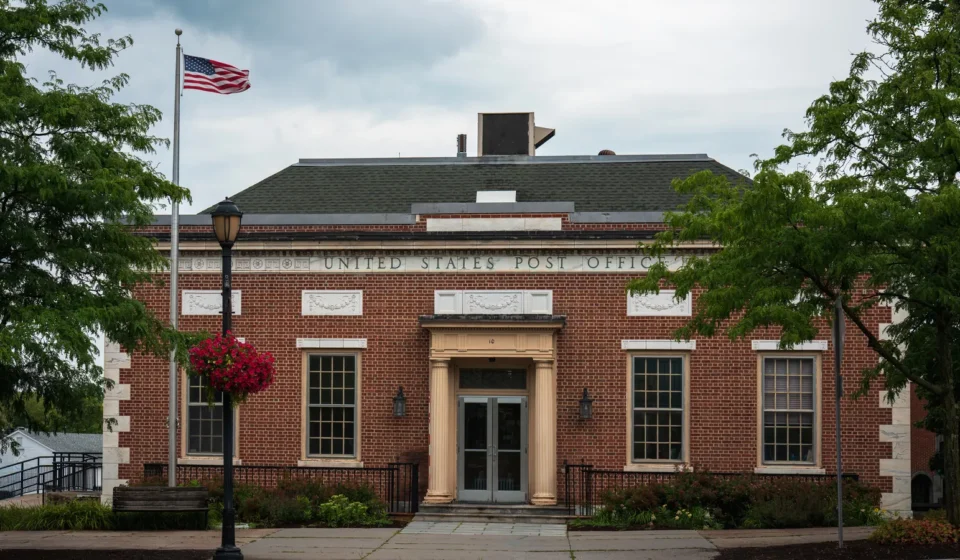
Postal Service Overhaul Sparks Rural-Urban Divide: USPS Inspector General Report Highlights Mixed Results of Regional Transportation Optimization

WASHINGTON — A sweeping logistical overhaul currently underway at the United States Postal Service (USPS) has yielded deeply polarized results, creating a pronounced divide in service reliability between urban centers and rural communities. According to a recently released report from the USPS Office of Inspector General (OIG), the agency’s ongoing efforts to streamline its sprawling national network have successfully trimmed operational costs, but they have done so at the expense of consistent, equitable delivery times for millions of Americans living outside major metropolitan areas.
The findings, detailed in a September 8 report from the internal watchdog, evaluate the mechanics and early performance metrics of the Regional Transportation Optimization (RTO) initiative. While the program has generated hundreds of millions of dollars in transportation savings, it has concurrently introduced structural delays for remote and rural customers. These operational shifts threaten to erode public trust in one of the nation’s oldest and most essential civic institutions just as leadership attempts to steady the agency’s precarious financial footing.
Main Facts
The Regional Transportation Optimization initiative is a core component of the Postal Service’s broader modernization strategy, designed to fundamentally rethink how mail and packages move across the country.
- The Core Strategy: RTO seeks to consolidate package drop-off and pickup activities at post offices located more than 50 miles away from regional processing and distribution centers (RPDCs).
- The Transit Trade-Off: By trimming the frequency of dedicated trips to and from rural and remote post offices, the Postal Service reduces fuel and labor overhead. However, this intentional reduction in trip frequency adds at least one extra transit day for parcels originating from these affected locations.
- Geographic Scale: The initiative is slated to ultimately impact 72% of all ZIP codes across the contiguous United States. This footprint encompasses roughly 48% of the nation’s population and accounts for 29% of its outgoing package volume. As of May, the Postal Service had successfully implemented RTO in approximately 64% of those targeted ZIP codes.
- The Urban-Rural Divide: Urban customers living in close proximity to regional processing hubs are enjoying faster, more reliable service. Conversely, rural customers bear the brunt of the logistical slowdowns.
- Product Disparities: Following the adjustment of service standards in 2025 to align with the RTO rollout, performance metrics diverged significantly by product category. On-time delivery rates for USPS Ground Advantage packages originating from RTO ZIP codes managed to mirror or slightly exceed those from non-RTO areas. However, Priority Mail packages originating from RTO-affected ZIP codes fell noticeably further behind their non-affected counterparts.
Chronology: The Evolution of the "Delivering for America" Plan
To understand how the Postal Service arrived at its current operational juncture, it is necessary to examine the timeline of strategic reforms that began nearly half a decade ago.
2021: Launch of the 10-Year Vision
The roots of the RTO initiative trace back to the rollout of the "Delivering for America" (DFA) plan, an ambitious 10-year enterprise designed to pull the Postal Service out of a multi-billion-dollar financial hole and modernize its aging infrastructure. From its inception, leadership framed the plan as a necessary modernization to convert an outdated operating model into a financially self-sustaining enterprise capable of competing with private-sector logistics giants like FedEx and UPS.
October 2024 – April 2026: The RTO Implementation Window
During this window, the OIG conducted its detailed performance analysis. Throughout this period, on-time delivery rates for key commercial services—specifically those meant to compete directly with private couriers, such as Priority Mail and Ground Advantage—showed clear disparities. Packages originating from ZIP codes targeted by the RTO consolidation effort suffered from lower average on-time delivery rates compared to ZIP codes untouched by the initiative.
2025: Service Standard Adjustments
Recognizing the structural friction introduced by the consolidation effort, the Postal Service updated its official service standards in 2025 to better reflect the realities of the new transit timelines. This adjustment created the bifurcated product performance noted in the OIG report, where Ground Advantage stabilized while Priority Mail continued to struggle in remote regions.
Present Day: Leadership Pivot and Evaluation
Under the leadership of Postmaster General and CEO David Steiner, who assumed the agency’s helm last year, the Postal Service is actively evaluating the locations most severely impacted by the network overhaul. Management is currently exploring targeted adjustments to mitigate rural delivery lags while attempting to preserve the cost-saving gains achieved thus far.
Supporting Data and Regional Impacts
The OIG report provides a granular look at the statistical realities and localized disruptions born from the RTO initiative. While the specific numerical percentages for national on-time delivery declines were redacted in the public version of the document, the qualitative and regional findings paint a vivid picture of systemic strain.
Financial Savings vs. Financial Health
The Postal Service has successfully slashed overall transportation expenses by approximately $755 million since the launch of the DFA plan. Yet, the OIG report underscores a troubling disconnect: these operational savings have not translated into a healthier overall financial position for the agency. Instead, structural deficits persist alongside measurable declines in service performance.
Statewide Vulnerabilities
Certain states face total exposure to the RTO initiative due to their geographic layouts and population distributions. According to the report, 100% of the ZIP codes in Louisiana, South Dakota, Vermont, West Virginia, and Wyoming are slated to be subjected to RTO protocols, placing them at continuous risk for extended transit times.
The report highlights Vermont as a prime example of the disproportionate friction caused by blanket network policies:
"For example, First-Class Mail service standards in Vermont were extended from two to four days to send mail from one corner of the state to another, despite the state only being 157 miles long and 90 miles wide," the OIG noted.
This tripling or quadrupling of intra-state transit times for a compact state illustrates how centralized network logic can clash awkwardly with regional realities.
Official Responses and Management Perspective
Faced with mounting criticism from internal watchdogs and external stakeholders alike, USPS management has responded with a mixture of defense and acknowledgment.
In formal responses accompanying the OIG report, Postal Service executives generally agreed with the watchdog’s findings. Leadership acknowledged that the aggressive consolidation timeline has introduced localized friction and service disparities that require active remediation.
To address these concerns, the agency has initiated internal evaluations focused specifically on the communities and regional corridors most heavily impacted by the network overhaul. The goal of these ongoing reviews is to identify tactical opportunities to restore delivery reliability without entirely dismantling the centralized transportation framework that has generated the $755 million in cost-cutting savings.
Furthermore, Postmaster General David Steiner has made improving on-time delivery reliability and repairing the agency’s long-term financial outlook top priorities since taking office. Steiner’s administration is under intense pressure from lawmakers, commercial shippers, and everyday consumers to prove that the Delivering for America plan can achieve fiscal discipline without sacrificing the universal service obligation that underpins the American postal system.
Implications for the Postal Service Brand and Future Operations
The OIG report serves as a warning flare regarding the long-term strategic risks of the RTO initiative. Beyond the immediate logistical hurdles faced by rural customers, the report warns that persistent service inequalities could permanently damage the Postal Service’s market position and public standing.
Brand Reputation and Customer Churn
In the competitive parcel delivery market, reliability is paramount. Businesses and individual consumers have myriad options—ranging from regional couriers to established giants like UPS, FedEx, and Amazon. The OIG explicitly cautions that:
"Because of this disparity, the Postal Service risks losing customers who perceive the service as inequitable, which could harm its brand and reputation, and adversely affect revenue."
If rural customers and businesses conclude that the Postal Service can no longer provide dependable, timely shipping, they may migrate permanently to private alternatives. Because rural routes often represent steady, captive volume, any loss of this market share could undercut the very revenue streams the agency needs to achieve financial solvency.
The Universal Service Obligation Dilemma
At its core, the tension surrounding the RTO initiative brings a fundamental policy debate back to the forefront: Can a government-mandated universal service provider successfully operate under strict corporate profitability metrics?
The Postal Service is legally bound to serve every address in the United States, regardless of how remote or economically inefficient delivery to that address might be. Critics of the current leadership’s strategy argue that network overhauls prioritizing cost-cutting over delivery speed inevitably penalize the rural populations who rely most heavily on the mail for prescriptions, legal documents, and commerce.
As the Postal Service continues to roll out the remaining phases of the Regional Transportation Optimization initiative across the final 36% of its targeted ZIP codes, executive leadership will walk a tightrope. They must find a way to honor the statutory mandate of universal, equitable service while satisfying congressional and financial demands to close the agency’s persistent budget gaps. Whether operational tweaks can bridge the widening rural-urban delivery divide remains the defining question for the future of American mail delivery.