



Hydraulic systems have long served as the heavy-duty muscle behind global manufacturing, plastics processing, and heavy equipment operations. Renowned for their unparalleled power density and rugged reliability, these systems have historically prioritized performance and safety margins above all else. However, as the global industrial sector faces mounting pressure to meet aggressive sustainability targets and reduce operational overhead, the narrative surrounding hydraulics is shifting.
Today, the focus is no longer just on how much force a system can exert, but how efficiently it can do so. By integrating advanced control strategies, digital twins, and intelligent energy management, modern hydraulics are shedding their reputation as "energy-hungry" legacy components and emerging as highly efficient, data-driven assets.
The Core Challenge: Efficiency in Energy Transformation
At its simplest level, a hydraulic system is an energy converter: it takes electrical energy, converts it into mechanical energy via a motor, transforms it into fluid power through a pump, and finally converts it back into mechanical work at the actuator.
In this multi-stage journey, energy losses are inevitable, often manifesting as heat or internal leakage. Traditionally, industrial designers utilized "design margins"—essentially oversizing components—to ensure that systems remained stable and responsive even under extreme or unpredictable loads. While this practice guaranteed reliability, it often led to systems running at sub-optimal capacities, resulting in significant wasted energy. The current challenge for engineers is to maintain that legendary robustness while narrowing the gap between required power and actual energy consumption.
Chronology: From Constant Speed to AI-Driven Precision
To understand the current state of hydraulics, one must look at the evolution of control technologies over the last several decades:
- The Era of Constant Speed (1970s–1990s): Systems were largely defined by fixed-displacement pumps and constant-speed motors. These systems were simple but inherently inefficient, as they often bypassed excess flow over relief valves, generating heat and wasting energy.
- The Rise of Load-Sensing (2000s): The industry introduced load-sensing and pressure-compensated systems. These allowed the pump to adapt to the specific pressure and flow requirements of the task, marking a significant leap in energy management.
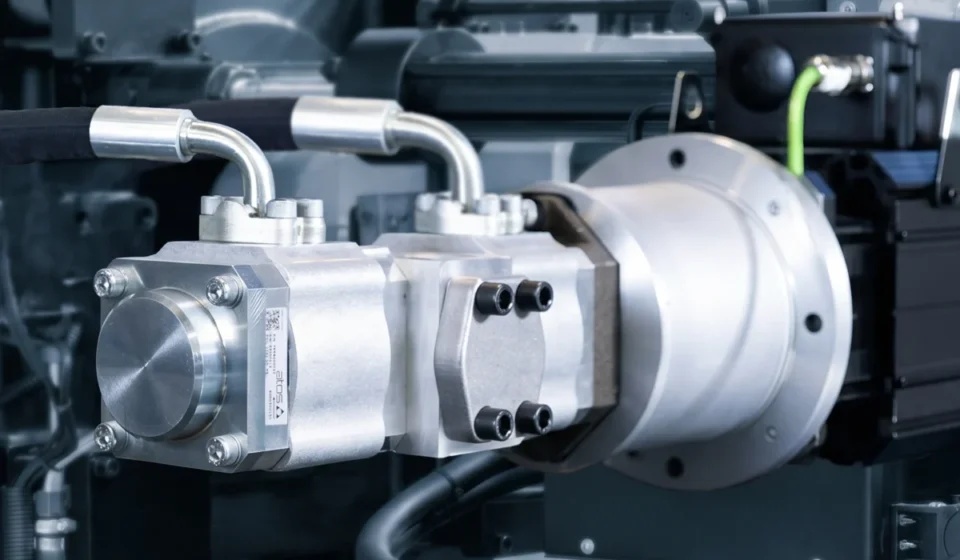
- The Electrohydraulic Revolution (2010s–Present): The integration of electronic controllers and sensors allowed for real-time, closed-loop feedback. Systems like those developed by Atos began utilizing servopumps to precisely match hydraulic output to demand.
- The AI and Digital Integration Phase (2025 and Beyond): We are currently entering an era where machine learning algorithms predict load cycles, optimize fluid viscosity in real-time, and schedule predictive maintenance before energy-draining inefficiencies occur.
Supporting Data: The Impact of Modernization
The transition to modernized hydraulic architectures is not merely theoretical; the data suggests substantial gains.
- Variable Speed Drive (VSD) Efficiency: Studies indicate that in applications with variable load cycles—such as injection molding—replacing a constant-speed motor with a VSD-controlled unit can reduce energy consumption by 30% to 50%.
- Electrohydraulic Servopumps: By eliminating the need for traditional throttle valves (which lose energy by restricting flow), servopump architectures can reduce the "idling" energy waste of a machine by up to 70% during non-productive cycle phases.
- Regenerative Potential: Advanced hydraulic accumulators are now capable of capturing energy during deceleration phases. In large-scale heavy machinery, these regenerative circuits can recover up to 15% of the total energy input, which is then recycled into the system for the next cycle.
Official Industry Perspective: Bridging Performance and Sustainability
Industry leaders, such as the engineering teams at The Atos Group, emphasize that the goal is not to compromise performance, but to refine it. According to specialists in the field, the modern approach to hydraulic design is "system-centric."
"Engineers are no longer just selecting a pump and a motor; they are modeling an entire ecosystem," explains an industry consultant. "We are looking at how the fluid temperature, the control software, and the physical duty cycle interact. When you view a hydraulic system as an integrated, digitalized unit, the ‘wasted’ energy is almost always recoverable or avoidable."
Regulatory bodies are also pushing this change. In the European Union and parts of North America, industrial energy efficiency standards are becoming increasingly stringent. Corporations are finding that integrating high-efficiency hydraulics is no longer an "optional upgrade" but a requirement for compliance, as well as a significant competitive advantage in reducing the total cost of ownership (TCO).
The Role of Digitalization and AI
The future of hydraulics is inextricably linked to the "Industrial Internet of Things" (IIoT). By embedding smart sensors into the hydraulic manifold, manufacturers can now perform condition monitoring.
If a filter begins to clog or a valve starts to lag, the system experiences a slight pressure drop, which the motor then compensates for by drawing more current. An AI-enabled system detects this anomaly before it becomes a major power drain, signaling maintenance teams to replace the component. Furthermore, machine learning can analyze thousands of operating hours to suggest the most energy-efficient pressure setpoints for specific manufacturing runs, essentially "learning" how to be more efficient with every shift.
Implications for Industrial Operations
What does this mean for the average manufacturing plant manager or system integrator?
1. Shift in Procurement Strategy
Companies are moving away from the lowest-initial-cost model toward a life-cycle cost model. While an electrohydraulic system with advanced VSDs may have a higher upfront price tag, the reduction in electricity consumption and the decrease in downtime due to predictive maintenance typically result in a return on investment (ROI) within 18 to 24 months.
2. The Necessity of New Skill Sets
The "hydraulic mechanic" of the past must now be part software engineer and part data analyst. As systems become more complex, the ability to troubleshoot an electrohydraulic controller via software is as important as knowing how to replace a seal. Training programs are becoming a critical component of successful technology implementation.
3. Sustainability as a Market Differentiator
As end-consumers demand greener supply chains, industrial facilities that can prove a lower carbon footprint—thanks in part to efficient hydraulic processes—are finding themselves at an advantage. Energy efficiency is now a metric that influences the entire value chain.
Conclusion: The Resilient Future of Fluid Power
The narrative that hydraulics are being replaced by electric actuators is, in many respects, a misunderstanding of the technology’s trajectory. While electromechanical systems have their place, they often struggle to match the sheer force density and durability of hydraulics in heavy-duty environments.
Rather than becoming obsolete, hydraulics are evolving. By embracing the marriage of high-pressure fluid power and low-latency digital control, the industry is creating a new generation of machinery that is smarter, leaner, and more sustainable. As we look toward the future, it is clear that the hydraulic system of tomorrow will be defined by its intelligence as much as its power—proving that even the most established industrial technologies can lead the charge in the global energy transition.
Sponsored content by The Atos Group