





Drought Relief: Idaho Avoids Snake River Curtailment Through Strategic Cooperation

By Clark Corbin, Idaho Capital Sun
In a move aimed at preventing a catastrophic disruption to Idaho’s agricultural economy, state officials announced this week that thousands of "trust water" users along the Snake River will not face water shutoffs during the current 2026 irrigation season. The decision comes amidst a severe drought that has strained the delicate balance between the state’s agricultural sector and the requirements of the historic 1984 Swan Falls Settlement Agreement.
While the decision provides immediate relief to over 4,000 water users, Governor Brad Little has cautioned that the reprieve is a temporary "bridge" rather than a permanent solution to the state’s intensifying water management challenges.
The Core Conflict: Agriculture vs. Hydropower
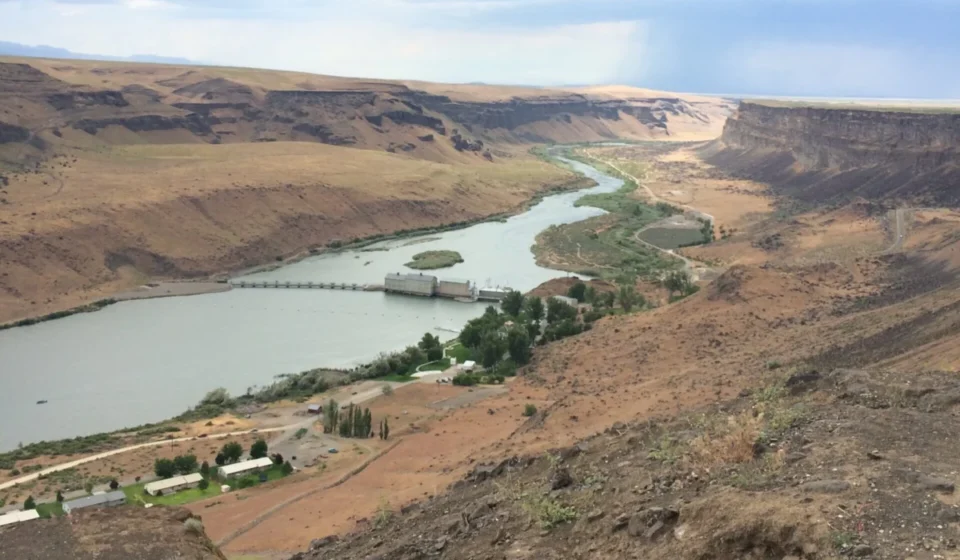
The current situation centers on the 1984 Swan Falls Settlement, a landmark legal agreement that settled a long-standing dispute between the state of Idaho and Idaho Power. The agreement was designed to balance two competing interests: the need for reliable water for irrigation, which supports Idaho’s multibillion-dollar agricultural industry, and the necessity of maintaining stream flows for hydropower generation at the Swan Falls Dam.
Under the terms of the settlement, minimum stream flows are mandated at the Murphy Gage near the dam. If water levels drop below 3,900 cubic feet per second (cfs), the Idaho Department of Water Resources (IDWR) is legally obligated to curtail—or shut off—water access for "trust water" users to ensure the minimum flow requirements are met.
This year, however, the intense drought conditions in the Snake River Basin brought flows dangerously close to that threshold. For the first time since the agreement was signed four decades ago, the state faced the prospect of triggering mandatory curtailments, a move that would have caused significant economic hardship for farmers throughout the region.
Chronology of a Developing Crisis
The path to this week’s announcement began months ago as hydrologists observed dwindling snowpack and rapidly evaporating reservoirs.
- Early 2026: Initial monitoring of the Snake River Basin indicated a higher-than-average probability of low flow conditions due to a lackluster winter and an early, dry spring.
- June 2026: As flows continued to decline toward the 3,900 cfs threshold, the IDWR issued formal notifications to more than 4,000 trust water users. The notices warned that their water rights could be subject to curtailment if the Murphy Gage readings continued to drop.
- Late June 2026: Recognizing the severity of the situation, Idaho Power leadership contacted Governor Brad Little. In a gesture of cooperation, the utility company proposed that it would not push for mandatory curtailment, provided the state could find alternative ways to mitigate the flow deficiency.
- June 26, 2026: Governor Little formally replied to IDWR Chairman Jeff Raybould, endorsing the utility’s approach. He directed the department to secure additional storage water to bolster the river’s flow, effectively neutralizing the immediate need for shutdowns.
- July 2026: The official announcement was made public, confirming that the irrigation season would proceed without the anticipated cutbacks.
Supporting Data and Hydrological Realities
The Snake River Basin is the lifeblood of Idaho’s economy, yet it remains highly susceptible to the volatility of the Western climate. The 3,900 cfs requirement is not merely a bureaucratic number; it is the physical benchmark for the health of the lower Snake River.
Data from the IDWR shows that the 2026 drought is among the most intense in the history of the settlement. When the 1984 agreement was negotiated, the primary goal was to provide certainty to water users while ensuring Idaho Power could generate electricity. However, the agreement was predicated on historical weather patterns that are increasingly failing to hold true.
The use of storage water—water held in upstream reservoirs and released during peak demand—is a standard tool for water managers. By choosing to release this reserve, the state is effectively "borrowing" from its future supply to satisfy the current drought-induced deficit. While this prevents a immediate crisis, it also highlights the diminishing margin for error in Idaho’s water portfolio.
Official Responses and Political Strategy
Governor Little’s response to the crisis has been one of tempered relief. While he has been praised by agricultural advocates for his decisive action, his rhetoric remains grounded in the reality of long-term water scarcity.

"I support Idaho Power’s proposed approach, and I am grateful for their cooperative outreach," Little wrote in his letter to Chairman Raybould. However, he was quick to manage expectations regarding the sustainability of this solution. "Under their proposal, the Snake River will not run dry of water for trust water right holders this season, but I want to be equally clear that this is a bridge, not a fix."
Little emphasized that the current arrangement should not be viewed as a precedent. "It buys us time. It does not permanently resolve the underlying tension between the minimum stream flow obligations the state holds under the agreement and the water needs of trust water right holders in a dry year, and it should not be mistaken for a permanent agreement."
The Idaho Department of Water Resources has echoed the Governor’s sentiment, noting that their primary focus remains on navigating the immediate risks while preparing for a potentially even drier 2027.
Implications for the Future of Idaho Water
The decision to avert curtailment this year is a significant victory for Idaho’s farmers, but it raises critical questions about the state’s long-term water policy. As climate patterns become more erratic, the conflict between power generation and agricultural production is likely to intensify.
1. The Fragility of Legal Settlements
The 1984 agreement was a product of a different era. The current drought has revealed that the "rules of the road" established four decades ago may not be sufficient for the realities of the mid-21st century. Legal scholars and water rights experts are already beginning to debate whether the agreement requires modernization to account for more frequent, extreme drought cycles.
2. Economic Vulnerability
Agriculture is a primary economic driver in Idaho. A mass curtailment would have had a cascading effect, potentially leading to crop failures, increased costs for consumers, and long-term damage to the state’s rural economy. The decision to prioritize water usage for these farmers acknowledges their vital role, but it also places a massive burden on the state to find water through increasingly expensive and complex storage solutions.
3. The Need for Infrastructure Investment
If "buying time" is the current strategy, the question remains: what happens when the time runs out? Experts suggest that the state will likely need to prioritize infrastructure projects, such as expanded water storage, advanced irrigation efficiency technology, and perhaps even a renegotiation of water-sharing agreements to ensure that the Snake River can continue to serve both the power grid and the farm.
4. A Model for Collaboration
On a positive note, the cooperation between Idaho Power and the state government is being cited as a potential model for future crises. By avoiding litigation and choosing a path of collaborative resource management, the two entities were able to achieve a result that keeps the economy moving and the river flowing, at least for the time being.
Conclusion
The Snake River remains the center of Idaho’s economic and environmental health. The 2026 drought has served as a wake-up call, demonstrating how quickly the balance between hydropower and irrigation can tip toward disaster.
While the farmers of Idaho can breathe a sigh of relief for the remainder of this irrigation season, the state’s water managers, lawmakers, and utility providers know that the work is far from over. The bridge built by Governor Little and Idaho Power has prevented an immediate collapse, but the path forward remains narrow, steep, and increasingly unpredictable. As Idaho moves into the next season, the conversation will likely shift from emergency mitigation to the difficult, long-term work of ensuring that the state’s most precious resource remains available for generations to come.
The Idaho Capital Sun is part of States Newsroom, a nonprofit news network supported by grants and a coalition of donors as a 501(c)(3) public charity. The Idaho Capital Sun maintains editorial independence. For inquiries regarding this report, contact Editor Christina Lords.