




Engineering the Flow of Heat: How a New Breakthrough in Ferroelectrics Could Redefine Energy Efficiency

In the world of thermal physics, heat has long been viewed as a somewhat chaotic, unruly force. Unlike electricity, which can be easily steered through wires and switches, heat tends to diffuse in every direction, often acting as a parasitic byproduct that degrades the performance of electronics and limits the efficiency of power plants. However, a groundbreaking discovery by researchers at the Department of Energy’s Oak Ridge National Laboratory (ORNL), in collaboration with The Ohio State University and Amphenol Corporation, has fundamentally challenged these constraints.
By applying an electric field to a specialized class of ceramics, the research team has successfully demonstrated a method to "steer" heat, achieving a nearly 300% increase in thermal conductivity in a specific direction. This breakthrough, recently published in PRX Energy, suggests that we are on the cusp of a new era in which thermal energy can be directed, modulated, and managed with the same precision currently reserved for electrons.
The Physics of Phonons: Unlocking the Atomic Highway
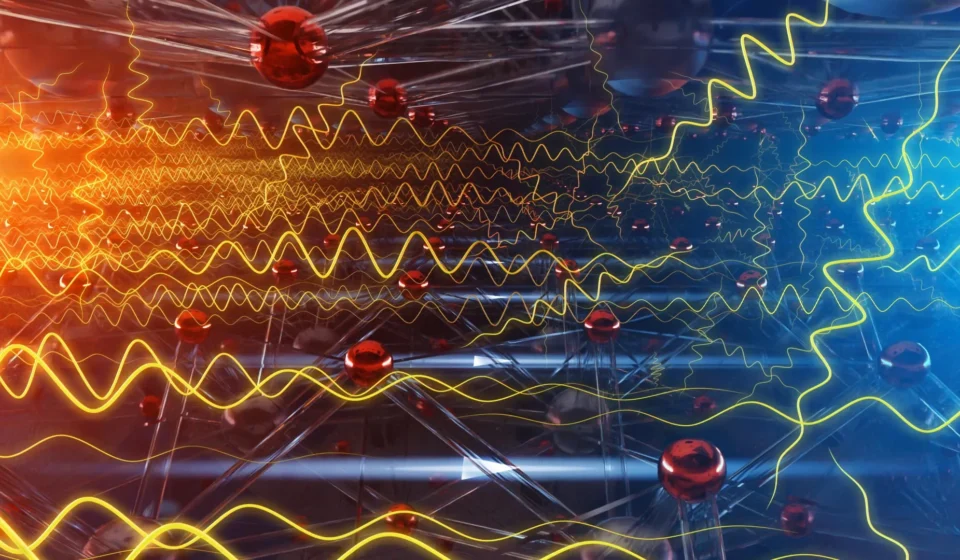
To understand the magnitude of this discovery, one must first look at the mechanism of heat transport in solids. Heat, at the atomic level, is not a fluid, but a vibration. These vibrations are quantified as "phonons"—quasiparticles that represent the collective oscillation of atoms within a crystal lattice. In most solid materials, phonons collide with one another and with defects in the crystal structure, causing them to scatter. This scattering limits how far and how fast heat can travel, effectively creating "thermal resistance."
The research team focused on "relaxor-based ferroelectrics," a category of ceramics known for their ability to polarize when exposed to an electric field. Under normal conditions, these materials are riddled with internal structural nuances that cause phonons to scatter frequently, leading to mediocre heat conductivity.
However, when the team applied a controlled electric field to these ceramics, they triggered a phenomenon known as "poling." This process aligned the internal electric charges of the material. The result was transformative: the electric field acted like a traffic management system on a congested highway, clearing the path for phonons. By aligning the atomic vibrations with the direction of the field, the researchers reduced the scattering frequency, allowing the phonons to travel significantly longer distances. The data showed that heat flowed nearly three times more efficiently in the direction of the electric field than in other directions—a result that far exceeded the 5% to 10% improvements seen in previous studies.
Chronology of the Discovery: From Theory to Breakthrough
The journey to this discovery was a multi-year effort that combined advanced material synthesis, high-end physics instrumentation, and rigorous data analysis.
Early Phase: Conceptualizing the Thermal Switch
The project began with a fundamental question: Could the internal structure of ferroelectric materials be manipulated to act as a gate for heat? The late Professor Joseph Heremans of The Ohio State University was a driving force in this conceptual phase. He posited that by tuning the polarization of a crystal, one might be able to create a "thermal valve" or a directional guide for phonons.
Middle Phase: Material Synthesis and Characterization
The task of creating the necessary high-quality crystals fell to Raffi Sahul at Amphenol Corporation. Growing these specialized ceramics requires precision, as even minor impurities or structural defects can act as traps for phonons, negating the effects of the electric field. Once the crystals were perfected, they were "poled"—exposed to a high-voltage electric field—to induce the required alignment.
Experimental Phase: Seeing the Invisible
The core of the validation took place at ORNL’s Spallation Neutron Source (SNS), a world-leading DOE Office of Science user facility. Using inelastic neutron scattering, the team, led by ORNL senior researcher Michael Manley and senior R&D staff member Raphaël Hermann, peered into the atomic structure of the ceramic.
Neutrons are the ideal probe for this task because they are uncharged and can penetrate deep into materials, interacting with the nuclei to reveal both the static structure of the lattice and the dynamic behavior of the atoms. The experiments were a direct continuation of the principles established by Nobel laureates Clifford Shull and Bertram Brockhouse, whose work pioneered the use of neutron scattering to map the motion of atoms.
Validation: The 300% Surprise
The final stage involved synthesizing the thermal conductivity data with the neutron scattering observations. While the team had anticipated an improvement, the magnitude of the increase—a 300% boost—was unexpected. The data revealed that the phonons were not only moving faster but were surviving significantly longer before losing their energy to scattering events.
Supporting Data: Why Phonon Lifetime Matters
In thermal science, conductivity is a function of phonon velocity and phonon lifetime. Most research in this field focuses on velocity, but the ORNL study highlights the untapped potential of lifetime.
When the electric field was applied, the alignment of the crystal dipoles reduced the "noise" or obstacles that typically force phonons to scatter. According to the team’s measurements, the "mean free path"—the average distance a phonon travels before colliding—was drastically extended.
| Material Condition | Thermal Conductivity (Relative) | Scattering Rate |
|---|---|---|
| Un-poled Ceramic | Baseline (1.0x) | High |
| Poled Ceramic (Perpendicular) | ~1.1x | Moderate |
| Poled Ceramic (Parallel) | ~3.0x | Low |
The data proves that the orientation of the polarization is the critical variable. By controlling the poling direction, researchers can effectively "steer" the heat flux, creating a material that acts as a thermal conductor in one orientation and a thermal insulator in another.
Official Responses and Researcher Perspectives
The implications of this study are being felt across the material science community. For the lead researchers, the findings represent a triumph of data-driven discovery over theoretical preconception.
"Earlier work on bulk ferroelectric materials achieved modest improvements in thermal conductivity of 5 percent to 10 percent," said Michael Manley. "While we expected to see an effect, the fact that we were able to reach an enhancement close to 300 percent is a testament to how effectively the electric field can suppress phonon scattering."
Delaram Rashadfar, the doctoral candidate who conducted much of the analysis under Professor Heremans’ guidance, noted the importance of the methodology. "Professor Heremans always stressed the importance of trusting the data first and letting the theory follow," Rashadfar said. "When the results came back showing a threefold difference, it forced us to rethink the limits of what we thought these ceramics could do. It was a significant, humbling result."
Puspa Upreti, an ORNL postdoctoral research associate, underscored the broader vision: "Being able to control both how fast and in what manner heat flows could lead to devices that manage thermal energy far more efficiently. We are moving from passive heat management to active thermal control."
Implications: A New Frontier for Technology
The ability to direct heat with such high efficiency has profound implications for modern industry. The current challenges of high-performance computing, aerospace engineering, and green energy transition all hinge on thermal management.
1. Solid-State Cooling
Current cooling systems often rely on fans, pumps, or liquids, which introduce mechanical failure points and energy inefficiencies. The development of a material that can "pipe" heat away from a sensitive component using only an electric field could lead to solid-state cooling systems with no moving parts, effectively revolutionizing laptop, server, and smartphone thermal design.
2. Waste Heat Recovery
In industrial processes—such as steel manufacturing or glass production—vast amounts of energy are lost as waste heat. If heat can be directed into thermoelectric generators more efficiently, we could capture a significantly higher percentage of that lost energy and convert it back into electricity, drastically improving the carbon footprint of heavy industry.
3. The Carnot Limit and Energy Engines
The Carnot cycle defines the absolute theoretical limit of heat engine efficiency. By better regulating the transfer of heat between high and low-temperature reservoirs, engineers can bring real-world engines closer to this idealized efficiency. This could lead to more compact and powerful engines for everything from vehicles to power plants.
4. Advanced Electronics
As microchips continue to shrink, the "heat density" on a chip increases, leading to thermal throttling and failure. Being able to direct heat away from "hot spots" on a chip using an integrated electric field could allow for faster clock speeds and higher-density components that were previously impossible to cool.
Conclusion
The collaboration between ORNL, The Ohio State University, and Amphenol Corporation has opened a new door in condensed matter physics. By treating heat not as an uncontrollable byproduct, but as a steerable resource, the team has laid the groundwork for a revolution in how we handle energy.
As we look toward a future defined by increasingly complex electronics and the urgent need for sustainable energy systems, the ability to control the flow of phonons will likely prove as vital as our current ability to control the flow of electrons. The "threefold increase" observed at the Spallation Neutron Source is not just a scientific curiosity; it is a blueprint for the next generation of high-efficiency, thermally intelligent technology. With further research into the scalability and durability of these ceramics, the days of passive heat management may soon be behind us.