Published: September 11, 2026 Author: Max Garland (Adapted and Expanded)
Main Facts
In an aggressive push to capture a larger share of the booming cross-border e-commerce market, logistics giant FedEx has officially announced a new suite of global shipping tools anchored by FedEx Duty and Tax. Designed to alleviate one of the most persistent pain points in international retail, the new application provides a guaranteed, all-inclusive cost calculation at checkout, absorbing the financial risk of any subsequent customs overages.
The launch comes at a time of considerable macroeconomic uncertainty. As international trade routes face shifting tariff frameworks, evolving regulatory compliance standards, and fluctuating geopolitical trade agreements, both retailers and consumers have found cross-border shipping increasingly unpredictable. By offering guaranteed "landed costs"—the total price of a product plus all shipping, insurance, duties, and taxes—FedEx aims to provide price certainty that protects end-consumers from unpleasant surprises upon delivery.
FedEx Duty and Tax is a cornerstone feature of the company’s broader technological ecosystem, known as Global Trade Navigator. This integrated suite of tools is engineered to support businesses at every phase of the international logistics lifecycle—from initial compliance checks and tariff classifications to final-mile delivery. By streamlining these complex workflows, FedEx hopes to democratize international trade, making global shipping as seamless, predictable, and frictionless as domestic commerce.
Chronology
The rollout of FedEx Duty and Tax and the Global Trade Navigator suite did not happen overnight; it represents the culmination of a multi-year technological modernization initiative at the carrier:
Late 2024 to Early 2025: Amid rising friction in global supply chains, FedEx identifies cross-border transparency as a critical bottleneck for small- and medium-sized enterprises (SMEs) expanding into international markets. Pilot testing for underlying trade compliance and calculation infrastructure quietly begins.
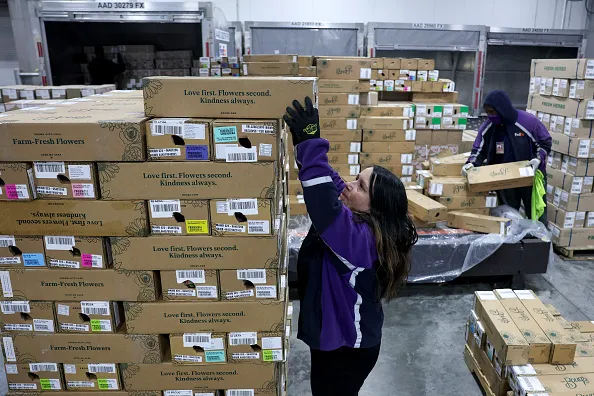
February 2025: Highlighting the sheer volume and complexity of international logistics, FedEx operations at key hubs—such as the massive agricultural and flower import centers at Miami International Airport—showcase the critical need for modernized digital trade solutions.
April 2026: FedEx publishes its 2026 Small Business Trade Index. The survey data reveals a striking market vulnerability: nearly 68% of small- and medium-sized businesses report that their international customers are frequently caught off guard by unexpected duties, taxes, or carrier fees billed upon delivery.
Summer 2026: FedEx begins an exclusive, limited-beta testing phase for the Global Trade Navigator suite, rolling out capabilities to a small percentage of select enterprise and e-commerce customers to gauge performance and user interface responsiveness.
September 11, 2026: FedEx officially announces the nationwide and global rollout of FedEx Duty and Tax, detailing its cost-guarantee framework, initial integration capabilities, and future expansion roadmap.
Supporting Data
The urgency behind FedEx’s new digital suite is heavily substantiated by proprietary research and industry-wide trends:
The 68% Shock Factor: According to the 2026 FedEx Small Business Trade Index released in May 2026, 68% of small- and medium-sized businesses note that their end-consumers experience unpleasant surprises regarding hidden duties, taxes, or fees upon delivery at least some of the time. This friction point is cited as a primary driver of cart abandonment and customer churn for cross-border merchants.
Competitive Landscape: FedEx is not alone in addressing this market gap. Major rival UPS launched UPS Global Checkout last year, a competing service designed to give shoppers a guaranteed total landed cost prior to purchase. Similarly, cross-border technology platform Zonos offers specialized applications—such as its Duty and Tax calculator app on Shopify—to bridge the gap between merchants, customs brokers, and consumers.
Cost Transparency Parity: According to internal assessments and executive commentary, FedEx’s new tool matches or exceeds existing market solutions in terms of cost transparency and ease of integration at checkout.
Target Demographics: The suite is designed to cater to a broad spectrum of commercial users, ranging from micro-merchants sending their very first international parcel to enterprise-level organizations requiring deep API integrations to ingest complex global trade data directly into existing ERP and warehouse management systems.
Official Responses
Company executives have emphasized that the primary motivation behind the Global Trade Navigator and its flagship duty-calculation tool is elevating the human element of logistics—specifically, the end-recipient’s delivery experience.
In an exclusive interview with Supply Chain Dive, Jason Brenner, FedEx’s Senior Vice President of Digital Portfolio, addressed how the new offering stacks up against existing market alternatives. Brenner stated that FedEx Duty and Tax stands "at parity or better" regarding cost transparency at the digital checkout screen.
While Brenner declined to provide immediate specifics regarding future platform integrations, he confirmed that there is "more to come" regarding the app’s availability on e-commerce platforms beyond its initial integration ecosystem.
"All of this is in the spirit of providing a better customer experience, reducing friction at those cross-border moments, and improving the recipient experience," Brenner remarked during the interview.
Highlighting the immediate psychological impact of the new tools on business clients during the beta-testing phase, Brenner shared customer reactions to the software’s capability:
"The theme is we’re effectively making international shipping as easy as domestic shipping, and we’re getting a lot of wows."
Implications
The introduction of FedEx Duty and Tax and the Global Trade Navigator suite carries significant implications for the broader logistics, retail, and e-commerce landscapes:
1. Shifting Expectations in E-Commerce Checkout
For years, "delivery-duty unpaid" (DDU) models plagued cross-border shopping, leaving consumers frustrated when local customs agencies or couriers demanded cash-on-delivery fees before releasing packages. With competitors like UPS and technology providers like Zonos also pushing for "delivery-duty paid" (DDP) solutions, guaranteed landed cost calculators are rapidly evolving from a luxury feature to an expected baseline requirement for global e-commerce. Retailers that fail to offer transparent checkout calculations risk losing market share to those that do.
2. Mitigating Macroeconomic and Regulatory Volatility
As global trade policy remains subject to rapid political shifts—including frequent adjustments to tariff rates, reciprocal trade disputes, and revised customs enforcement thresholds—merchants face immense difficulty calculating accurate cross-border fees manually. By placing the financial guarantee on the carrier, FedEx assumes the risk of miscalculation, shielding both merchants and consumers from unexpected regulatory expenses and bureaucratic delays at international borders.
3. Empowering Small- and Medium-Sized Enterprises (SMEs)
Historically, navigating the labyrinth of international trade codes, harmonized system (HS) classifications, and foreign tax laws required massive legal and logistical compliance departments—a luxury reserved for multinational corporations. By embedding these capabilities into automated digital tools accessible directly through e-commerce workflows, FedEx is effectively lowering the barrier to entry for smaller merchants looking to scale their operations internationally.
4. Escalating the Logistics Tech Wars
The logistics sector is increasingly defined by software as much as physical infrastructure (planes, trucks, and sorting hubs). By bundling cost-guarantee applications with compliance, tracking, and trade navigation tools, FedEx, UPS, and DHL are locked in an intense technological arms race. The ultimate winner will likely be determined by which carrier provides the most frictionless, API-friendly, and cost-effective digital ecosystem for merchants navigating an increasingly borderless digital economy.