




Port Authority of New York and New Jersey Launches $45 Million Clean Truck and Infrastructure Initiative to Decarbonize Freight Operations

NEW YORK/NEW JERSEY — In a major push toward sustainable logistics, the Port Authority of New York and New Jersey is rolling out a comprehensive $45 million clean transportation initiative designed to accelerate the adoption of zero-emission drayage and yard trucks. Backed by federal funding secured through the landmark Inflation Reduction Act of 2022, the program aims to remove financial barriers for fleet operators and independent truck drivers looking to transition from traditional diesel-powered heavy-duty vehicles to battery-electric alternatives.
The ambitious program, officially announced in September 2026, combines a massive point-of-sale voucher incentive framework with direct investments in supporting charging infrastructure. Administered in partnership with clean-transportation nonprofit CALSTART, the dual-pronged strategy sets aside $39 million for vehicle purchase discounts and $6 million dedicated to expanding local charging capabilities, including a dedicated $5 million allocation for the newly minted Green Drayage Accelerator.
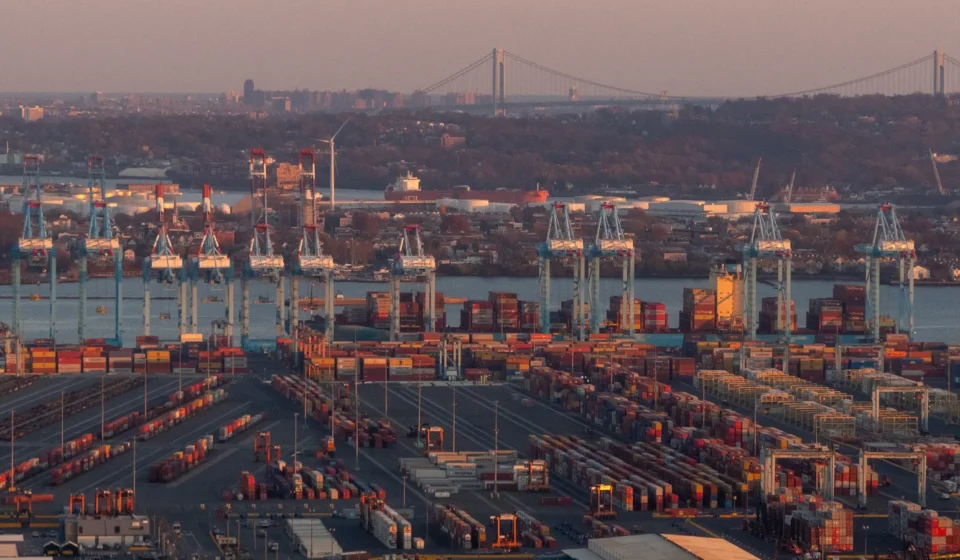
As supply chains face mounting regulatory pressure and corporate sustainability mandates, this initiative marks a pivotal milestone for one of North America’s busiest shipping hubs. By tackling the high upfront costs of clean technology, the Port Authority hopes to drastically curb diesel emissions, improve regional air quality for surrounding port communities, and pave the way for a fully decarbonized freight ecosystem.
Main Facts
The core of the Port Authority’s new initiative rests on direct financial subsidies aimed at offsetting the steep capital expenditures required to purchase heavy-duty electric commercial vehicles.
- Total Funding Allocation: The initiative is backed by a $45 million investment, largely sourced from the U.S. Environmental Protection Agency’s (EPA) Clean Ports Program, which distributes nearly $3 billion nationwide via the Inflation Reduction Act.
- Point-of-Sale Vouchers: Up to $39 million will be distributed through direct point-of-sale discounts handled in coordination with original equipment manufacturers (OEMs) and authorized dealerships.
- Substantial Vehicle Discounts: According to program fact sheets, a Class 8 electric drayage truck is eligible for a voucher amount of up to $230,000, while off-road terminal trucks (yard tractors) qualify for discounts up to $150,000.
- Charging Infrastructure Support: A separate $5 million fund, operating under the Green Drayage Accelerator program, will support the development of new heavy-duty electric vehicle charging hubs located within a 10-mile radius of the port facilities.
- Program Administration: Clean transportation non-profit CALSTART is serving as the primary administrator, responsible for overseeing merchant sign-ups, rolling admissions for OEMs, and developing tracking dashboards to monitor program metrics.
Chronology of Events
The path toward this multi-million-dollar sustainability milestone spans several years of federal legislative action, regional planning, and phased infrastructure development.
- August 2022: The federal government passes the Inflation Reduction Act, authorizing historic investments in environmental justice and climate initiatives, including the EPA’s Clean Ports Program.
- Late 2025: Building early momentum for electrification, the Port Authority opens a specialized electric truck charging station at Port Newark equipped with four super-fast chargers, setting a logistical precedent for heavy-duty EV support.
- September 3, 2026: The Port Authority of New York and New Jersey officially issues a formal press release detailing the launch of the $45 million clean truck and infrastructure initiative in partnership with CALSTART.
- September 11, 2026: Industry publications, including Supply Chain Dive and Trucking Dive, highlight the specifics of the rollout, noting the breakdown of voucher amounts and the launch timeline.
- Fall 2026: The voucher program and the Green Drayage Accelerator are slated to officially open. OEMs and dealers will be integrated on a rolling basis via continuous sign-up pathways, and administrative dashboards built by CALSTART will go live to track deployment metrics.
Supporting Data and Financial Frameworks
Transitioning a commercial fleet from internal combustion engines to electric powertrains requires navigating intricate cost structures. Traditional Class 8 diesel trucks generally require lower upfront capital, whereas their zero-emission counterparts—while significantly cheaper to fuel and maintain over their lifecycles—frequently command purchase prices two to three times higher than legacy models.
The Port Authority’s incentive structure is mathematically calibrated to absorb a substantial portion of this price premium:
+-----------------------------------+-------------------+
| Equipment Category                | Max Voucher Value |
+-----------------------------------+-------------------+
| Class 8 Electric Drayage Trucks   | $230,000          |
| Off-Road Terminal/Yard Tractors   | $150,000          |
| Local Charging Infrastructure     | $5,000,000 total  |
+-----------------------------------+-------------------+
These figures derive from a broader national push funded by the EPA’s Clean Ports Program. By funneling these federal dollars directly to the point of sale, buyers do not have to wait for retroactive rebates. Instead, the discount is applied immediately at the dealership or manufacturer level, drastically lowering the barrier to entry for smaller trucking companies and independent owner-operators who historically struggle with credit access and high capital investments.
Furthermore, the geographical constraint of the Green Drayage Accelerator—requiring charging hubs to be built within 10 miles of the port—ensures that drayage operators do not have to venture far off their normal routes to replenish their vehicle batteries, thereby mitigating "range anxiety" and reducing operational downtime.
Official Responses and Stakeholder Perspectives
Port leadership and environmental advocates have lauded the rollout as a transformative step for regional logistics and public health.

"This $45 million partnership with CALSTART puts zero-emission trucks, terminal tractors, and charging infrastructure within reach for the operators who serve this port every day," said Port Authority Chairman Kevin O’Toole in the official September 3 news release.
O’Toole emphasized that the initiative represents more than just a logistical upgrade; it is a core pillar of the agency’s broader climate commitments.
"The programs will further strengthen the Port Authority’s wide-ranging, ambitious sustainability agenda," the port noted in official communications.
Industry analysts point out that municipal and regional port authorities across the United States are increasingly under pressure to address localized pollution. Ports are massive aggregation points for heavy-duty diesel exhaust, which contributes heavily to particulate matter and nitrogen oxide pollution in adjacent urban neighborhoods. By partnering with organizations like CALSTART—a recognized authority in zero-emission vehicle deployment—the Port Authority is signaling a collaborative, data-driven approach to greening the supply chain.
Broader Implications for Logistics and Supply Chain Operations
The implementation of the Port Authority’s $45 million voucher and infrastructure program carries profound implications for the wider freight and trucking industries operating within the northeastern United States.

1. Accelerating Fleet Modernization
For years, fleet operators have cited high vehicle costs and inadequate grid infrastructure as the twin bottlenecks preventing widespread fleet electrification. By lowering the cost of a Class 8 drayage truck by up to $230,000, the program alters the total cost of ownership (TCO) calculations in favor of electric trucks much earlier than market forces would have allowed independently.
2. Empowering Independent Operators
Large logistics conglomerates often possess the capital reserves to experiment with emerging vehicle tech. However, the drayage sector is heavily reliant on small-to-mid-sized fleets and independent owner-operators. Point-of-sale discounts bypass cumbersome rebate approval processes, making zero-emission vehicles genuinely accessible to smaller enterprises that operate on tight margins.
3. Creating a Blueprint for National Ports
As part of the nearly $3 billion distributed through the EPA’s Clean Ports Program, the Port of New York and New Jersey’s initiative serves as a litmus test for federally funded port decarbonization. If CALSTART’s tracking dashboards demonstrate rapid vehicle adoption, high uptime, and measurable reductions in greenhouse gas emissions, this framework could easily be replicated across other major maritime gateways in North America, including the ports of Los Angeles, Long Beach, Savannah, and Houston.
4. Grid Capacity and Real Estate Synergy
The targeted allocation of $5 million for charging infrastructure within a 10-mile radius highlights the critical intersection of real estate, logistics, and electrical grid capacity. Successfully powering dozens—and eventually hundreds—of heavy-duty trucks simultaneously will require close coordination between the Port Authority, local utility providers, and private real estate developers. The Green Drayage Accelerator is expected to stimulate private-public partnerships to ensure local electrical grids can support rapid-charging depots without straining residential power supplies.
Conclusion
The launch of the $45 million clean truck and infrastructure initiative by the Port Authority of New York and New Jersey represents a watershed moment for East Coast supply chain logistics. By pairing substantial point-of-sale vouchers for Class 8 drayage trucks and yard tractors with strategic investments in local charging hubs, the port is systematically dismantling the financial and logistical obstacles that have historically hindered commercial fleet electrification.
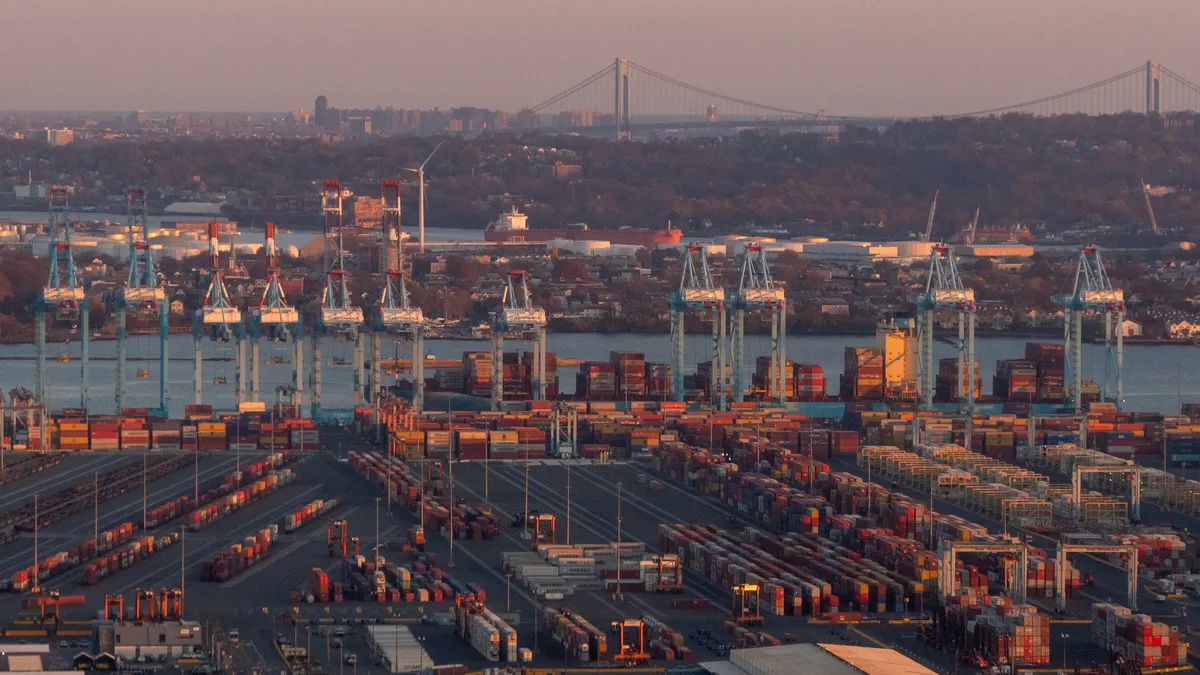
As the program rolls out this fall, backed by federal EPA grants and managed alongside CALSTART, it promises not only to cut emissions at one of the nation’s premier marine terminals but also to establish a scalable, sustainable model for the future of American freight transportation.