

Reimagining the Final Frontier: NASA and AnalySwift Pioneer In-Space Robotic Assembly of Thermoplastic Composites

WEST LAFAYETTE, IND. — In the relentless pursuit of a permanent, sustainable human footprint in deep space, the methods by which we build, deploy, and maintain infrastructure are undergoing a radical technological transformation. Breaking free from the traditional constraints of rocket payload capacities, NASA is aggressively backing the next generation of in-space manufacturing. At the forefront of this initiative is a strategic investment in AnalySwift LLC, a specialized engineering software and technology startup collaborating with researchers at Purdue University.
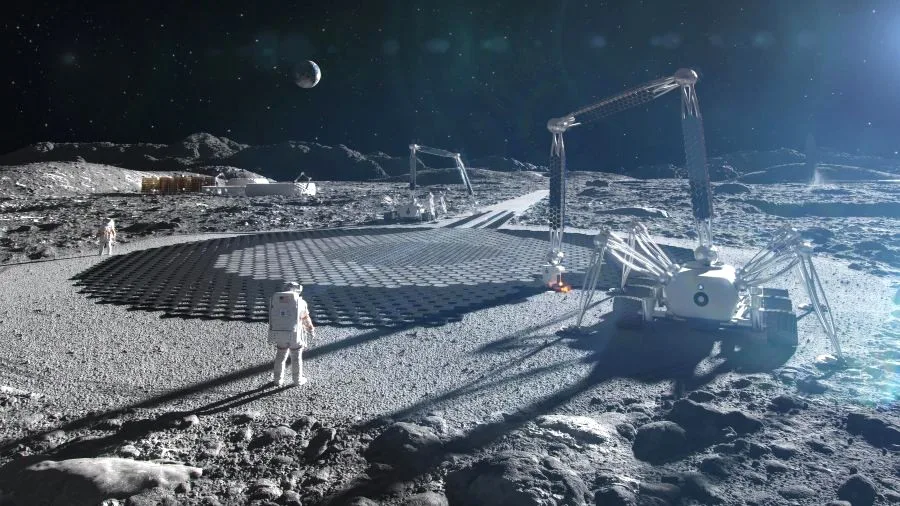
Together, this academic-industry powerhouse is developing groundbreaking robotic technology designed to weld and un-weld thermoplastic composites directly in the vacuum of space. The venture promises to unlock unprecedented capabilities for assembling massive space-based structures—ranging from colossal communication antennas and high-capacity solar arrays to sprawling telescope mirrors and critical thermal radiators—completely bypassing the physical size limits imposed by traditional launch-fairing dimensions.
Main Facts: Breaking the Limits of Launch-Fairing Dimensions
The core challenge of space exploration has always been logistical: everything humanity sends into orbit must fit snugly inside the payload fairing of a rocket. This physical constraint has historically capped the scale of space telescopes, communication relays, and orbital habitats. The NASA-backed initiative aims to shatter this paradigm through modular in-space manufacturing and assembly (ISAM).
- The Technology: Robotic welding and un-welding of advanced thermoplastic composite materials utilizing embedded resistance heaters.
- The Key Players: AnalySwift LLC (led by President and CEO Allan Wood), alongside Purdue University’s School of Aeronautics and Astronautics and the Weld County/Industrial Engineering departments.
- Primary Applications: Construction and dynamic reconfiguration of large truss structures, communication arrays, solar farms, space telescopes, and thermal management systems for lunar, Martian, and orbital missions.
- Strategic Advantage: The ability to assemble, disassemble, and structurally repurpose spacecraft components across multiple mission lifecycles, dramatically cutting down the mass and cost of transporting raw construction materials from Earth.
Chronology: From Concept to Orbital Reality
The path toward in-space thermoplastic welding has evolved through decades of materials science research, culminating in this critical phase of flight-readiness development.
Phase I: The Evolution of Thermoplastic Composites (Pre-2020s)
For years, aerospace engineers relied primarily on thermoset polymers for structural components. While strong and lightweight, thermosets cannot be re-melted or reshaped once cured. The aerospace industry gradually shifted focus toward thermoplastic composites, which can be repeatedly melted and solidified without degrading their mechanical integrity. This characteristic makes them the ideal candidate for reusable and reconfigurable space structures.
Phase II: Academic Foundation at Purdue University (2021–2023)
Researchers at Purdue University began investigating advanced joining techniques for high-performance polymers. Dr. Kawai Kwok and his team focused on integrating localized heating elements directly into composite joints, setting the theoretical groundwork for bond-and-debond structural interfaces.
Phase III: Industry Partnership and NASA Investment (2024–Present)
Recognizing the commercial and operational viability of Purdue’s research, NASA targeted AnalySwift LLC for investment and development. Teaming up with Purdue’s aerospace and industrial engineering departments, AnalySwift began building full-scale digital simulations and physical prototypes of the robotic welding systems required to execute complex structural assembly in microgravity.
Supporting Data & Technological Mechanics
Building infrastructure in extreme environments requires meticulous material science and advanced mechatronics. The system currently under development relies on a sophisticated convergence of thermal dynamics, intelligent robotics, and multi-sensor feedback loops.
The Mechanics of In-Situ Thermoplastic Welding
At the heart of the technology are composite joints embedded with microscopic resistance heaters. Unlike traditional welding methods that require external torches or massive bulk heating systems, these embedded elements provide localized, in situ thermal energy.
When activated, the localized heat brings the thermoplastic matrix up to its precise processing temperature. Mechanical forces are then applied to either bond the joint-strut interface or—in the case of structural reconfiguration—debond the components.
Dual-Arm Robotic Manipulation
Executing these operations in the vacuum of space, potentially under microgravity or lunar gravity conditions, demands supreme precision. Dr. Yu She, an assistant professor of industrial engineering at Purdue, is spearheading the development of a dual-arm robotic system to handle the physical manipulation.
[Vision Sensors] ──┐
                   │
[Tactile Sensors] ─┼──► [Dual-Arm Robotic System] ──► [Joint Location & Activation]
                   │
[Thermal Feedback] ┘
The robots are equipped with an array of sensory inputs:
- Vision Systems: To optically locate composite joints within complex space trusses.
- Tactile and Force Feedback: To ensure delicate handling, preventing structural damage during connection and disconnection phases.
- Thermal Feedback Monitoring: To regulate the exact temperature of the embedded resistance heaters, ensuring optimal polymer bonding without thermal degradation.
Structural Simulation and Feasibility
AnalySwift’s primary contribution to the R&D pipeline involves high-fidelity simulation software. Predicting how composite materials will behave under extreme thermal fluctuations, solar radiation, and mechanical stress in space is non-trivial. AnalySwift is modeling these advanced materials to verify the feasibility of full-scale truss structures before they ever leave Earth’s atmosphere.
Official Responses and Industry Perspectives
Leadership from both the private sector and academia emphasize that this technology is not merely a convenience, but an absolute necessity for humanity’s long-term expansion into the solar system.

Allan Wood, president and CEO of AnalySwift, underscores the economic and logistical paradigm shift enabled by the project:
"This capability allows the repurposing of spacecraft components for other missions, achieving multiuse structures and assembling large structures without the limit of launch-fairing dimensions. Our focus will be simulating the advanced materials and structures needed for this activity, including the feasibility of repurposing full-scale truss structures."
Wood stresses that relying on traditional Earth-to-space supply chains for structural components is entirely unsustainable for crewed outposts.
"Long-duration crewed missions to the moon, Mars and beyond require infrastructure to be constructed sustainably on these surfaces," Wood points out.
Detailing the mechanics of the project, Dr. Kawai Kwok explains the duality of the joining technology:
"The embedded heater provides in situ heating to bring the thermoplastic matrix to the processing temperature for bonding and debonding the joint-strut interface by mechanical forces. Intelligent robotic systems will perform the welding operation and structural reassembly to achieve reconfiguration of a truss."
Dr. Yu She highlights why automation is non-negotiable for this tier of extraterrestrial engineering:
"Robots are essential to assemble and repurpose large structures in space, because it requires precise and repeatable manipulation. My team will develop a dual-arm robotic system that uses vision, tactile sensing, and force and thermal feedback to locate composite joints, activate their embedded heaters, and carefully separate or reconnect the structural components."
Broader Implications for Aerospace and Manufacturing
The success of the NASA-AnalySwift-Purdue initiative ripples far beyond government space exploration programs, offering profound implications for commercial aerospace, terrestrial manufacturing, and the burgeoning space economy.
1. Sustainable Orbital Architecture
By enabling the recycling and repurposing of existing spacecraft components, space agencies can dramatically reduce orbital debris while cutting mission costs. A truss built for an initial communications relay can theoretically be un-welded, reconfigured, and redeployed as part of a deep-space habitat or an upgraded telescope array.
2. Redefining Commercial Satellite Design
Commercial aerospace manufacturers may soon design satellites and space stations with modular assembly in mind from the ground up. Instead of building monolithic, high-risk, single-purpose spacecraft, companies can launch modular components that snap together autonomously in low Earth orbit (LEO).
3. Spillover into Terrestrial Advanced Manufacturing
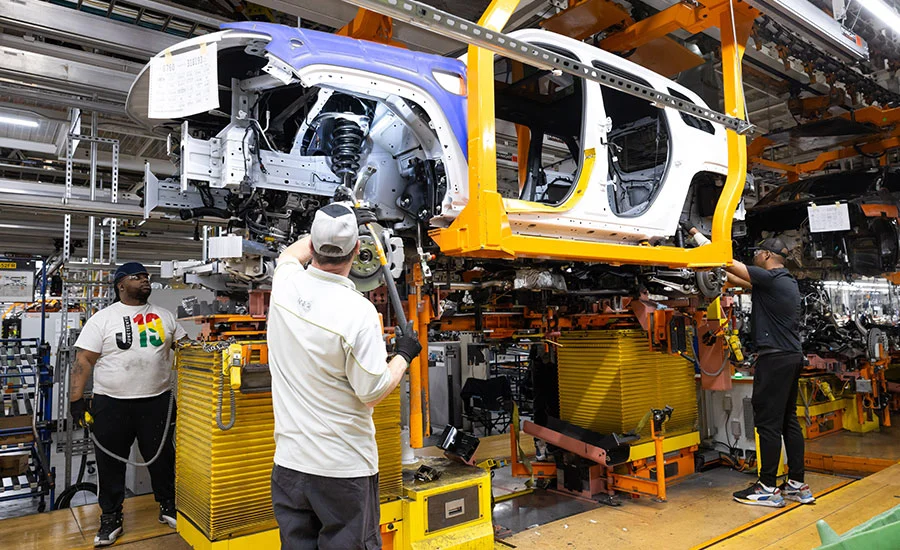
The innovations born from this project—particularly in rapid, localized thermal welding of thermoplastic composites and multi-sensor dual-arm robotic manipulation—will likely find heavy application back on Earth. Industries such as automotive manufacturing, wind energy (for assembling massive turbine blades), and heavy construction stand to benefit immensely from automated, high-precision composite bonding techniques.
As this partnership progresses from simulation to hardware prototyping, it brings humanity one step closer to a true space-faring civilization—one where our reach into the cosmos is no longer bounded by the size of the rocket door, but only by the limits of our ingenuity.