



The Digital Backbone: How Walmart is Orchestrating a Supply Chain Revolution Through Agentic AI

In the high-stakes world of global retail, the difference between market dominance and obsolescence often lies in the milliseconds of decision-making within a supply chain. For Walmart, the world’s largest retailer, that gap is currently being bridged by a sophisticated, multi-layered integration of Artificial Intelligence. While the company has recently made headlines for its ambitious initiative to empower its 2-million-strong workforce with AI tools, the foundation for this transformation was laid years ago within its vast, intricate supply chain infrastructure.
Indira Uppuluri, Walmart’s Senior Vice President of Supply Chain Technology, describes this evolution not as a sudden pivot, but as a systematic elevation of the company’s predictive capabilities. By transitioning from traditional stochastic modeling to a modern ecosystem of Large Language Models (LLMs) and autonomous AI agents, Walmart is redefining how a global enterprise manages the flow of goods from warehouse to doorstep.
The Core Transformation: From Predictive Models to Agentic Autonomy
The Evolution of Supply Chain Intelligence
For decades, supply chain management relied heavily on statistical analysis and historical data to forecast demand. However, the sheer volume of variables in today’s economy—ranging from volatile fuel prices to sudden geopolitical shifts—has rendered traditional models insufficient.
Walmart’s current approach integrates vast datasets, including granular customer buying patterns and hyper-local weather telemetry, into machine learning frameworks. This allows the company to move beyond reactive logistics. "Predictive models have always had a home within the supply chain," Uppuluri explained in an interview with CIO Dive. "But the amount of data and AI tools our teams have access to now gives them stronger, more actionable signals to navigate a challenging landscape."
Embracing the "Agentic" Era
The most significant shift in Walmart’s technological strategy is the move toward "agentic" AI. Unlike standard chatbots or static analytical tools, AI agents are designed to perform tasks, make decisions, and interact with other systems to achieve a specific outcome.
In the context of Walmart’s fulfillment engines, these agents do not just flag a problem—they propose solutions. By analyzing the entire network as a unified digital entity, these agents allow associates to move away from siloed management. Instead of focusing on a single node (a specific distribution center or transportation hub), teams now leverage a bird’s-eye view of resource allocation, allowing them to balance the "triad of constraints": assortment, speed, and cost.
Chronology of Technological Integration
The current sophistication of Walmart’s logistics is the result of a deliberate, multi-year progression in digital maturity:
- The Era of Stochastic Modeling: Early efforts focused on probability-based forecasting, which served the company well for predictable, seasonal demand spikes but struggled with "black swan" events.
- The Rise of Machine Learning (ML): As cloud computing scaled, Walmart began integrating ML to process unstructured data, such as social media trends and local weather impacts, providing the first real-time visibility into supply chain bottlenecks.
- The LLM Integration: Following the explosion of generative AI, Walmart began incorporating Large Language Models to act as a conversational interface for its technical staff, simplifying the retrieval of complex supply chain data.
- The Agentic Shift (Current): Today, Walmart is deploying AI agents capable of autonomous troubleshooting. These systems are being used to simulate network stress, test contingency plans, and recommend inventory rerouting in real-time.
Supporting Data and Technical Infrastructure
The Role of Custom Development
Walmart’s strategy is not reliant on a single vendor. While the company maintains partnerships with industry titans like OpenAI and Google to access cutting-edge LLMs, it maintains a robust internal data science and optimization team. This team builds proprietary AI tools specifically tuned to Walmart’s unique objectives.
Digital Twins: The Virtual Laboratory
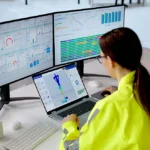
Perhaps the most critical tool in the company’s arsenal is the use of "digital twins"—virtual, high-fidelity replicas of the entire supply chain network. These replicas allow the company to conduct "what-if" simulations without risking actual inventory or capital.
Whether it is a facility closure due to extreme weather or a sudden, localized spike in demand, the digital twin environment allows Walmart’s logistics team to stress-test their response. By simulating how goods move across the network under extreme pressure, the team can identify potential failure points before they manifest in the physical world. As Uppuluri notes, "If you suddenly have a fire somewhere, how do you react to it pretty quickly? The systems behind the scenes leverage the data to come up with actions, and our associates implement them."
Workforce Empowerment: The "Squiggly" Platform
Technology is only as effective as its users. To ensure this high-level AI is accessible to the broader organization, Walmart developed "Squiggly," an associate-facing platform. Through this hub, employees access role-specific AI certifications, allowing them to build custom tools tailored to their specific department’s needs. By democratizing access to AI, Walmart ensures that innovation is not just top-down, but an enterprise-wide practice.
Official Perspectives and Strategic Objectives
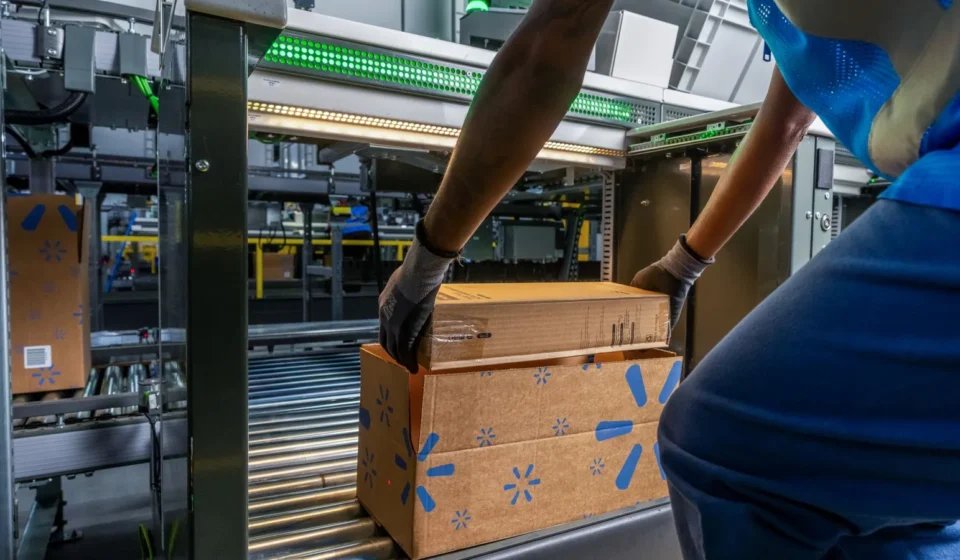
Walmart’s leadership remains hyper-focused on the balance between speed and efficiency. The demand for rapid delivery—typified by Sam’s Club’s launch of one-hour delivery services earlier this year—has placed immense pressure on the "middle mile" of the supply chain.
"Assortment, speed, and cost are the three factors that we are trying to balance," Uppuluri emphasized. This balance is increasingly difficult to maintain in a global climate characterized by trade turbulence, tariff fluctuations, and environmental instability. The 2026 fiscal year has proven particularly difficult for logistics leaders, with geopolitical instability and climate-related disruptions creating a "new normal" of volatility.
Walmart’s stance is that the only way to manage this volatility is to shorten the feedback loop between an event and an action. By utilizing AI to automate the identification of problems and the generation of mitigation strategies, Walmart is essentially building a self-healing supply chain.
Implications for the Future of Retail
The Competitive Moat
Walmart’s investment in AI is more than just a search for operational efficiency; it is an attempt to create a massive competitive moat. In retail, where margins are razor-thin, the ability to optimize inventory location and delivery speed automatically creates a distinct pricing and service advantage. As competitors struggle to match these capabilities, the barrier to entry for smaller retailers becomes even higher.
The Human-AI Symbiosis
There is a clear implication here for the future of work. Walmart’s model does not aim to replace the human element; rather, it aims to augment it. By offloading the "heavy lifting" of data analysis and bottleneck detection to AI agents, the company allows its human employees to focus on high-level decision-making and strategic implementation. This human-in-the-loop approach is central to their philosophy—associates remain the final arbiters who "implement the recommendations" provided by the AI.
Sustaining the Innovation Cycle
The industry is currently in a state of constant flux. As Uppuluri observed, the evolution of the supply chain is inextricably linked to the evolution of the models themselves. As AI agents move from simple task completion to more complex multi-step reasoning, Walmart’s logistics network will likely become even more autonomous.
For the retail giant, the goal is clear: to remain agile in a world that is becoming increasingly unpredictable. By embedding AI into the very DNA of its supply chain, Walmart is not just keeping pace with the industry—it is setting the standard for how global commerce will be conducted in the decades to come. As the technology continues to mature, the company’s ability to leverage these tools will likely be the deciding factor in its ability to meet the evolving demands of the 21st-century consumer.