

The Industrial Evolution of the Humanoid: Holiday Robotics Secures $105M to Redefine the Factory Floor

The global race toward a functional, scalable humanoid robot has entered a new, more pragmatic chapter. While much of the public’s attention has been captured by bipedal prototypes performing backflips or dancing to pop music, the industrial sector is demanding something far more rigorous: reliability, safety, and a clear return on investment.
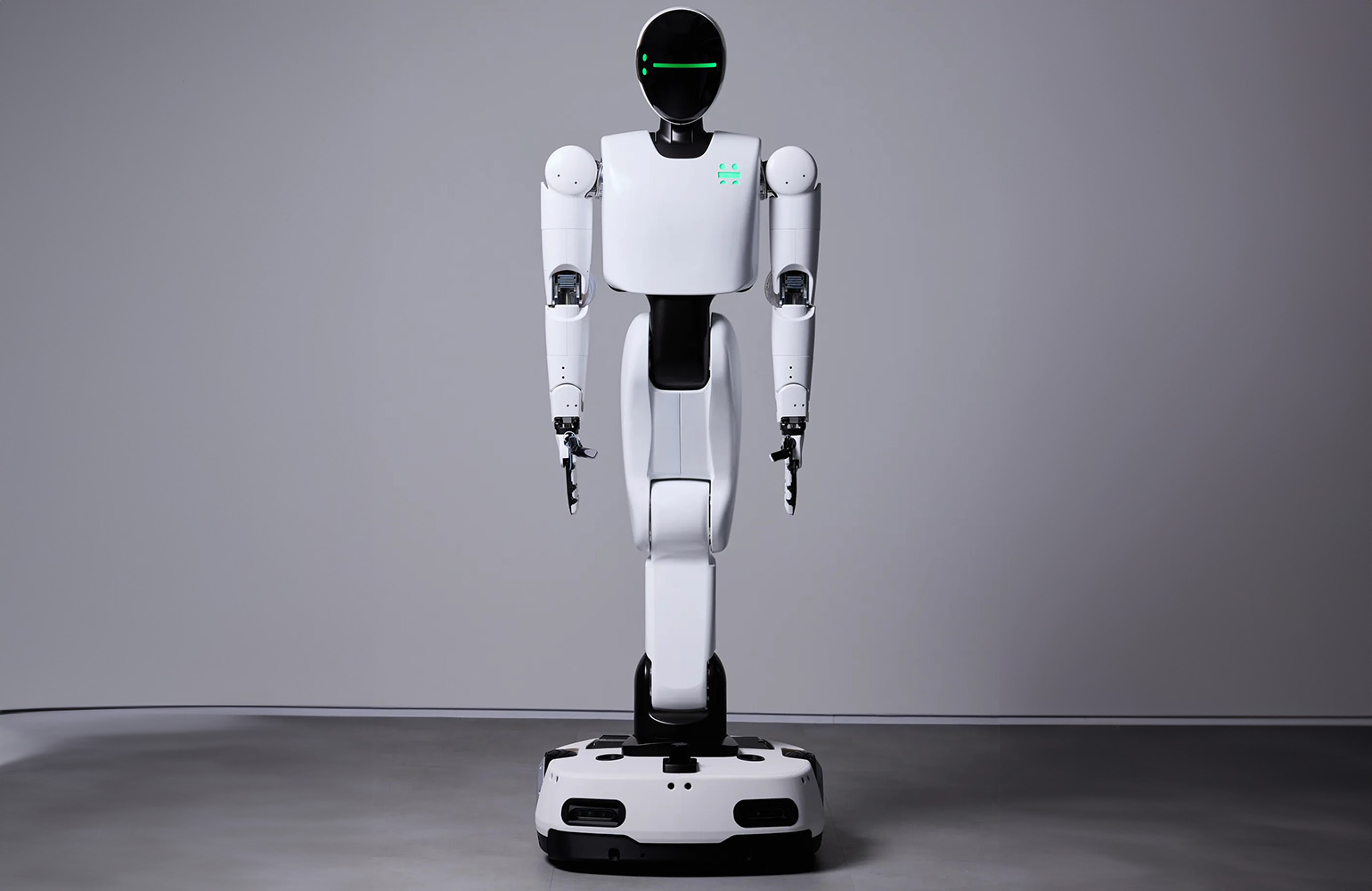
Holiday Robotics, a Seoul-based robotics pioneer, has positioned itself at the center of this transition. This month, the company announced a landmark $105 million Series A funding round, a significant war chest dedicated to the commercialization and refinement of its flagship robot, FRIDAY. Unlike many of its competitors, FRIDAY is not a biped; it is a "wheeled humanoid" designed specifically to bridge the gap between high-level artificial intelligence and the gritty, uncompromising reality of the manufacturing floor.
Main Facts: A $105 Million Bet on "Work-Ready" Robotics
The $105 million Series A round represents one of the largest early-stage investments in the South Korean robotics ecosystem to date. The capital injection is slated to accelerate Holiday Robotics’ mission to move humanoids out of the laboratory and into high-stakes industrial environments.
The Core Offering: FRIDAY
FRIDAY is a semi-humanoid platform characterized by a sophisticated upper body mounted on a high-speed, stable wheeled base. The robot is designed to perform repetitive physical tasks that have historically been difficult to automate due to the need for human-like dexterity and environmental adaptability.
Key technical specifications of the FRIDAY platform include:
- Degrees of Freedom (DoF): A total of 64 DoF, with a staggering 40 DoF dedicated solely to the hands, highlighting the company’s focus on fine motor skills.
- Perception Suite: 360-degree situational awareness provided by a combination of multiple LiDAR sensors and high-resolution cameras, ensuring no blind spots during operation.
- Power Management: Hot-swappable batteries designed to support continuous operation across full industrial shifts without downtime for charging.
- Safety Architecture: Lightweight, low-inertia hands and fully back-drivable joints, allowing the robot to interact safely with human coworkers without the need for traditional safety cages.
Strategic Objectives
With this funding, Holiday Robotics intends to:
- Scale the Engineering Team: Expand research and development presence in both Seoul and the United States.
- Strengthen Manufacturing Readiness: Prepare the FRIDAY platform for mass production and industrial-scale deployment.
- Advance the "Full-Stack": Refine the proprietary Vision-Language-Skill (VLS) software architecture that powers the robot’s decision-making.
Chronology: From Lab Demos to the Industrial "Brownfield"
The trajectory of Holiday Robotics reflects a broader shift in the robotics industry over the last decade. To understand the significance of FRIDAY, one must look at the evolution of the "General Purpose Robot" (GPR).
The Era of Exploration (2010s–2021)
During this period, companies like Boston Dynamics proved that robots could achieve incredible feats of mobility. However, these machines were often prohibitively expensive and lacked the "brains" to perform useful work autonomously. The focus was on physics—how to make a machine balance and move like a human.
The AI Inflection Point (2022–2023)
The rise of Large Language Models (LLMs) and Vision-Language Models (VLMs) changed the game. Suddenly, robots could "understand" instructions and "see" their environments with unprecedented nuance. This led to a surge in bipedal humanoid startups, with companies like Tesla (Optimus), Figure, and Apptronik promising robots that could replace human labor entirely.
The Pragmatic Pivot (2024–Present)
Holiday Robotics emerged during this phase with a different thesis. While competitors focused on the "cool factor" of walking on two legs, Holiday recognized that in a factory—where floors are flat and efficiency is king—legs are often a liability. They are mechanically complex, prone to falling, and energy-intensive.
By opting for a wheeled base, Holiday Robotics bypassed the stability issues of bipedalism to focus on the real value-add: the hands. This "field-first" approach led to the development of FRIDAY, a robot designed not for a futuristic "greenfield" factory, but for the "brownfield" sites of today—existing facilities that cannot be rebuilt to accommodate a robot.
Supporting Data: Why the "Hand-First" Philosophy Matters
In industrial automation, the "last inch" is the most expensive. Traditional robotic arms are excellent at moving heavy objects from Point A to Point B, but they struggle with the "finesse" tasks that define human labor: picking up a tangled wire, adjusting a misaligned component by feel, or handling objects with varying friction.
The 40-DoF Advantage
Holiday Robotics’ assertion that "value is created through the hands" is backed by the mechanical design of FRIDAY. Of its 64 degrees of freedom, 40 are located in the hands. This is a direct response to the complexity of factory work.
- Tactile Sensing: The hands are equipped with advanced sensors that allow the robot to "feel" contact.
- Force-Aware Control: This enables the robot to adapt to resistance in real-time, preventing damage to delicate components or itself.
- Sim-to-Real Transfer: Holiday utilizes "One-Shot Video-Guided Sim-to-Real" technology, allowing the robot to learn a task in a digital twin environment and execute it in the physical world with minimal adjustment.
The VLS Software Stack
The company’s Vision-Language-Skill (VLS) approach is a departure from the "End-to-End" learning models used by some competitors. In an end-to-end model, a single neural network takes sensory input and produces motor output. While impressive, these models are often "black boxes"—if a robot fails, it is difficult to diagnose why.
Holiday’s VLS architecture breaks tasks down:
- Vision-Language: The robot interprets the task (e.g., "Transfer these totes to the conveyor").
- Skill Orchestration: The system retrieves specific, validated "skills" (e.g., "grasping," "weight compensation," "obstacle avoidance") to complete the task.
- Validation: Each skill is hardened in the "Holiday Sim" before being deployed.
This modularity ensures that if a robot encounters a new variable, the specific "skill" can be updated without retraining the entire system, a necessity for industrial uptime.
Official Responses: A Philosophy of Earned Generality
Leadership at Holiday Robotics has been vocal about the company’s mission to avoid the "hype cycle" that has plagued the humanoid sector. In official statements accompanying the funding announcement, the company emphasized that safety and reliability are not optional features, but foundational requirements.
"A real factory imposes constraints that never show up in a controlled demo," the company noted. "These include things like contact, timing, repeatability, safety, recovery, and operational fit. The robot has to work inside the environment as it already exists, not ask the environment to change around it."
This "environment-agnostic" philosophy is what drove the development of the full-stack in-house. By controlling the hardware (FRIDAY), the simulation (Holiday Sim), the skill development (Holiday Lab), and the deployment (OASys), Holiday Robotics claims it can guarantee a level of reliability that third-party integrations cannot match.
Regarding their market strategy, the company stated: "We will earn generality through use rather than claim it in advance." This suggests a conservative, phased rollout, focusing first on specific high-value sectors like automotive and semiconductor manufacturing before attempting to solve the broader challenges of general-purpose labor.
Implications: The Future of Global Manufacturing and Labor
The successful funding of Holiday Robotics and the development of FRIDAY have profound implications for the global industrial landscape, particularly in the context of shifting demographics and economic pressures.
Addressing the Labor Gap
South Korea, Japan, and the United States are facing acute labor shortages in the manufacturing sector. As the workforce ages, there are fewer humans willing or able to perform the "3D" jobs—Dull, Dirty, and Dangerous. FRIDAY is positioned as a direct solution to this crisis. By automating repetitive physical work, companies can preserve their human capital for higher-level supervisory and maintenance roles.
The Geopolitics of Automation
South Korea is already the most automated nation in the world, with the highest density of industrial robots per human worker. The rise of Holiday Robotics signals South Korea’s intent to remain a leader in the next generation of AI-driven robotics, competing directly with U.S.-based firms like Figure and Tesla, and Chinese firms like Unitree.
The Shift from Bipedalism to Utility
The industry is watching FRIDAY closely to see if the "wheeled humanoid" becomes the standard for indoor industrial use. If FRIDAY can prove that a wheeled base provides 90% of the utility of a bipedal robot at a fraction of the cost and complexity, it may force a pivot across the entire humanoid industry.
"Brownfield" vs. "Greenfield"
Most of the world’s manufacturing happens in older factories. A robot that requires specialized flooring or wide, obstacle-free paths is a luxury most manufacturers cannot afford. FRIDAY’s 360-degree perception and compact, wheeled design make it a candidate for "brownfield" integration—meaning it can be dropped into an existing 20-year-old car plant and start working alongside humans almost immediately.
Conclusion: A Turning Point for Humanoid Utility
The $105 million investment in Holiday Robotics is more than just a financial milestone; it is a vote of confidence in a specific vision of the future. It is a future where robots are judged not by how much they look like us, but by how reliably they can assist us.
As FRIDAY begins its private proofs of concept with industrial partners in the automotive and semiconductor sectors, the robotics world will be watching. If Holiday Robotics can deliver on its promise of "earned generality" and industrial-grade reliability, the wheeled humanoid may soon become as common a sight on the factory floor as the conveyor belt once was. The era of the "demo robot" is ending; the era of the "worker robot" has begun.