



Precision Underfoot: The Evolution and Engineering of Industrial Footswitches in Modern Safety Systems

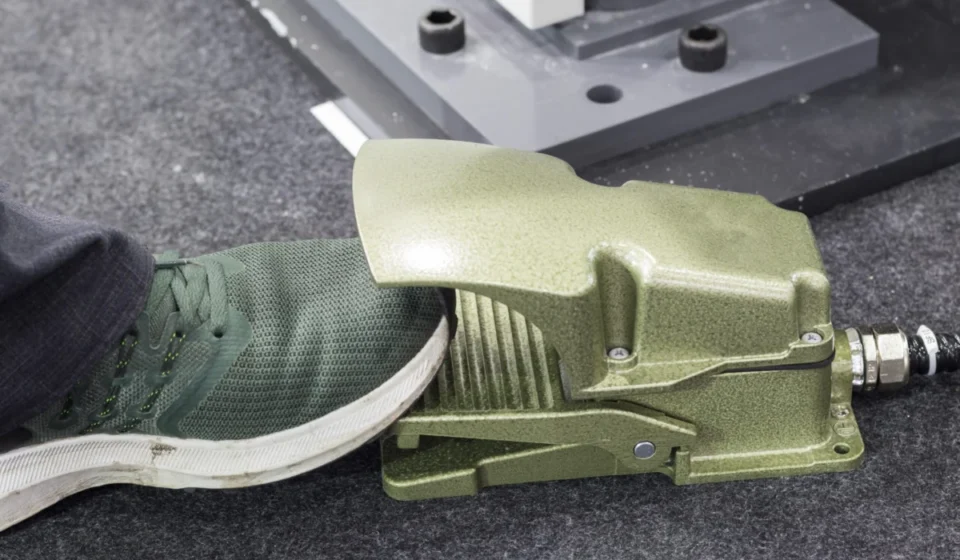
From the dawn of the Industrial Revolution to the high-precision automated assembly lines of the 21st century, the footswitch has remained a fundamental interface between human operator and machine. While the technology has transitioned from primitive mechanical linkages to sophisticated, ruggedized electronic sensors, its core purpose remains unchanged: providing a safe, intuitive, and ergonomic means of command for heavy machinery.
In today’s industrial landscape, the footswitch is more than a simple on-off button; it is a critical safety component that mitigates risk, improves operational throughput, and prevents the long-term health degradation associated with repetitive strain injuries (RSIs).
The Evolution of Foot-Operated Controls: A Chronology
The lineage of the modern footswitch can be traced back to the pre-steam era, where foot-driven power was the primary kinetic input for textile looms, manual sewing machines, and early wood-turning lathes.
- The Pre-Industrial Era (Pre-1800s): Early footswitches were strictly mechanical. These primitive "pedals" served as direct power inputs, translating the force of a worker’s leg into the reciprocating motion required for spinning wheels or weaving shuttles.
- The Steam and Early Electric Age (1800s–1950s): As steam power and early electricity took over, the footswitch evolved from a power source to a control interface. Mechanical clutches and crude electrical contacts began to replace human-powered kinetic energy, though they remained largely analog and lacked sophisticated safety interlocks.
- The Industrial Automation Revolution (1960s–2000s): The integration of solid-state electronics transformed the footswitch. Engineers introduced dustproof and waterproof seals, allowing these components to thrive in harsh, oily, or debris-heavy manufacturing environments. Ergonomics became a focal point, as manufacturers began designing pedals to match the natural posture of the human foot, reducing the risk of musculoskeletal disorders.
- The Smart Manufacturing Era (2010–Present): Modern footswitches are now highly specialized. They utilize advanced switching topologies, such as multi-stage, variable-speed, and programmable electronic signals, to integrate seamlessly with Programmable Logic Controllers (PLCs) and sophisticated safety-rated circuits.
Supporting Data: Engineering and Ergonomics
The modern footswitch is a marvel of human-factors engineering. To ensure worker longevity and machine efficiency, manufacturers prioritize several design criteria.

Materials and Durability
Today’s footswitches are constructed from high-impact polymers and aircraft-grade aluminum or steel. These materials are chosen not only for their durability but for their ability to withstand the corrosive environments of modern workshops. Internal subcomponents are sealed to IP (Ingress Protection) standards, preventing the intrusion of dust, coolant, and debris—factors that historically led to switch failures and safety hazards.
Ergonomic Considerations
Poor ergonomics is one of the leading causes of workplace injury. A poorly positioned or excessively stiff footswitch can lead to chronic fatigue, nerve damage, and repetitive strain injuries. Modern units are often adjustable, allowing operators to fine-tune the pedal angle and travel distance. By reducing the physical exertion required to activate the machine, manufacturers can maintain higher levels of productivity while simultaneously lowering the incidence of medical leave among operators.
Force Requirements and Application-Specific Design
One of the most critical aspects of footswitch selection is the required actuation force.
- Precision/Laboratory Applications: For delicate work—such as controlling a robotic arm for handling medical vials—the footswitch is designed for minimal force. This ensures that the operator can work for extended shifts without fatigue.
- Heavy-Duty/Off-Highway Applications: In contrast, agricultural equipment, such as harvesters or industrial crushers, requires heavy-duty "stomp" switches. These are engineered to require deliberate, high-force input to prevent nuisance tripping caused by machine vibrations or accidental contact.
Technical Integration: Design Considerations for Safety
Integrating a footswitch into an industrial system requires more than simply connecting a wire. It requires a deep understanding of electrical load and safety protocols.

Avoiding Catastrophic Failure
Consider a 12-ampere motor controlled by a footswitch. A novice designer might select a switch rated for 15 amperes, assuming the margin is sufficient. However, if that motor stalls or experiences a high-inrush current event, the current draw can spike well beyond the rating of a standard switch, leading to contact welding or catastrophic failure.
Safety-critical systems must incorporate:
- Overcurrent Protection: Proper circuit breakers or fuses must be positioned between the power source and the switch.
- Redundancy: In high-risk applications, dual-channel switching is often employed to ensure that if one contact fails, the machine enters a safe state.
- Rated Load Management: Switches must be selected based on the specific motor duty cycle, ensuring they can handle both steady-state current and transient spikes.
Wiring Topologies
Footswitches offer a variety of contact configurations to suit different control logic requirements:
- Single-Action (On-Off): Can be configured as momentary (spring-loaded) or latching (push-on/push-off).
- Pole Configurations: Available as single-pole, double-pole, or multi-pole, allowing for complex control arrays where one pedal might trigger multiple safety shutdowns simultaneously.
- Contact States: Contacts can be Normally Open (NO), Normally Closed (NC), or a combination of both, providing flexibility for fail-safe wiring.
Dual-Action and Advanced Control Logic
The most sophisticated industrial footswitches utilize "dual-action" or "two-stage" designs. These devices provide a tactile "click" or resistance point at the halfway mark, triggering a stage-one condition (such as enabling the power or priming the machine) and a second, deeper depression for the final action.

Make-Before-Break vs. Break-Before-Make
The switching core is vital for systems involving direction control, such as DC motor axes.
- Break-Before-Make: Essential for reversing polarity. It ensures that the forward circuit is fully disconnected before the reverse circuit engages, preventing short circuits and electrical arcing.
- Simultaneous-Switching: While useful in specific timing applications, it carries the risk of momentary shorts, which can lead to hazardous electrical discharges or component degradation.
Analog Variable Control
Beyond simple switching, modern pedals can provide infinite, analog speed control. By integrating potentiometers or Hall-effect sensors, these footswitches allow operators to vary the speed of an axis smoothly, providing the nuance required for high-speed machining or precise robotic manipulation.
Implications for Industrial Safety
The primary implication of modern footswitch design is the reduction of the "human element" risk. By implementing features like protective shrouds, two-stage actuation, and high-IP ratings, engineers have created a barrier between the operator and potential hazards.
However, the technology is only as effective as its implementation. Safety managers must ensure that:

- Maintenance Schedules: Footswitches are not "set-and-forget" devices. Seals degrade, and mechanical springs lose tension over time. Regular inspection is mandatory.
- Operator Training: Workers must understand the "feel" of their specific equipment, especially regarding two-stage pedals, to avoid accidental engagement.
- Regulatory Compliance: Any integration of a footswitch must adhere to local and international machinery safety standards (such as ISO 13849 or OSHA requirements), particularly when the device is used to initiate a stop or emergency action.
Conclusion: The Future of Foot-Operated Interfaces
As we move toward a future of Industry 4.0, the footswitch remains a staple of human-machine interaction. While voice controls and gesture recognition are emerging, the reliability, tactile feedback, and safety profile of the foot-operated switch ensure its place in the factory of the future. Whether it is a simple momentary contact or a sophisticated, programmable, multi-stage controller, the footswitch continues to provide the essential, reliable link that keeps workers safe and machines running at peak efficiency.