



Bridging the Gap: Liqcreate Unveils Bio-Med Flex, a New Frontier for Biocompatible 3D Printing

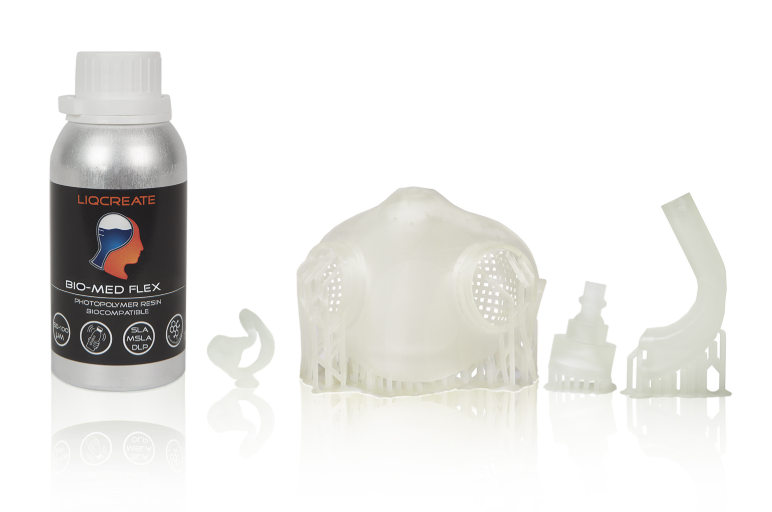
The landscape of medical additive manufacturing has long been dominated by rigid, high-performance polymers. While these materials have revolutionized dental and surgical planning, a significant void remained for flexible, resilient, and biocompatible components. Netherlands-based independent 3D printing resin manufacturer Liqcreate has stepped into this vacuum with the launch of Bio-Med Flex, a specialized photopolymer engineered specifically for the rigorous demands of clinical and biomedical environments.
This development represents more than just a new product launch; it signifies a shift in how hospitals and clinical prototyping labs can approach the production of soft-tissue anatomical models, wearable medical sensors, and deformable surgical fixtures. By offering a material that is both biocompatible and flexible, Liqcreate is enabling a new class of in-house production capabilities that were previously restricted to expensive, outsourced industrial elastomer manufacturing.
The Core Innovation: Why Flexibility Matters in Healthcare
In the world of medical 3D printing, "biocompatible" has historically been synonymous with "rigid." Surgeons and engineers have become accustomed to using hard resins for anatomical models that simulate bone or for static surgical guides. However, the human body is a system defined by soft tissues, elastic membranes, and flexible interfaces.
Rigid resins are inherently ill-suited for applications where deformation under load is required. Trying to simulate a heart valve, a flexible ligament, or a comfortable wearable sensor housing with a rigid resin leads to either brittle failure or a complete lack of functional realism. Until now, the only alternative was to commission parts from external industrial providers using specialized elastomers—a process that is often slow, cost-prohibitive, and incompatible with the fast-paced, iterative nature of clinical research.
Bio-Med Flex changes this paradigm. With a Shore A hardness of 73, the material mimics the feel of a firm rubber gasket. It possesses enough structural integrity to hold complex geometries with high precision, yet it remains soft enough to compress, bend, and withstand the repeated mechanical stress typical of medical training tools and wearable devices.
A Chronology of Development: From Concept to Clinical Reality
The evolution of Bio-Med Flex did not happen in a vacuum; it is the logical successor to Liqcreate’s Bio-Med Clear, a rigid biocompatible resin that has served as a benchmark in clinical and laboratory settings for over three years.
The Foundation: Bio-Med Clear
When Liqcreate first introduced Bio-Med Clear, it addressed the immediate need for a robust, transparent, and ISO-certified resin for standard medical applications. Its success in dental and surgical guide workflows proved that Liqcreate could master the delicate balance between material stability and medical-grade safety.
The Engineering Phase
Following the stabilization of Bio-Med Clear, the Liqcreate R&D team pivoted to the "flexibility challenge." The objective was to maintain the rigorous biocompatibility standards established by the flagship product while fundamentally altering the polymer chain to introduce elasticity. This required years of testing, focusing on molecular weight, cross-linking density, and the integration of photo-initiators that could cure reliably across various light wavelengths.
The Validation Milestone
The final stage of development involved intensive ISO certification testing. Unlike many consumer-grade resins that merely claim biocompatibility, Liqcreate opted for a verified, workflow-dependent certification. This approach ensures that when a user follows the prescribed post-processing steps—including specific ultrasonic washing and multi-stage curing—the final part consistently meets the stringent safety requirements expected in clinical environments.
Supporting Data: Mechanical Properties and Sterilization Resilience
The true test of a medical-grade material lies in its performance under pressure and its ability to withstand the harsh environment of a hospital autoclave. Bio-Med Flex provides a compelling suite of mechanical statistics that distinguish it from standard flexible resins.
Mechanical Specifications
- Shore A Hardness: 73 (Firm rubber)
- Tensile Strength: 5.0 MPa
- Elongation at Break: 180% to 250%
- Tear Strength: 20 to 28 kN/m
These numbers indicate a material that provides significant "stretch" before failure, making it ideal for components that undergo constant movement. Furthermore, the tear resistance ensures that thin-walled parts or complex intricate designs do not fail prematurely when handled by medical professionals.
The Autoclave Test
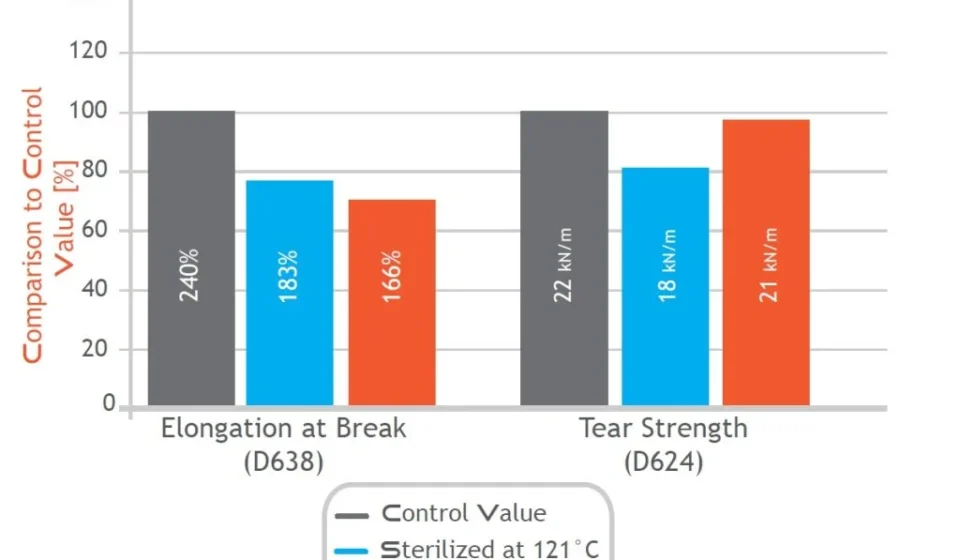
One of the most impressive features of Bio-Med Flex is its resilience to steam sterilization. Clinical tools must be capable of surviving 121°C or 134°C sterilization cycles.
- At 121°C: The material retains 3.7 MPa of tensile strength and a hardness of 70 Shore A.
- At 134°C: The material maintains 3.6 MPa of tensile strength and a hardness of 75 Shore A.
While there is a slight, predictable decline in mechanical properties, the material remains stable enough for repeated use. Even more impressively, disinfection with 70% or 99% isopropyl alcohol (IPA) results in negligible degradation, with tensile strength and elongation metrics remaining nearly identical to their pre-disinfection states.
The Criticality of the "Validated Workflow"
It is vital to note that biocompatibility is not an inherent property of the raw resin; it is a result of a validated, complete manufacturing process. Liqcreate has explicitly stated that the material only meets ISO 10993-5:2009 (cytotoxicity), ISO 10993-10:2021 (sensitization), and ISO 10993-23:2021 (irritation) standards when a specific, multi-step workflow is followed.
The Required Protocol:
- Ultrasonic Wash: Two distinct cycles in IPA or ethanol to ensure all residual monomers are removed from the surface.
- Ambient Dry: A minimum 60-minute window to allow solvents to evaporate fully.
- UV Cure: A 10-minute submerged UV curing cycle at 405 nm.
- Thermal Cure: A 120-minute thermal cure at 60°C.
Liqcreate emphasizes that the thermal cure stage is non-negotiable and requires a high-quality curing chamber, such as the Formlabs Formcure. Short-cutting this process compromises the chemical safety of the part, rendering it unfit for medical use regardless of its visual accuracy.
Implications for the Medical Industry
The launch of Bio-Med Flex has profound implications for the democratization of medical technology. By making this material available for open-architecture printers (including systems from Asiga, Elegoo, Anycubic, and Phrozen), Liqcreate is effectively removing the "barrier to entry" for many small-to-medium-sized clinical labs.
Decentralized Manufacturing
Hospitals no longer need to wait days or weeks for external manufacturers to supply flexible models. An orthopedic surgeon can now print a flexible, patient-specific model of a knee joint in-house, sterilize it, and bring it into the operating theater on the same day. This reduces supply chain friction and lowers the total cost of ownership for high-fidelity medical training and planning tools.
OEM and Custom Development
For manufacturers of medical devices, Bio-Med Flex offers a shortcut to regulatory approval. Because the material already possesses the necessary biocompatibility certifications, companies can focus on the geometry and functionality of their devices rather than spending years on material toxicity testing. Liqcreate’s willingness to offer custom, rebranded, and non-standard formulas further empowers OEMs to create proprietary products based on a pre-validated chemical foundation.
Conclusion: A Step Toward the Future of Digital Surgery
The introduction of Bio-Med Flex represents a maturing of the 3D printing industry. We have moved past the era of "prototyping for show" and entered a phase of "production for utility." As medical professionals continue to integrate additive manufacturing into their daily workflows, the availability of versatile, reliable, and safe materials like Bio-Med Flex will be the primary driver of innovation.
By providing detailed, transparent documentation—including validated print profiles and sterilization performance data—Liqcreate has established a new standard for material transparency. For the engineer, the surgeon, and the medical device OEM, Bio-Med Flex is not just a resin; it is a building block for the next generation of patient-specific, flexible medical solutions.
As the additive manufacturing industry moves toward 2026 and beyond, the ability to produce these high-performance, biocompatible parts in-house will likely become the cornerstone of hospital-based manufacturing hubs, effectively shortening the distance between a patient’s unique anatomical needs and the solution that treats them.