


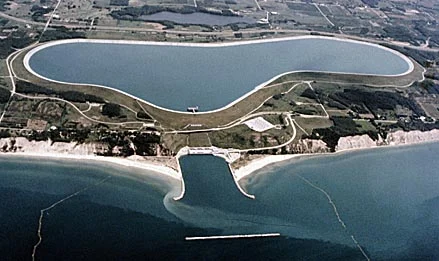
The Year of the Water Battery: Global Pumped Storage Capacity Surpasses Historic 200 GW Milestone

The global energy landscape is undergoing a profound transformation, and at the heart of this shift lies an age-old technology experiencing a high-tech renaissance. According to the International Hydropower Association’s (IHA) 2026 World Hydropower Outlook, 2025 has been officially crowned "the year of the water battery." With global pumped storage hydropower (PSH) capacity surging past the 200 GW threshold, the industry is cementing its role as the critical backbone of a decarbonized electrical grid.
As the world pivots toward intermittent renewables like wind and solar, the ability to store vast amounts of energy—and deploy it instantly—has shifted from a niche engineering requirement to a strategic geopolitical and economic priority.
Main Facts: A Watershed Moment for Energy Storage
The IHA’s latest report paints a picture of a sector in the midst of a historic expansion. In 2025 alone, the world commissioned 28 GW of new hydropower capacity. Of that figure, a record-shattering 11.7 GW was attributed specifically to pumped storage projects. This rapid deployment has propelled total global pumped storage capacity to over 200 GW, with a massive pipeline of 243 GW currently under construction worldwide.
When combined with conventional hydropower, total global installed capacity reached 1,469 GW by the end of 2025. This infrastructure is no longer merely about "base-load" power; it is increasingly defined by its "flexibility." As wind and solar assets continue to saturate the energy market, the inherent volatility of these sources requires a stabilizing force. Pumped storage acts as a massive, liquid-based battery, absorbing excess energy when demand is low and releasing it when the sun sets or the wind dies down.
Chronology of a Sector Reborn
The trajectory of hydropower, and specifically pumped storage, has been characterized by decades of steady utility, followed by a sudden, urgent acceleration.
- 1973: The commissioning of iconic projects like the Ludington Pumped Storage plant in Michigan set the gold standard for large-scale energy storage. For decades, these facilities served as quiet workhorses of the utility sector.
- 2010–2020: As the cost of solar and wind plummeted, the "storage gap" began to widen. Energy planners realized that batteries alone could not bridge the long-duration storage requirements of a modern grid.
- 2023–2024: Global policy frameworks—such as the U.S. Inflation Reduction Act and China’s 14th Five-Year Plan—began explicitly incentivizing pumped storage as a primary solution to grid instability.
- 2025: The "Year of the Water Battery." New capacity records were set, and the 200 GW barrier was shattered, marking the transition of PSH from a secondary grid asset to a primary energy security priority.
- 2026 and Beyond: The focus shifts to the 243 GW pipeline, as nations scramble to finalize projects currently in various stages of construction, driven by the explosive power needs of AI and data center infrastructure.
Supporting Data: The Global Distribution of Power
The geography of this expansion is heavily tilted toward major economies that view energy independence as a national security issue.
China’s Unrivaled Dominance
China remains the undisputed leader in hydropower development, accounting for over 40% of all global capacity additions in 2025. The sheer scale of Chinese infrastructure is staggering: the country has more than 300 GW of hydropower currently under construction, with 218 GW of that dedicated to pumped storage.
A centerpiece of this expansion is the Yarlung Zangbo River Hydropower Project. Once completed, this engineering marvel is expected to generate approximately three times the electricity of the Three Gorges Dam, the current record-holder. Such projects are not merely about power; they represent a fundamental restructuring of the national energy grid to support a manufacturing-heavy economy.
North American Modernization
While China focuses on new mega-projects, North and Central America are focusing on optimization. In Canada, the commissioning of the 1.1 GW Site C project in British Columbia serves as a testament to the country’s commitment to large-scale hydro. Meanwhile, the U.S. has pivoted toward "modernization."
U.S. federal agencies have implemented significant permitting reforms and fast-track measures to revitalize aging infrastructure. With over 60 GW of pumped storage projects currently in various stages of development, the U.S. is signaling that its future grid security will rely heavily on the conversion of existing water resources into advanced storage facilities.
Official Responses and Strategic Shifts
The IHA’s outlook does not mince words regarding the impetus for this growth. The association emphasized that "while conventional hydropower remains essential, increasing shares of wind and solar are driving growing demand for flexibility."
The AI/Data Center Catalyst
Perhaps the most surprising driver of hydropower demand in 2025 has been the explosion of Artificial Intelligence. Data centers are notoriously power-hungry, requiring constant, reliable electricity to function. Major technology giants, including Microsoft and Google, have moved beyond simple carbon-offsetting to sign landmark long-term hydropower supply agreements. These companies require the 24/7 reliability that only hydro-based systems can provide, effectively positioning the hydropower sector as the silent partner of the digital revolution.
Regulatory and Economic Challenges
Despite the momentum, the IHA warned that the path forward is not without friction. "Financing constraints, permitting delays, transmission bottlenecks, climate-related hydrological variability and regulatory uncertainty" remain significant barriers.
In many markets, the time it takes to secure environmental permits for a pumped storage project can span a decade or more—a timeline that is increasingly incompatible with the urgent decarbonization goals set by international climate agreements. Transmission bottlenecks also remain a critical issue; even if a massive hydropower plant is built, moving that power from remote mountainous regions to urban load centers remains an expensive and politically sensitive challenge.
Implications: Building the Grid of Tomorrow
What does the "Year of the Water Battery" mean for the average consumer and the global climate agenda?
1. Grid Resilience
As climate change increases the frequency of extreme weather events, the vulnerability of the electrical grid is a top-tier concern. Pumped storage provides a level of "black-start" capability—the ability to restart a grid from scratch during a blackout—that chemical batteries cannot easily match at scale.
2. Economic Competitiveness
Nations that master the deployment of pumped storage will likely enjoy lower energy costs over the long term. By reducing the need to curtail (throw away) wind and solar energy during periods of over-production, pumped storage turns "waste" energy into a profitable commodity.
3. The Future of Policy
The success of the past year suggests that government intervention is the primary lever for progress. The shift toward fast-track permitting in the U.S. and the massive capital allocation in China serve as templates for other regions. However, the IHA warns that without addressing hydrological variability—the impact of changing rainfall patterns and melting glaciers on water availability—the long-term viability of some hydropower assets may be at risk.
4. Conclusion: A Silent Giant Awakens
The world is moving away from the era of "cheap, dirty energy" toward an era of "managed, flexible energy." Hydropower, once thought of as a legacy technology, has reclaimed its position as a central pillar of the energy transition. As we look toward the remainder of the decade, the 243 GW pipeline of pumped storage projects will be the primary metric by which we measure the success of the global transition to a low-carbon economy.
The "water battery" has arrived, and it is currently storing the energy that will power the next century of human progress. The challenge for policymakers and engineers now is not just to build more, but to build smarter, faster, and with a keen eye on the changing climate that these very projects are designed to protect.