

Four Million and Counting: How the Nissan Qashqai Cemented Its Position as Europe’s Definitive Crossover

The compact crossover segment, a dominant force in the global automotive landscape, owes its modern existence to a single, bold gamble taken by Nissan nearly two decades ago. By replacing a conventional hatchback with a high-riding, family-oriented utility vehicle, the Japanese automaker did more than introduce a new model; it established an entirely new vehicle category.
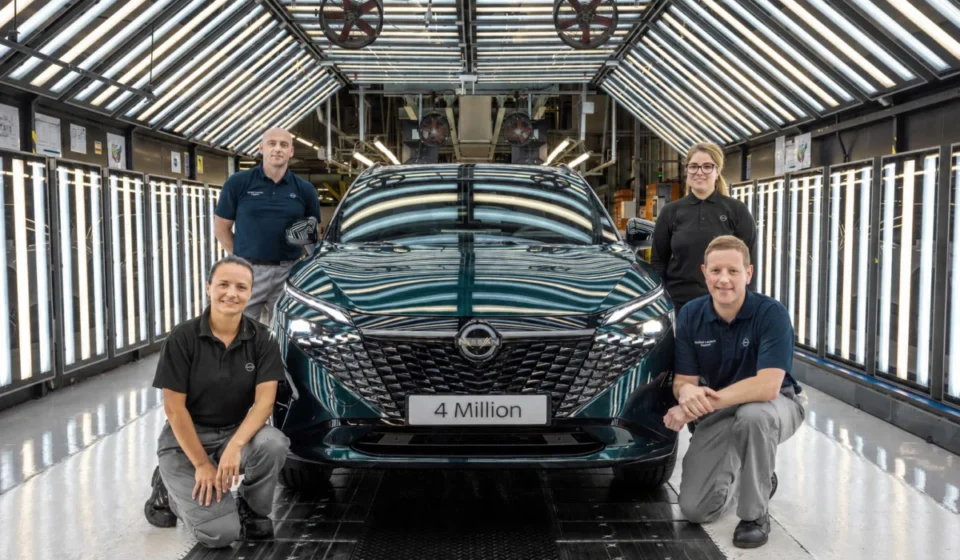
Today, that gamble continues to pay dividends. Nissan has officially announced that the Qashqai has surpassed four million sales in Europe across three generations. To celebrate this milestone and address the shifting demands of an increasingly tech-focused customer base, the brand has launched an educational initiative developed by its European engineering division. This campaign highlights the sophisticated technology embedded within the vehicle, emphasizing how the model has transitioned from a rugged hatchback alternative into a showcase of advanced electrification and driver assistance.
Main Facts: A Milestone for the Crossover Pioneer
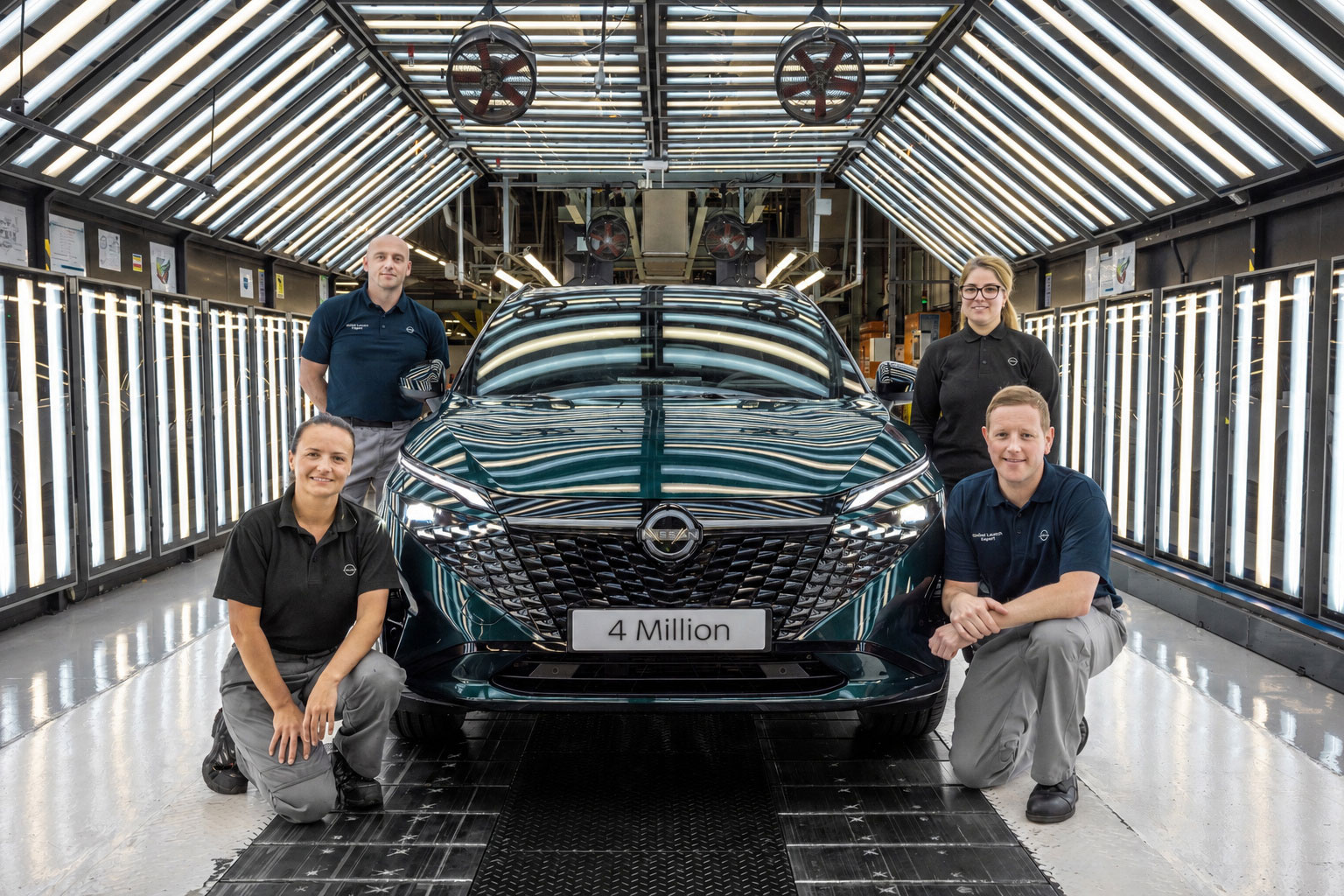
The sale of the four-millionth Nissan Qashqai in Europe solidifies the model’s status as one of the continent’s most resilient and commercially successful nameplates. Designed, engineered, and manufactured in Europe, the Qashqai represents a localized success story that has sustained Nissan’s regional operations for nearly twenty years.
To mark this achievement, Nissan Technical Centre Europe (NTCE) has released a dedicated video series titled "Wait, My Qashqai Does What…?". Produced by the very engineers responsible for testing and validating the vehicle’s systems, the series aims to educate owners on advanced features that often go underutilized. The video campaign focuses on four primary areas:
- Driver Assistance Personalization: Customizing the vehicle’s active safety systems, such as lane-keeping assistance and speed limit alerts, to suit individual driving preferences.
- Advanced Parking Systems: Utilizing the Around View Monitor and automated parking aids to navigate tight urban spaces.
- The e-POWER Hybrid Powertrain: Explaining the mechanics of Nissan’s unique series-hybrid technology, which uses a gasoline engine solely to generate electricity for an electric motor.
- Cabin Utility and Convenience: Practical tips on maximizing the vehicle’s modular luggage space and utilizing the hands-free capabilities of the Nissan Intelligent Key.
By pairing a major sales milestone with a customer-education campaign, Nissan is pursuing a clear strategic objective: fostering brand loyalty and retaining its extensive customer base at a time when the European mid-size SUV market is more saturated than ever.
Chronology: The Evolution of a Segment-Defining Icon
The journey to four million European sales spans three distinct generations, marked by shifts in consumer preferences, regulatory environments, and powertrain technologies.
+-----------------------------------------------------------------------------+
|                                QASHQAI TIMELINE                             |
+-----------------------------------------------------------------------------+
|                                                                             |
|  2004: Concept Phase                                                        |
|  [ Nissan cancels conventional C-segment hatchback; greenlights crossover ] |
|                                 │                                           |
|                                 ▼                                           |
|  2007: Generation 1 Launch                                                  |
|  [ Pioneers the compact crossover segment; replaces Almera & Primera ]      |
|                                 │                                           |
|                                 ▼                                           |
|  2014: Generation 2 Launch                                                  |
|  [ Introduces Nissan Safety Shield; shifts toward premium cabin materials ] |
|                                 │                                           |
|                                 ▼                                           |
|  2021: Generation 3 Launch                                                  |
|  [ Built on CMF-C platform; diesel discontinued; e-POWER debuted ]         |
|                                 │                                           |
|                                 ▼                                           |
|  2024: Mid-Cycle Refresh & Milestone                                        |
|  [ Sleeker design, Google built-in integrated; 4M European sales surpassed ]|
|                                                                             |
+-----------------------------------------------------------------------------+
Generation 1 (2007–2013): Bold Risk, Immediate Success
In the mid-2000s, Nissan’s traditional C-segment contenders, the Almera hatchback and Primera sedan, were struggling to compete against established European rivals. Recognizing the need for a radical departure, Nissan’s European product planners proposed a hybrid concept: a vehicle with the elevated driving position and robust styling of an SUV, but the running costs, agility, and footprint of a family hatchback.
Launched in early 2007, the first-generation Qashqai (codenamed J10) was an instant commercial success. Production at the Sunderland plant in the United Kingdom quickly ramped up to three shifts a day to meet unprecedented demand. In 2008, Nissan expanded the lineup with the Qashqai+2, offering a longer wheelbase and seven-seat practicality. By the time the first-generation model finished its run, it had democratized the high-riding driving position and forced virtually every major competitor in Europe to develop a rival crossover.
Generation 2 (2014–2021): Defending the Crown
The second-generation Qashqai (J11), introduced in late 2013 for the 2014 model year, faced a radically different competitive landscape. No longer the sole player in the segment, it went up against dozens of direct competitors.
To maintain its market leadership, Nissan focused on refinement, cabin quality, and active safety technology. The J11 generation introduced the "Nissan Safety Shield," bringing advanced driver assistance systems (ADAS) like traffic sign recognition, lane departure warning, and autonomous emergency braking to a mainstream audience. A major facelift in 2017 further elevated the vehicle’s interior materials and introduced ProPILOT, Nissan’s semi-autonomous driving assistant.
Generation 3 (2021–Present): The Electrified Revolution
The third-generation Qashqai (J12), launched in 2021, arrived amidst stringent European emissions regulations and an industry-wide transition toward electrification. Built on the Alliance CMF-C platform, the J12 marked a major technological shift. Nissan completely eliminated diesel engines from the lineup, replacing them with 12V mild-hybrid petrol options and, most notably, the innovative e-POWER drivetrain.
In 2024, the third-generation model received a comprehensive mid-cycle refresh. The update introduced a sharper exterior aesthetic inspired by the Ariya electric SUV, an upgraded infotainment system featuring Google built-in, and enhanced materials throughout the cabin, ensuring the vehicle remains competitive against newer rivals.
Supporting Data: Technical Efficiency, Accolades, and Manufacturing Scale
The commercial longevity of the Nissan Qashqai is backed by strong manufacturing metrics, efficiency figures, and industry recognition.
The e-POWER Powertrain: Electric Drive without the Plug
At the heart of Nissan’s current European sales strategy is the e-POWER system. Unlike conventional parallel hybrids, where the internal combustion engine and electric motor take turns driving the wheels, e-POWER operates as a series hybrid.
+-----------------------------------------------------------------------------+
|                          NISSAN e-POWER SYSTEM FLOW                         |
+-----------------------------------------------------------------------------+
|                                                                             |
|   [ 1.5L VC-Turbo Petrol Engine ]                                           |
|                 │                                                           |
|                 ▼                                                           |
|         [ Generator ]                                                       |
|                 │                                                           |
|                 ▼                                                           |
|         [ Inverter ] <─── (Power Split) ───> [ High-Output Battery ]        |
|                 │                                     │                     |
|                 ▼                                     ▼                     |
|         [ 140 kW Electric Motor ] ────────────────────┘                     |
|                 │                                                           |
|                 ▼                                                           |
|         [ Drive Wheels ]                                                    |
|                                                                             |
+-----------------------------------------------------------------------------+- The Engine: A 1.5-liter three-cylinder turbocharged petrol engine featuring variable compression ratio technology. It does not connect to the drive shafts; its sole purpose is to run an alternator that generates electricity.
- The Motor: A 140 kW (188 hp) electric motor that exclusively drives the front wheels. This configuration delivers the instant torque, linear acceleration, and smooth power delivery characteristic of a battery-electric vehicle (BEV).
- Efficiency Metrics: Under official WLTP test conditions, the Qashqai e-POWER delivers a combined fuel consumption of 4.3 liters per 100 km (equivalent to approximately 65.7 mpg UK).
- Range: Thanks to this thermal efficiency, the vehicle can cover more than 1,200 kilometers (approx. 745 miles) on a single 55-liter tank of fuel, offering long-distance usability without the charging infrastructure dependencies of a pure BEV.
Awards and Industry Recognition
Over its 17-year lifespan, the Qashqai has accumulated significant industry accolades:
- More than 110 international awards spanning safety, design, value, and engineering.
- 20 Car of the Year titles across various European and global markets.
- Consistently high safety ratings, including a maximum five-star Euro NCAP rating for the latest generation under the organization’s increasingly stringent testing protocols.
Regional Economic Impact and Production Scale
The Qashqai is a cornerstone of the UK and European automotive manufacturing sectors:
- Design & Engineering: All three generations of the Qashqai have been styled at Nissan Design Europe (NDE) in Paddington, London, and engineered at the Nissan Technical Centre Europe (NTCE) in Cranfield, Bedfordshire.
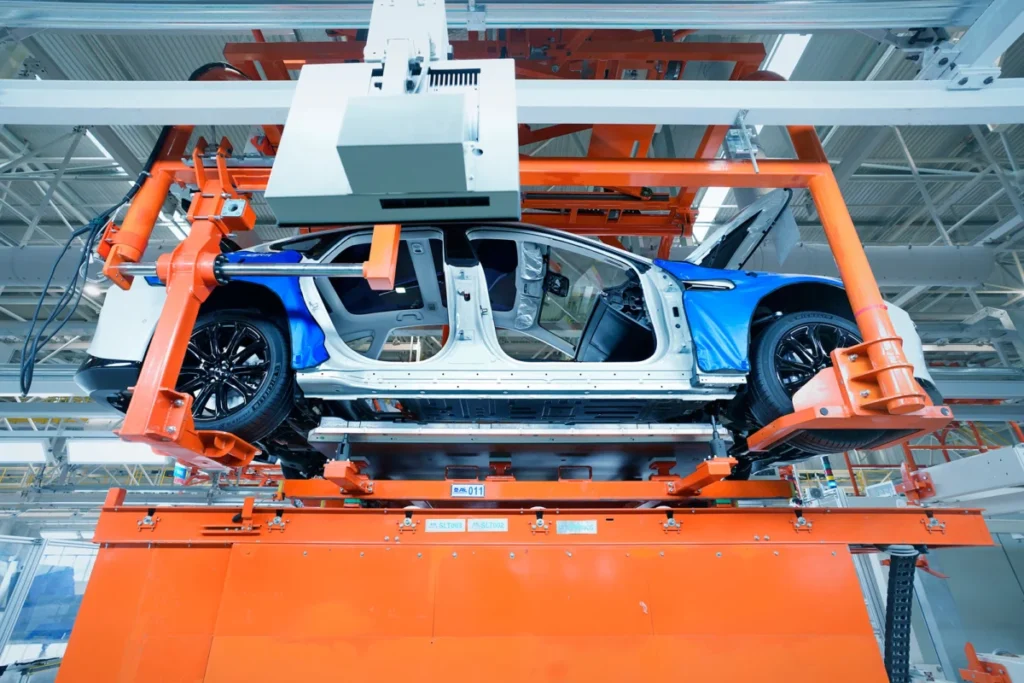
- Production Hub: The vehicle is built at Nissan’s manufacturing plant in Sunderland, Tyne and Wear. The facility has produced the vast majority of the four million units sold in Europe.
- Speed of Production: The Qashqai is the fastest UK-built car to reach the one-million, two-million, and three-million production milestones, supporting thousands of direct jobs at the plant and tens of thousands more in the regional automotive supply chain.
Official Responses: Engineering Insight and Customer-Centric Design
The release of the "Wait, My Qashqai Does What…?" video series highlights Nissan’s shift toward improving customer onboarding and feature utilization. Automotive manufacturers have long recognized that modern vehicles contain more advanced safety and convenience systems than the average driver uses or understands.
Engineers at NTCE facilities in Cranfield, UK, and Barcelona, Spain, designed the video series based on real-world customer feedback and diagnostic data. The focus on educating owners about ADAS personalization is particularly relevant, as many drivers find lane-keeping alerts or speed limit warnings intrusive and opt to disable them entirely rather than tailoring them to their driving style.
By demystifying these systems, Nissan’s engineering team hopes to demonstrate that features like the Intelligent Around View Monitor and ProPILOT Assist are not gimmicks, but practical tools designed to reduce driving stress and improve daily safety.
Furthermore, Nissan’s design and engineering teams in the UK emphasize that the Qashqai’s localized development is its greatest strength. By testing the vehicle on European roads—characterized by narrow urban streets, high-speed motorways, and unpredictable weather—the engineering team ensures that steering feel, suspension tuning, and driver assistance calibration are optimized for the region’s driving conditions.
Implications: Securing Market Share in an Era of Hyper-Competition
Reaching the four-million sales mark is a major achievement, but it comes at a critical juncture for Nissan in Europe. The C-SUV segment, which the Qashqai pioneered, is now the most competitive and crowded sector in the European automotive market.
To maintain its foothold, Nissan must navigate several challenges:
1. Defending Against Established and New Competitors
The Qashqai faces strong competition from traditional European rivals like the Volkswagen Tiguan, Peugeot 3008, and Ford Kuga, alongside highly competitive Asian models like the Hyundai Tucson and Kia Sportage. Additionally, the rapid influx of well-equipped, competitively priced vehicles from Chinese OEMs poses a new challenge to established mainstream brands.
2. Bridging the Gap to Full Electrification
While Nissan’s long-term goal is a fully electric lineup, the transition to BEVs in Europe has shown signs of polarization, influenced by shifting government incentives, high initial purchase costs, and public charging infrastructure gaps. The e-POWER system serves as a key transitional technology. It appeals to buyers who want the driving dynamics of an electric vehicle but are not yet ready or able to transition to a plug-in model.
3. Securing the Future of European Manufacturing
The success of the Qashqai is directly linked to the future of the Sunderland plant. Nissan has already committed to its "EV36Zero" blueprint, a major investment plan designed to transform the Sunderland facility into an electric vehicle manufacturing hub.
This plan includes the future production of three all-electric crossovers, which will serve as the spiritual and physical successors to the current Qashqai, Juke, and Leaf. Maintaining strong sales of the current hybrid Qashqai is vital to generating the revenue and market share needed to support this transition.
+-----------------------------------------------------------------------------+
|                         NISSAN SUNDERLAND TRANSITION                        |
+-----------------------------------------------------------------------------+
|                                                                             |
|  Current Era:                                                               |
|  [ Highly efficient ICE, Mild-Hybrid, and e-POWER Qashqai production ]      |
|                                 │                                           |
|                                 ▼                                           |
|  Investment Phase (EV36Zero):                                               |
|  [ £3 Billion investment in battery gigafactories and wind/solar grid ]      |
|                                 │                                           |
|                                 ▼                                           |
|  Next-Gen Era:                                                              |
|  [ All-electric replacements for Qashqai, Juke, and Leaf ]                  |
|                                                                             |
+-----------------------------------------------------------------------------+
By focusing on post-sale customer engagement, refinement, and practical hybrid technology, Nissan is working to keep its foundational model highly relevant. Four million sales prove that the Qashqai has been a cornerstone of Europe’s automotive market for nearly two decades. The coming years will determine if its electrified descendants can replicate that success in an increasingly electric future.