

Cultivating a Culture of Safety: How an Oklahoma Transformer Recycler Achieved SHARP Excellence Through OSHA Collaboration

By Chelsey Arries
Enriched and Expanded Edition
Main Facts: Transforming Workplace Safety in Tonkawa
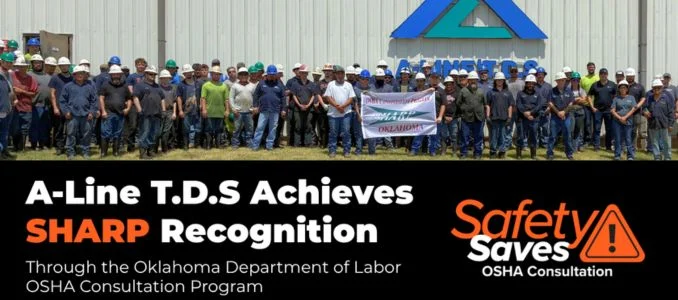
In the high-stakes world of industrial recycling, where heavy machinery, hazardous materials, and complex electrical infrastructure intersect, workplace safety is not merely a regulatory box to check—it is a matter of life and death. For A-Line TDS, a specialized transformer recycling facility based in Tonkawa, Oklahoma, cultivating an uncompromising safety culture has yielded remarkable operational dividends. Spotlighted in a success story released by the Oklahoma Department of Labor (ODOL), the company is receiving renewed acclaim for its dramatic safety overhaul, anchored by its partnership with the OSHA On-Site Consultation Program.
The multi-year safety journey undertaken by A-Line TDS culminated in 2025 when the company achieved Safety and Health Achievement Recognition Program (SHARP) status. This elite designation is reserved for small and medium-sized business employers who operate exemplary safety and health programs. By opening its doors to state safety experts, overhauling its daily operational routines, and fundamentally shifting how management and frontline workers communicate about risk, A-Line TDS has transformed from a conventional industrial processor into a benchmark for modern occupational health and safety (OHS) practices.
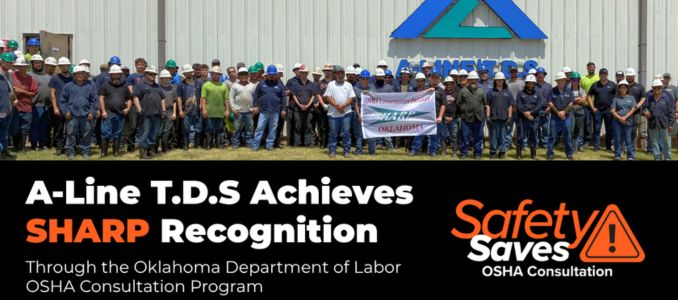
At the core of the company’s transformation is a cultural pivot: safety is no longer perceived as a top-down mandate imposed by compliance officers or plant managers. Instead, it has evolved into a shared, collaborative responsibility. By integrating open forums into daily safety meetings, empowering line-level employees to voice concerns without fear of reprisal, and rigorously tracking near-miss data, A-Line TDS successfully eliminated workplace incidents during some of its most hazardous operations—specifically, the complex dismantling of large-scale industrial transformers.
Chronology of a Safety Evolution: From First Consultation to SHARP Recognition
The journey toward institutionalized safety excellence at A-Line TDS did not happen overnight. It represents a methodical, multi-year progression of self-assessment, professional consultation, policy implementation, and cultural reinforcement.
Phase 1: The Initial Assessment (2022)
The foundational chapter of the company’s modern safety era began in 2022, when leadership made the proactive decision to invite the Oklahoma Department of Labor’s OSHA On-Site Consultation Program to evaluate the Tonkawa facility. Unlike OSHA enforcement inspections—which can result in citations and financial penalties—the On-Site Consultation Program is a confidential, voluntary resource designed specifically to help small and medium-sized businesses identify workplace hazards, evaluate safety and health programs, and develop comprehensive corrective action plans.

During this initial walkthrough, state safety consultants conducted a thorough hazard identification sweep across the facility. They examined equipment guarding, material handling protocols, industrial hygiene controls, and standard operating procedures (SOPs) associated with transformer processing. The findings provided A-Line TDS leadership with an objective, external baseline of their operational vulnerabilities and structural safety gaps.
Phase 2: Policy Redesign and Empowerment (2022–2024)
Armed with actionable insights from the initial consultation, A-Line TDS management initiated a series of structural updates to its safety program. Rather than treating the consultant’s recommendations as a simple checklist, the company focused on the human element of safety compliance.
Recognizing that frontline workers possess the most immediate, granular understanding of daily operational hazards, the company overhauled its daily safety meeting structure. Traditional, lecture-style briefings where supervisors read off safety rules were replaced with interactive open forums. Workers were actively encouraged to share observations, question existing procedures, voice emerging concerns, and pitch practical ideas for mitigating workplace hazards.

Phase 3: Continuous Improvement and Hazard Mitigation (2024)
As employee engagement deepened, the facility experienced a notable shift in how safety data was captured and utilized. Near-miss reporting—historically an underutilized metric in many industrial settings—surged. By treating near misses not as administrative nuisances but as vital warning signs, safety personnel and floor staff collaborated to engineer out potential hazards before they could manifest as actual injuries.
Phase 4: Achieving SHARP Status (2025)
Following sustained improvements, rigorous self-inspections, and demonstrated adherence to rigorous occupational health standards, A-Line TDS officially earned SHARP status in 2025. This milestone recognized that the facility’s injury and illness rates were well below the national average for its industry classification, and that its safety and health management system met the rigorous criteria established by federal and state OSHA guidelines.
Supporting Data: Quantifying the Impact of Cultural and Structural Reforms
In industrial safety, qualitative improvements must be validated by quantitative metrics. The success of the safety overhaul at A-Line TDS is powerfully underscored by the operational data recorded following the implementation of their revised safety programs and consultation recommendations.

1. Zero Incidents in High-Risk Operations
Transformer recycling inherently involves severe occupational hazards, including heavy lifting, exposure to residual dielectric fluids, high-voltage equipment handling, and thermal cutting processes. Following the procedural overhauls that stemmed from the OSHA On-Site Consultation process, A-Line TDS recorded a pristine safety record during high-risk transformer dismantling operations. Achieving zero safety incidents in such a demanding operational environment proves that hazard recognition and proactive engineering controls successfully neutralized catastrophic risk vectors.
2. Surge in Near-Miss Reporting and Employee Participation
In traditional manufacturing and recycling environments, workers frequently hesitate to report close calls due to misplaced fears of disciplinary action or production delays. By transforming daily safety meetings into open forums, A-Line TDS reversed this dynamic. The Oklahoma Department of Labor noted a significant, measurable increase in active employee participation during safety discussions. This heightened engagement directly correlated with a higher volume of reported near misses—a counter-intuitive metric that safety professionals universally recognize as a sign of a maturing, highly functioning safety culture. When workers feel safe reporting close calls, management gains the visibility needed to prevent actual accidents.
3. Alignment with SHARP Benchmarks
To qualify for SHARP, businesses must meet stringent statistical thresholds. Facilities are required to maintain a Days Away, Restricted, or Transferred (DART) rate and a Total Recordable Incident Rate (TRIR) below the national Bureau of Labor Statistics (BLS) average for their specific North American Industry Classification System (NAICS) code. By meeting and maintaining these benchmarks, A-Line TDS demonstrated that its safety management systems are not only compliant on paper, but demonstrably effective in practice.

Official Responses and Perspectives: Leadership, Labor, and Consultation
The success story of A-Line TDS highlights the symbiotic relationship that can exist between regulatory bodies and private enterprises when safety is approached as a cooperative endeavor rather than an adversarial contest.
The Oklahoma Department of Labor’s Perspective
The ODOL has consistently championed the OSHA On-Site Consultation Program as a vital economic and humanitarian resource for Oklahoma businesses. By publishing the A-Line TDS success story on September 16, the department sought to underscore how proactive engagement can alter a company’s operational trajectory.
According to labor officials, the consultation process was instrumental in providing A-Line TDS with the technical guidance necessary for continuous improvement. More importantly, the department emphasized that the program successfully fostered a shared responsibility model. In this framework, executive leadership, plant supervisors, and hourly line workers view occupational health as a collective moral and economic imperative. The state’s promotion of A-Line TDS serves as a public blueprint for other small and medium-sized enterprises (SMEs) hesitant to engage with state or federal safety agencies.

Corporate Leadership and Frontline Buy-In
For A-Line TDS management, the decision to invite external consultants required a cultural commitment to transparency. Inviting safety regulators—even in a consultative capacity—demands humility and a willingness to confront operational shortcomings. By embracing this vulnerability, company leadership earned the trust of its workforce.
Frontline workers responded to the open-forum policy by taking ownership of plant safety. When workers realize that their observations directly influence operational policy, safety transforms from a rigid compliance chore into a point of professional pride. This psychological safety is widely regarded by industrial psychologists as the bedrock of world-class safety programs.
Broader Implications: Lessons for the Industrial Recycling and Manufacturing Sectors
The experiences of A-Line TDS offer profound, scalable lessons for the broader industrial recycling, scrap processing, and manufacturing sectors. As industries face mounting operational pressures, labor shortages, and increasingly complex regulatory landscapes, the A-Line TDS model provides a clear roadmap for sustainable safety excellence.

1. Demystifying OSHA Consultation
Many small and medium-sized business owners harbor an underlying anxiety regarding OSHA, often viewing any interaction with safety agencies as a precursor to citations and fines. The A-Line TDS narrative powerfully reinforces the distinction between OSHA enforcement and the On-Site Consultation Program. Because consultation services are completely confidential and separate from enforcement—provided the employer corrects identified serious hazards—SMEs can leverage expert engineering and industrial hygiene advice without financial jeopardy. Industrial associations and safety advocates can point to A-Line TDS as tangible proof that inviting consultation is a low-risk, high-reward strategic investment.
2. The Power of Psychological Safety in High-Hazard Industries
In heavy industrial environments, physical safeguards—such as machine guards, lockout/tagout (LOTO) protocols, and personal protective equipment (PPE)—are foundational. However, as the A-Line TDS transformation illustrates, mechanical safeguards are insufficient without psychological safety. When employees are given an unhindered platform to voice concerns during daily huddles, they act as frontline sensors for unseen or evolving hazards. Cultivating an environment where an entry-level technician feels empowered to halt an operation due to a perceived safety anomaly is the ultimate defense against catastrophic workplace injuries.
3. Economic and Operational Viability of SHARP
Achieving SHARP status is more than a public relations victory; it carries tangible business advantages. SHARP-approved worksites are exempted from programmed OSHA enforcement inspections, allowing management to focus resources on production and continuous improvement rather than administrative compliance audits. Furthermore, maintaining an exemplary safety record dramatically reduces workers’ compensation insurance premiums, minimizes absenteeism, curtails equipment damage, and boosts overall employee retention. In an industry where specialized labor is difficult to recruit and retain, a sterling safety reputation acts as a powerful talent magnet.

Conclusion
The journey of A-Line TDS from its initial 2022 consultation to its 2025 SHARP designation demonstrates that workplace safety is a dynamic, evolving discipline. By bridging the gap between management intentions and frontline realities, the Tonkawa-based transformer recycler has proven that safety excellence is attainable for small and medium-sized industrial operations. Through open communication, rigorous hazard identification, and a genuine commitment to shared responsibility, A-Line TDS has not only protected its workforce from harm but has established an inspiring standard for industrial stewardship across Oklahoma and the broader manufacturing community.