




Bridging the Security-Resilience Gap: Rockwell Automation Report Highlights the Hidden Vulnerabilities of Industrial Connectivity

By Industrial Technology News Desk
Published: October 24, 2023
Main Facts: The Illusion of Security in Modern Manufacturing
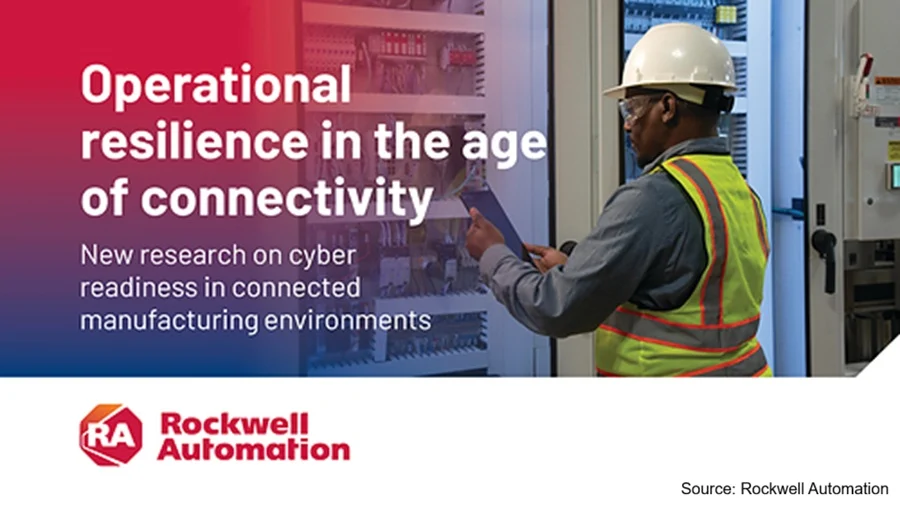
As the global manufacturing sector races to digitize, modernize, and integrate cutting-edge technologies into its foundational infrastructure, a startling paradox has emerged at the intersection of information technology (IT) and operational technology (OT). According to a newly released industry insights report titled “Operational Resilience in the Age of Connectivity” by industrial automation giant Rockwell Automation, Inc., significant financial investments in cybersecurity are failing to automatically translate into true operational resilience.
The comprehensive global study—which gathered insights from 1,500 manufacturing and industrial operations decision-makers spread across 17 countries—paints a complex picture of modern industrial security. While organizations are actively spending capital on defense mechanisms, an overconfidence in existing protective measures has left many businesses dangerously exposed to sophisticated cyber threats. The convergence of IT and OT systems, the rapid scaling of artificial intelligence (AI) initiatives, and the widespread democratization of operational data across corporate enterprises have created sprawling webs of digital dependencies. Consequently, over one-third of industrial organizations now view cyber-related vulnerabilities as one of the single greatest external obstacles to their long-term corporate growth.
Chronology: The Evolution of Industrial Cyber Risk
To understand the gravity of the findings presented in Rockwell Automation’s latest report, it is essential to trace how the industrial threat landscape has evolved over the past decade.
Phase 1: The Air-Gapped Era (Pre-2015)
Historically, industrial control systems (ICS) and supervisory control and data acquisition (SCADA) networks operated in relative isolation. Commonly referred to as "air-gapped" environments, operational technology plants were physically separated from corporate enterprise networks and the internet. Security was largely a matter of physical access control—keeping unauthorized personnel away from the plant floor. Cyber threats to physical machinery were considered largely theoretical, and IT security teams rarely interacted with plant-floor engineers.
Phase 2: The Push for Connectivity and Industry 4.0 (2015–2020)
As the "Fourth Industrial Revolution" (Industry 4.0) took hold, organizations recognized the massive efficiency gains, predictive maintenance capabilities, and cost savings associated with data-driven manufacturing. Companies began bridging the gap between enterprise resource planning (ERP) systems and factory-floor PLCs (Programmable Logic Controllers). While this integration unlocked unprecedented business intelligence, it inadvertently tore down the air-gapped walls that had historically protected operational hardware from external digital interference.
Phase 3: The Convergence Crisis and Post-Pandemic Realities (2020–Present)
The COVID-19 pandemic accelerated remote monitoring, automation, and cloud integration out of sheer operational necessity. Cybercriminals quickly identified industrial environments as lucrative targets, shifting from traditional corporate data breaches to high-stakes ransomware attacks targeting critical infrastructure, manufacturing plants, and supply chains.
Rockwell Automation’s new study captures this current era: an environment where nearly half of all industrial organizations have experienced a cyber incident within the past 12 months, yet leadership remains stubbornly overconfident in their defensive postures.
Supporting Data: Key Findings from the Rockwell Automation Report
The “Operational Resilience in the Age of Connectivity” report breaks down the metrics defining today’s industrial cybersecurity climate. Several key data points highlight the disconnect between perceived security and actual operational risk:
1. High Incident Exposure Meets Unwavering Overconfidence
Despite 46% of surveyed organizations reporting that they experienced a cyber incident over the past year, an astonishing 90% stated they remain confident in their ability to prevent, contain, or recover from such an attack. Industry analysts point to this massive delta between actual breach frequency and perceived defensive capability as a dangerous psychological blind spot. Organizations may have basic perimeter defenses in place, but many lack the deep visibility required to detect lateral movement within OT networks.
2. Cybersecurity as a High-ROI Investment
On a more optimistic note, industrial leadership recognizes the monetary and operational value of security spend. 62% of organizations have already invested heavily in cybersecurity platforms. Furthermore, when asked about the business value of various technology investments, respondents ranked cybersecurity as the second-highest ROI-generating technology implemented across their operations.
3. The Rise of AI in Defense and Attack Vectors
Artificial intelligence is rapidly becoming a double-edged sword in the industrial space. While malicious actors use AI to automate phishing campaigns and scan for network vulnerabilities, industrial defenders are fighting fire with fire. According to the report, 45% of industrial organizations plan to actively apply AI and machine learning (ML) to their cybersecurity initiatives over the next 12 months to achieve real-time threat detection and automated response capabilities.
4. IT/OT Integration Points as Prime Targets
The convergence of Information Technology and Operational Technology is viewed simultaneously as a growth driver and a massive vector of vulnerability. Integration points where corporate networks meet plant-floor machinery rank as the second-most vulnerable areas to cyber incidents. Conversely, looking toward the horizon, 37% of respondents believe that properly securing their IT/OT architecture will drive positive business outcomes over the next five years.
Official Responses and Expert Analysis
Industry leaders have been quick to weigh in on the implications of the Rockwell Automation report. The findings challenge the traditional corporate mindset that purchasing software licenses equates to risk mitigation.
"Industrial organizations understand that cybersecurity directly affects uptime, continuity, productivity, and growth, but technology investments alone do not create operational resilience or confidence in an organization’s security posture," said Rick Kaun, Global Director of Cybersecurity Services at Rockwell Automation.
Kaun emphasized that technology is merely a tool, not a complete strategy. "True resilience is built when cybersecurity becomes an integral part of business strategy. Organizations that proactively manage risk and prepare for disruption are better positioned to protect operations, sustain production, and gain a competitive advantage."
Independent cybersecurity analysts echo Kaun’s sentiments, noting that many manufacturing executives suffer from "compliance-based security"—checking regulatory boxes rather than testing their systems against realistic, adversarial simulations. In traditional IT environments, a cyberattack might result in stolen data or temporary website downtime. In an industrial or manufacturing environment, a successful breach can halt physical production lines, compromise environmental safety, damage expensive capital equipment, and disrupt national supply chains.
Implications: Building True Operational Resilience
What do the findings of the “Operational Resilience in the Age of Connectivity” report mean for the future of global manufacturing, energy production, and critical infrastructure?
Moving Beyond the "Perimeter Defense" Mindset
Historically, companies relied on castle-and-moat security strategies—hardening the perimeter while trusting everything inside the network. In an era where third-party vendors, remote engineers, cloud platforms, and IoT sensors constantly interact with OT networks, the perimeter no longer exists. Industrial organizations must adopt a Zero Trust architecture, where every user, device, and software application must continuously verify their identity and authorization level before accessing sensitive control systems.
Aligning IT and OT Cultural Divides
One of the most persistent hurdles in industrial cybersecurity is the cultural divide between IT and OT teams.
- IT professionals prioritize data confidentiality, rapid patching cycles, and continuous software updates.
- OT engineers prioritize system availability, physical safety, and uptime—often viewing corporate software patches as disruptive risks that could crash legacy machinery.
Bridging this gap requires cross-departmental collaboration. Organizations must train IT teams on the unique physical constraints of plant-floor machinery, while educating OT personnel on modern threat vectors.
Integrating Cyber Preparedness into Business Continuity
True operational resilience is not just about preventing an attack; it is about how quickly an organization can recover without suffering catastrophic financial or physical loss. Manufacturing leaders must implement robust disaster recovery plans, conduct regular table-top crisis simulations, and maintain air-gapped, immutable backups of critical PLC code and configuration files.
The Competitive Edge
As global supply chains face growing geopolitical tensions, regulatory pressures, and increasingly sophisticated threat actors, operational resilience is transforming from a defensive cost center into a powerful competitive differentiator. Customers, partners, and insurers are beginning to favor suppliers who can demonstrate verified, resilient cybersecurity practices.
By treating cybersecurity as a core component of overall business strategy rather than an afterthought, industrial organizations can safely harness the power of AI, cloud computing, and IT/OT convergence without sacrificing the safety and continuity of their physical operations.
The full report, "Operational Resilience in the Age of Connectivity," is available for download on the Rockwell Automation website. For more information regarding industrial cybersecurity services and enterprise resilience solutions, visit www.rockwellautomation.com.