






USPS Infrastructure Overhauls Threaten Short-Term Delays, But Agency Promises Peak Season Gains

By Max Garland | Published September 25, 2026
Main Facts: Modernizing the Postal Network
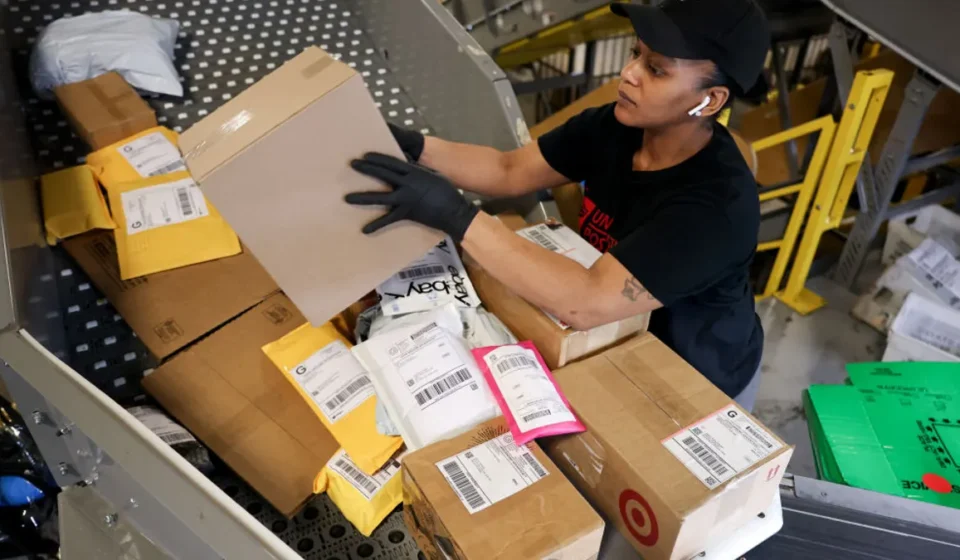
The United States Postal Service (USPS) has confirmed that customers utilizing processing facilities in Indianapolis, Indiana, and Louisville, Kentucky, should prepare for potential shipping delays over the coming weeks. The temporary disruptions are a direct consequence of an aggressive, nationwide infrastructure upgrade campaign. The agency is actively installing state-of-the-art package sorting machinery designed to bolster throughput, enhance handling capabilities for larger and heavier goods, and sharply increase overall sortation accuracy.
While the short-term reality involves localized bottlenecks, rerouted mail streams, and temporary service friction, leadership at the Postal Service insists that these growing pains are necessary. The structural enhancements are engineered to fortify the agency’s network ahead of the grueling peak holiday shipping season, ensuring long-term reliability and competitive positioning against private-sector giants like FedEx and UPS.
Chronology of the Disruption
The timing of these network overhauls is meticulously planned, yet inherently disruptive. The rollout involves a multi-week operational pivot across several key regional processing and distribution centers (P&DCs):
- Early September 2026: The Postal Service initiates a wave of equipment installations and volume diversions across multiple metropolitan areas, including Los Angeles, New Orleans, and Tampa, Florida. Regional notices emphasize that temporary shifting of package flows is required to safely transition facilities to automated sorting systems.
- Throughout September 2026: The Louisville, Kentucky P&DC experiences sustained processing delays. The facility is forced to shoulder the operational burden of an Evansville, Indiana processing site that is simultaneously undergoing extensive equipment modernizations.
- September 21, 2026: The USPS issues a formal operational update regarding the Indianapolis regional processing center, projecting a two-to-three-week window for final equipment integration and routing adjustments.
- September 22, 2026: In response to compounding backlogs in Louisville, the agency releases a follow-up notice detailing strategic package diversions. Excess volume is redirected to the Nashville, Tennessee P&DC and an annex facility in Springdale, Ohio.
- September 25, 2026: Official agency updates confirm that while short-term transit times may fluctuate, the broader modernization timeline remains on track to support upcoming holiday volume surges.
Supporting Data: Scale, Scope, and Strategy
The ongoing upgrades at the Indianapolis and Louisville facilities are part of a massive, multi-year capital investment strategy aimed at transforming the USPS from a legacy mail carrier into a modern, highly automated logistics powerhouse.
Targeting Heavy and Oversized Freight
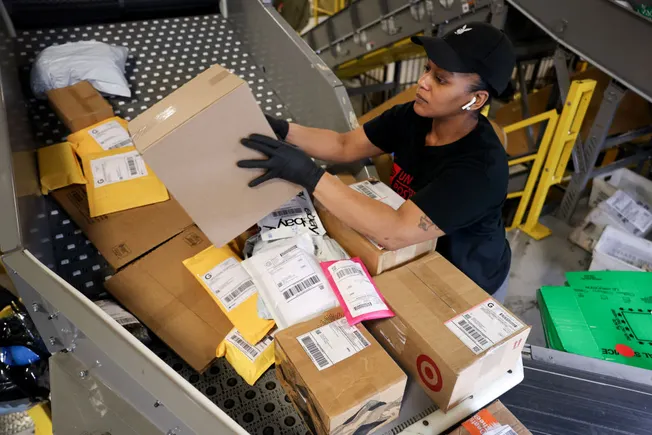
At the Indianapolis regional P&DC, the newly installed machinery features advanced automation capable of seamlessly processing large, oversized parcels. Historically, these bulky items required manual intervention, creating labor bottlenecks and slowing down facility throughput. By drawing heavier, higher-value packages into the USPS ecosystem—a strategy heavily championed by Postmaster General and CEO David Steiner—the agency is directly challenging private carriers for a larger share of the lucrative e-commerce logistics market.
Regional Integration and Volume Redistribution
The operational strain in Louisville underscores the interconnected vulnerability of the postal grid. As part of the agency’s central processing region—established in 2025 to manage an immense volume of approximately 177 million mailpieces daily across 100 facilities—the Louisville center acts as a crucial regional pivot.
When upgrades shuttered local capabilities in Evansville, Louisville attempted to pick up the slack. However, the resulting congestion forced the USPS to establish secondary safety valves:
- Nashville P&DC (Tennessee): Absorbing overflow regional freight.
- Springdale Annex (Ohio): Providing vital offsite sorting capacity to relieve pressure on the Louisville-Evansville corridor.
Furthermore, concurrent adjustments in cities like Los Angeles, New Orleans, and Tampa demonstrate that Indianapolis and Louisville are merely nodes in a sweeping, nationwide infrastructural transformation.
Official Responses and Strategic Rationale
USPS leadership has remained transparent about the friction caused by the transition, framing the temporary service lapses as a minor trade-off for a significantly upgraded operational foundation.

In official communications released via the agency’s postal resources and messaging boards, USPS representatives outlined the direct benefits of the machinery upgrades:
"New and upgraded equipment will increase package sorting throughputs, automation capabilities for larger packages, increase sortation accuracy, and improve machine reliability."
Addressing the specific challenges in Indianapolis, the agency noted that parallel administrative steps are being taken to stabilize the workforce and streamline logistics:
"Routing changes are also occurring to improve operational flows and cycle times into and out of the region. Hiring is progressing to add more team members to support these changes."
Regarding the Louisville-Evansville corridor, postal officials expressed confidence that the temporary relief valves in Nashville and Springdale will bridge the gap until local installations conclude:

"As these installations are completed and operations stabilize, processing flows and transit times in and out of the region will improve."
Implications for Businesses and Consumers
The current round of USPS infrastructure modifications carries profound implications for supply chain managers, e-commerce retailers, and everyday consumers relying on postal delivery services heading into the final quarter of the year.
For E-Commerce Retailers and Shipping Managers
Businesses dependent on the postal network—particularly those operating distribution hubs in the Midwest and the Ohio River Valley—must factor potential transit delays into their fulfillment timelines. While the long-term promise of automated, high-accuracy sorting is a welcome development for supply chain efficiency, the immediate reality of rolling facility upgrades means that transit guarantees may experience temporary friction. Shippers are advised to monitor official USPS service alerts closely and consider utilizing diversified carrier strategies or alternate routing hubs where available.
For the U.S. Postal Service
Strategically, the agency’s willingness to absorb short-term customer dissatisfaction in exchange for long-term modernization underscores the urgency of its turnaround plan. To remain competitive in an increasingly demanding parcel delivery market, the USPS must shed its reputation as a manual, legacy-bound mail carrier. Successfully integrating automated sorting for heavy and oversized parcels is critical to capturing profitable commercial volume.
Ultimately, while the coming weeks may test the patience of shippers in Indiana, Kentucky, and surrounding regions, the successful culmination of these upgrades will determine whether the Postal Service can meet the unprecedented demands of the upcoming holiday peak season without buckling under the pressure.