
Scaling Precision: Additive Assurance Partners with NTT DATA XAM to Revolutionize Metal 3D Printing in Japan

Introduction: The New Frontier of Metal Additive Manufacturing
The industrial landscape of Japan—a nation globally synonymous with precision engineering and manufacturing excellence—is currently undergoing a profound transformation. As sectors ranging from aerospace and automotive to medical devices shift their focus from iterative prototyping to high-volume, mission-critical mass production, the limitations of conventional metal powder bed fusion (PBF) have come into sharp focus.
To bridge the gap between experimental additive manufacturing (AM) and industrial-grade scalability, Additive Assurance, a pioneer in real-time quality assurance (QA) solutions, has officially entered into a strategic domestic distributorship agreement with NTT DATA XAM Technologies Corp. (XAM). This partnership marks a pivotal moment for the Japanese manufacturing sector, as it introduces AMiRIS—a sophisticated real-time monitoring and QA platform—to one of the world’s most demanding industrial markets. By combining Additive Assurance’s cutting-edge software with XAM’s deep-rooted technical infrastructure, the two companies aim to solve the industry’s "Achilles’ heel": build consistency, quality traceability, and the inherent variability of laser-based metal 3D printing.
The Core Facts: Bridging the Quality Gap
At its foundation, the agreement is designed to address the systemic challenges that have historically prevented metal 3D printing from achieving the same level of reliability as traditional subtractive manufacturing (such as CNC machining).
What is AMiRIS?
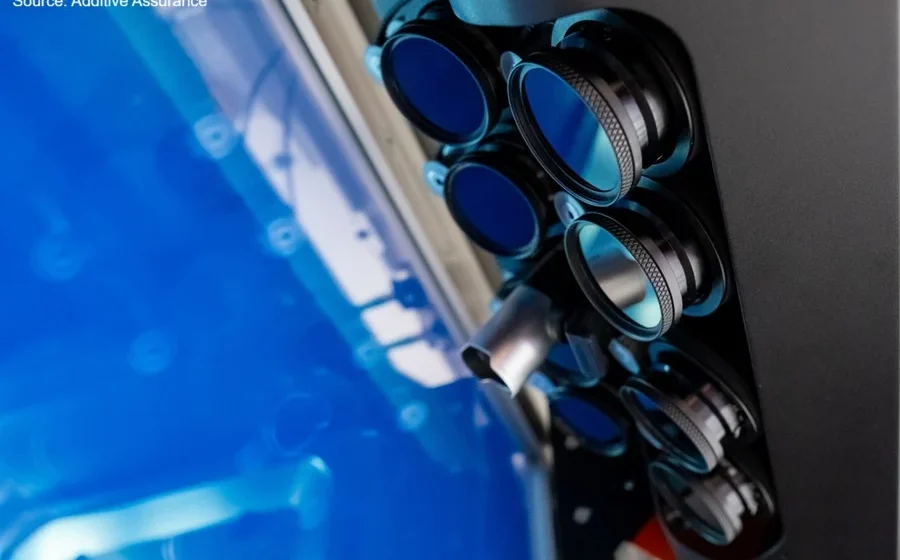
AMiRIS is a proprietary quality assurance solution developed by Additive Assurance. It functions as an "in-process" guardian, monitoring the build status of metal components in real-time. Unlike post-process inspections—which often involve destructive testing or expensive X-ray tomography that can identify a failure only after a build is finished—AMiRIS provides actionable data during the build itself.
The Strategic Alliance
Under the terms of the agreement, NTT DATA XAM will serve as the exclusive domestic distributor and technical partner for AMiRIS in Japan. XAM is not merely acting as a sales agent; the company is positioned to act as a full-service integration hub, providing:
- Localized Technical Support: Comprehensive onboarding, training, and maintenance for Japanese engineers.
- Ecosystem Integration: Linking AMiRIS directly into the workflows of existing industry-standard hardware, specifically systems from EOS and AMCM.
- Digital Transformation (DX) Support: Leveraging the data harvested by AMiRIS to help Japanese firms build a robust, digitally tracked manufacturing foundation.
Chronology of Market Evolution: From Prototyping to Industrialization
To understand the significance of this partnership, one must examine the trajectory of additive manufacturing in Japan over the last decade.
Phase 1: The R&D Era (2010–2018)
In the early 2010s, metal AM in Japan was largely relegated to research laboratories and automotive design centers. Engineers were primarily focused on geometric freedom—creating lightweight, lattice-based parts that were impossible to cast or machine. During this phase, quality assurance was secondary; if a part failed, it was simply reprinted.
Phase 2: The Push for Production (2019–2022)
As global supply chains faced unprecedented stress, Japanese manufacturers began looking at AM as a viable tool for decentralized, on-demand manufacturing. However, the move toward mass production exposed major hurdles. Variations in build quality—caused by gas flow, powder bed inconsistencies, or laser drift—became significant financial liabilities. Traceability, a requirement for aerospace and medical certification, remained elusive.
Phase 3: The Era of "Digital Quality" (2023–Present)
The current era is defined by a demand for "Industry 4.0" integration. The market has realized that additive manufacturing cannot be scaled without autonomous, sensor-driven quality monitoring. The partnership between Additive Assurance and XAM is a direct response to this demand, signaling that the Japanese market is ready to move beyond "trial and error" into a predictive, data-driven manufacturing paradigm.
Supporting Data: Why Quality Assurance is the Bottleneck
The necessity of this partnership is underscored by the current economic and technical reality of the metal AM industry.
The Cost of Failure
In mass-production environments, the cost of a single failed build—which can involve tens of thousands of dollars in high-grade metal powder, machine time, and operator labor—is a major barrier to adoption. Data from recent industry studies suggests that companies often dedicate upwards of 30% of their total manufacturing cost to post-process quality control. By moving to in-situ monitoring, Additive Assurance aims to reduce this overhead by identifying defects in real-time, potentially saving weeks of production time and thousands in material waste.
The Traceability Requirement
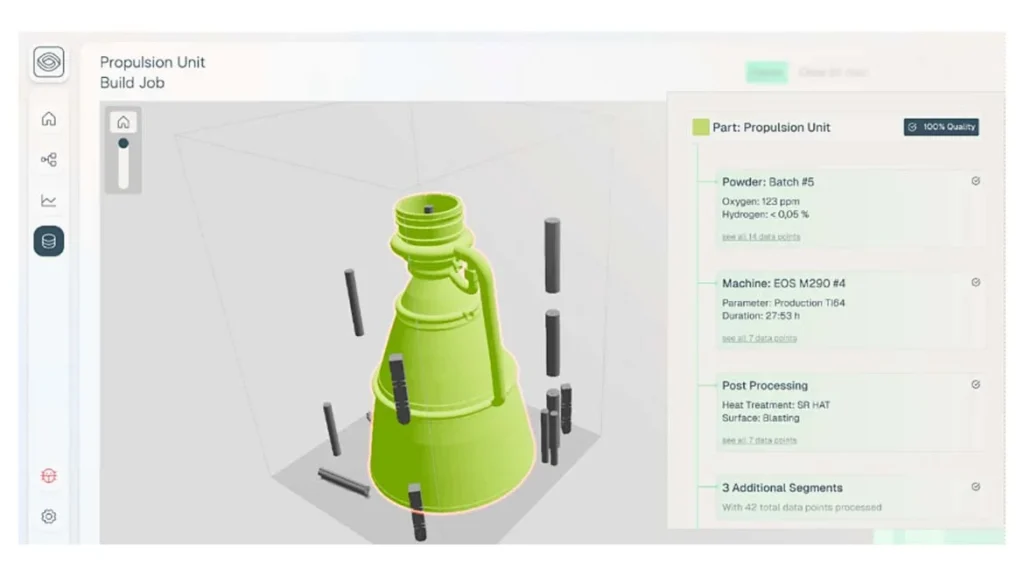
For industries like aerospace, "birth certificates" for components are mandatory. Every part must be traceable to the specific conditions under which it was manufactured. AMiRIS addresses this by logging data streams from the build process, creating a digital twin of the build history. This level of granularity is exactly what is required for Japanese firms to comply with stringent regulatory standards for safety-critical components.
Official Responses: The Strategic Vision
The leadership teams at both organizations view this partnership as a synergy of global innovation and local expertise.
Perspective from Additive Assurance
Marten Jurg, CEO of Additive Assurance, emphasized the importance of the Japanese market’s unique culture of quality. "We are honored to partner with NTT DATA XAM Technologies, a company with a rich track record and exceptional technical capabilities in the Japanese market," said Jurg. "Our technology provides the transparency needed to unlock mass production, but without the local expertise and deep industry relationships that XAM brings, it is difficult to implement these changes effectively. We look forward to delivering our innovative solutions and supporting Japan’s transition to stable, high-quality mass production."
Perspective from NTT DATA XAM
XAM, a subsidiary of the NTT DATA group, has long been a key player in Japan’s digital transformation efforts. By bringing AMiRIS into their portfolio, they are completing a circle of services. Their role is to ensure that the hardware (EOS/AMCM systems) and the software (AMiRIS) function as a unified, high-performance manufacturing unit. For XAM, this is a strategic move to help their clients move faster, with less risk, and with higher output consistency.
Implications: What This Means for the Japanese Manufacturing Sector
1. Accelerating Digital Transformation (DX)
Japan’s government has been a staunch advocate for "Society 5.0," a vision of a super-smart society where digital technology is integrated into every aspect of life. The partnership supports this by moving the metal AM process from a "black box" to a transparent, data-rich digital process. This enables companies to build "Digital Factories" where data is the primary driver of production decisions.
2. Strengthening the Competitive Edge
Global competition in the automotive and aerospace sectors is heating up. Manufacturers in Europe and North America have been aggressively adopting in-situ monitoring. By providing Japanese firms with world-class QA tools, this partnership ensures that Japanese manufacturing remains globally competitive, helping them maintain their edge in precision and reliability.
3. Enabling New Applications
When manufacturers can prove the consistency of their prints, they gain the confidence to print more critical, load-bearing parts. We can expect to see an increase in the use of metal AM for final-stage components in automotive engines, aerospace turbines, and medical implants—parts that were previously deemed "too risky" for additive production.
Conclusion: A New Standard for Metal AM
The entry of Additive Assurance into the Japanese market via NTT DATA XAM is more than just a distribution deal; it is a signal that the metal additive manufacturing industry has matured. The challenges of the past—variability, opacity, and scalability—are being systematically dismantled by the marriage of sensor technology and data analytics.
As Japanese manufacturers continue to integrate AMiRIS into their existing workflows, the focus will shift from how to print a part to how well that part is being printed. By prioritizing quality at the point of creation, Additive Assurance and NTT DATA XAM are setting a new standard for industrial reliability. In the high-stakes world of modern engineering, this partnership provides the precision and confidence necessary to turn the promise of 3D printing into the reality of mass production.
For organizations looking to lead in this new landscape, the path is clear: digital oversight, real-time data, and a commitment to total quality. With this alliance, Japan is well-positioned to remain at the forefront of the global manufacturing revolution.
For more information on the implementation of AMiRIS and how it can be integrated into your existing manufacturing infrastructure, visit the official website at www.nttdata-xam.com.