


Bridging the Digital Gap: Hexagon’s New Reverse Engineering Workflow Transforms Aerospace MRO

In the high-stakes environment of aerospace and defense, the ability to maintain aging fleets is often dictated by the availability of original technical documentation. For decades, maintenance, repair, and overhaul (MRO) teams have grappled with the "no-CAD-data" dilemma: when a legacy component—a tray table latch, an interior shroud, or a specialized antenna housing—fails, and the original manufacturer no longer exists or the blueprints have been lost to history, the part becomes a major operational bottleneck.
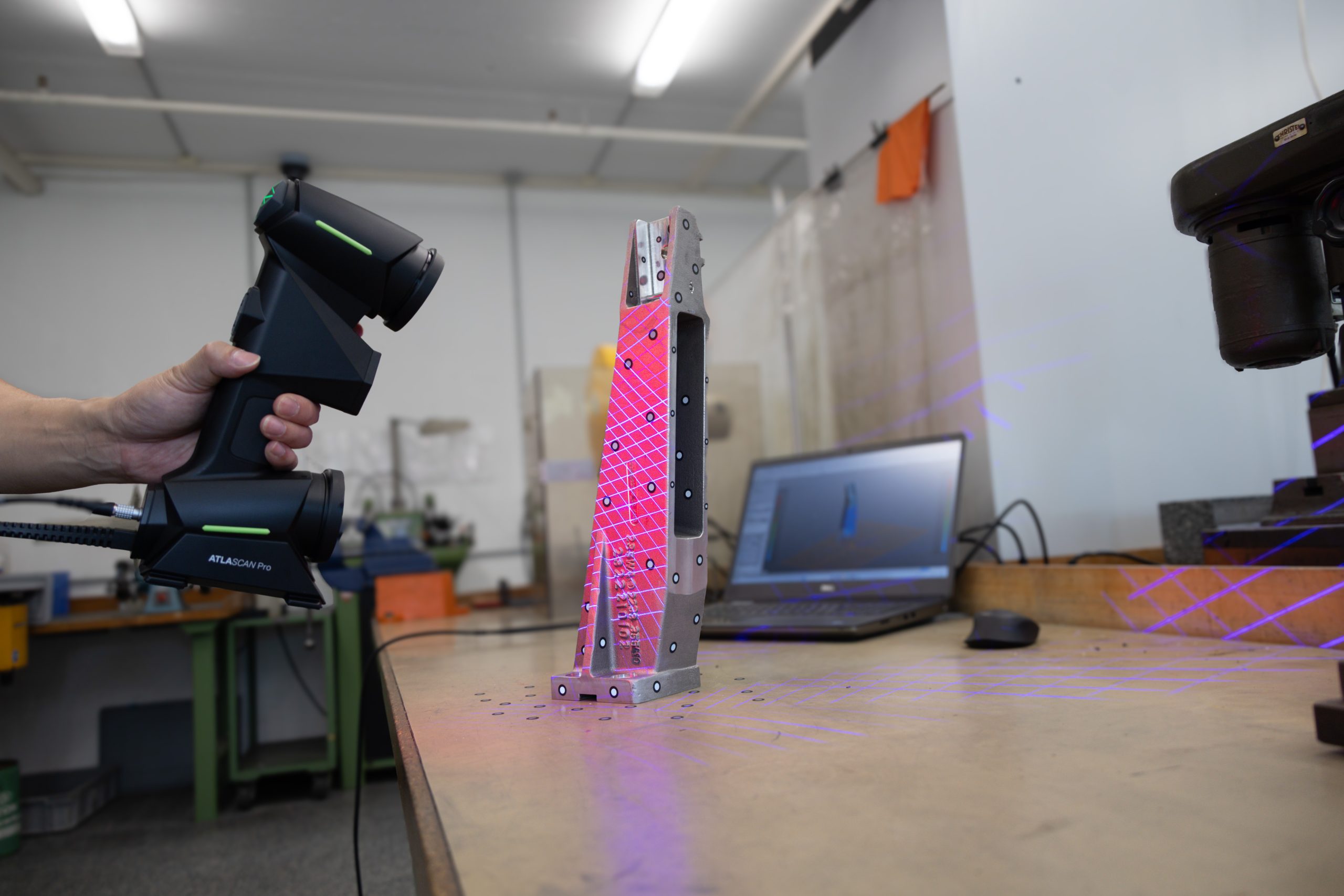
Hexagon’s Portable Metrology Division has announced a strategic advancement aimed at solving this crisis. By integrating its ATLASCAN Pro handheld 3D scanner directly with Geomagic Design X software, Hexagon has created a streamlined reverse engineering workflow. This combination allows MRO engineers to convert physical, worn-out components into precise, editable CAD models up to eight times faster than traditional methods, effectively digitizing the repair process for platforms that have been in service for decades.
Main Facts: A Seamless Scan-to-CAD Integration
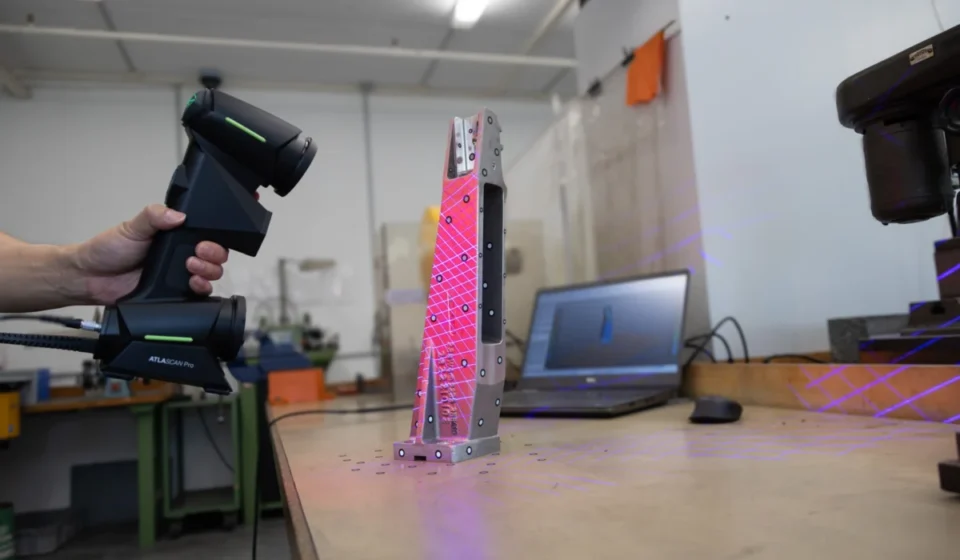
The core of Hexagon’s new solution lies in the synergy between portable hardware and intelligent software. The ATLASCAN Pro is a handheld 3D scanner engineered specifically for the rugged, unconditioned environments of hangars, shop floors, and field deployments. Unlike stationary metrology systems that require laboratory-like precision, the ATLASCAN Pro is designed to capture high-density data and fine geometry without requiring extensive surface preparation or complex training.
Once the scan data is captured, it is processed through Geomagic Design X. This is where the "eight times faster" performance claim is realized. The software utilizes a suite of automated tools—including Region Segmentation, Modeling Wizards, and Auto Sketch—to interpret point clouds. By leveraging NURBS (Non-Uniform Rational B-Splines) surfacing, the software converts raw, freeform scan data into clean, parametric CAD models. Crucially, this process retains the full design history, allowing engineers to modify the model as if it were an original design rather than a static 3D mesh.
The workflow is vendor-agnostic. Hexagon has ensured that the final models can be exported via LiveTransfer into major industry-standard platforms, including SOLIDWORKS, Siemens NX, Autodesk Inventor, and PTC Creo.
Chronology: The Evolution of Digital MRO
The journey toward this integrated workflow is the result of years of mounting pressure on the aerospace and defense sectors.
- Early 2020s: As supply chains faced unprecedented disruptions, MRO teams began pivoting toward on-demand, additive manufacturing (3D printing) to mitigate the lack of spare parts.
- 2023–2024: The U.S. Air Force gained prominence for its successful efforts in reverse-engineering F-35 canopy frames for non-flight testing, demonstrating that 3D scanning could serve as a reliable bridge to manufacturing.
- 2025: The Royal Air Force marked a significant milestone by fitting its first in-house 3D-printed part onto a Typhoon aircraft, signaling that the regulatory hurdles surrounding additive manufacturing in flight-critical applications were beginning to clear.
- July 2026: Hexagon formally introduces the integrated ATLASCAN Pro and Geomagic Design X package, responding to the growing demand for "containerized" repair solutions that can be deployed anywhere in the world.
This chronology reflects a broader industry shift: moving away from centralized manufacturing warehouses toward distributed, on-site, "print-on-demand" capabilities.
Supporting Data: Why Speed Matters
The efficiency gains promised by this workflow are not merely incremental; they are fundamental to operational readiness. In traditional reverse engineering, the labor-intensive process of converting scan data into an accurate CAD model is the primary source of delay.
- Manual Measurement Limitations: Traditional manual measurement techniques are prone to human error and cannot capture complex freeform surfaces with the required fidelity.
- CAD Bottlenecks: Using non-specialized CAD software to "trace" over scan data is an arduous, multi-day task. By utilizing automated modeling wizards, Hexagon reports that the time-to-CAD is reduced by 700% to 800%.
- Accuracy Verification: The inclusion of an "Accuracy Analyzer" tool within the workflow is critical. It provides real-time feedback, comparing the constructed CAD surfaces against the original scan data. This prevents the "fit-check" cycle—where a part is printed, found to be inaccurate, and re-designed—thereby saving significant material and time costs.
Official Perspectives: The Push for "Repair Anywhere"
Aziz Tahiri, Global Director of Aerospace and Defense at Hexagon, emphasizes that the market is currently driven by the necessity of mobility. "Defense customers are increasingly asking for mobile units—literally a single shipping container equipped with a scanning arm, a workstation running our software, and a 3D printer," says Tahiri.
He notes that the conventional method of repairing a mechanical component is often an expensive, multi-person effort involving back-and-forth communication with original equipment manufacturers (OEMs). "With this new workflow, we are seeing the time-to-repair drop from weeks to a matter of hours. You can scan, rebuild, and prepare the file for printing in the same day," Tahiri adds.
This sentiment is echoed by broader industry trends. The U.S. Navy’s RESTORE lab has been a pioneer in this space, using what they term the "scan-to-CAD-to-fab" method to maintain equipment like the AN/TRC-194 antenna. Their success in restoring legacy parts that no longer have physical drawings has paved the way for more widespread adoption of these digital tools across the military.
Implications: The Future of Maintenance
The introduction of this workflow has profound implications for the lifecycle management of aerospace assets.

1. Extending Asset Lifespan
By democratizing the ability to reproduce obsolete parts, organizations can extend the operational life of legacy aircraft and vehicles that would otherwise be retired due to a lack of spare parts.
2. Democratization of Metrology
Historically, reverse engineering was the domain of highly trained metrologists. By designing the ATLASCAN Pro for use by general MRO technicians, Hexagon is lowering the barrier to entry. This allows smaller squadrons or regional maintenance depots to perform high-fidelity engineering work without needing a specialized team on standby.
3. Strengthening Supply Chain Resilience
The shift toward on-site, digital manufacturing reduces dependency on fragile, global supply chains. When a part can be reverse-engineered and printed in a hangar, the risk of "AOG" (Aircraft on Ground) scenarios—where planes are grounded for weeks awaiting a simple bracket or cover—is significantly minimized.
4. A Template for Other Industries
While the aerospace and defense sectors are the immediate beneficiaries, the methodology is highly transferable. Industries such as energy, rail, and heavy automotive manufacturing face similar challenges with legacy equipment. As this "scan-to-CAD" workflow becomes the industry standard, it will likely reshape how global companies handle inventory, potentially moving toward a "digital warehouse" model where components are stored as files rather than as physical stock.
Conclusion
Hexagon’s integration of the ATLASCAN Pro and Geomagic Design X represents a significant milestone in the industrialization of additive manufacturing and reverse engineering. By removing the primary technical and time-related barriers to digitizing physical parts, Hexagon is enabling a new era of maintenance agility. As the company prepares to showcase this technology at the 2026 Farnborough International Airshow, the industry is watching closely. The era of "no-CAD-data" is rapidly coming to an end, replaced by a future where any component, no matter how old or complex, can be brought back to life in a matter of hours.
For those interested in the future of additive manufacturing, 3D Printing Industry continues to track these developments through its 2026 Additive Manufacturing Applications (AMA) series. Practitioners and industry leaders are encouraged to engage with these discussions to better understand the ongoing transformation of the global supply chain.