




Bridging the Production Gap: Instruct3D Launches “Additive Build Intelligence” to Revolutionize Metal AM

The metal additive manufacturing (AM) industry has long grappled with a fundamental paradox: while the technology is capable of producing intricate, high-performance geometries that traditional manufacturing cannot replicate, the path from prototype to repeatable, industrial-scale production remains fraught with uncertainty. Today, Sheffield-based innovator Instruct3D aims to dismantle these barriers with the commercial launch of its "Additive Build Intelligence" platform—a sophisticated synthesis of physics-based modeling, low-cost sensor hardware, and actionable data analytics.
This launch represents a pivotal shift in how the industry approaches quality assurance. By moving beyond simple in-situ monitoring, Instruct3D is offering manufacturers a comprehensive framework designed to predict, build, prove, and learn.
The Core Challenge: From Complexity to Consistency
For sectors such as aerospace, defense, and energy, the primary obstacle to the widespread adoption of metal AM is not the ability to print, but the ability to verify. When manufacturing critical components, the cost of a single failed build—or worse, a latent defect in a flight-ready part—can be catastrophic. Historically, companies have relied on extensive trial-and-error cycles and post-process non-destructive testing (NDT), both of which are time-consuming and expensive.
Instruct3D addresses this by providing a digital thread that spans the entire production cycle. The company’s platform is built on over two decades of rigorous research conducted at the University of Sheffield, a world-renowned hub for additive manufacturing excellence. By integrating this deep academic expertise with modern data science, Instruct3D provides a solution that transforms raw build data into a "material reality" that operators can trust.
The Anatomy of the System: Hardware and Software Synergy
Instruct3D’s platform is bifurcated into two primary components: VertX and AdditiveOS. While the system utilizes camera-based hardware, the company is careful to distinguish its offering from conventional "in-situ monitoring" providers.
VertX: The Eye of the Operation
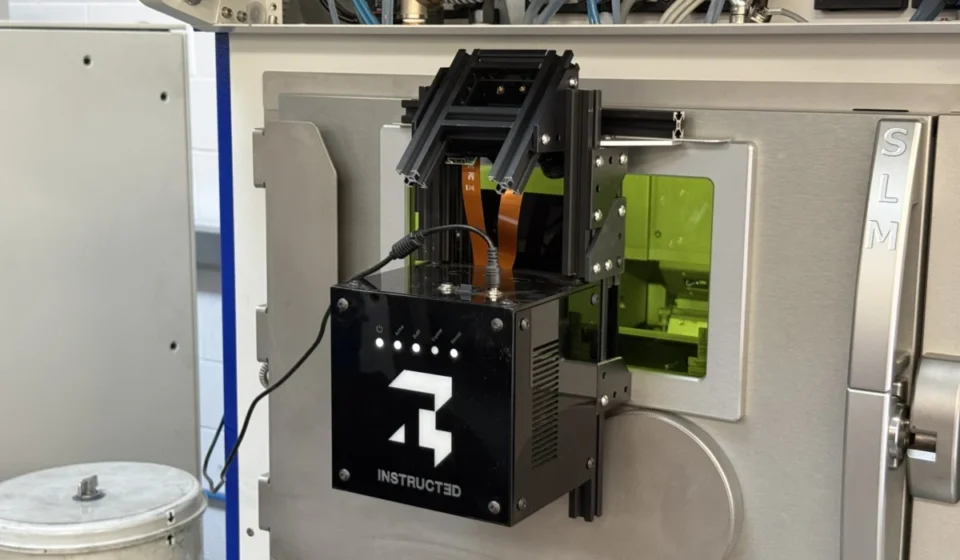
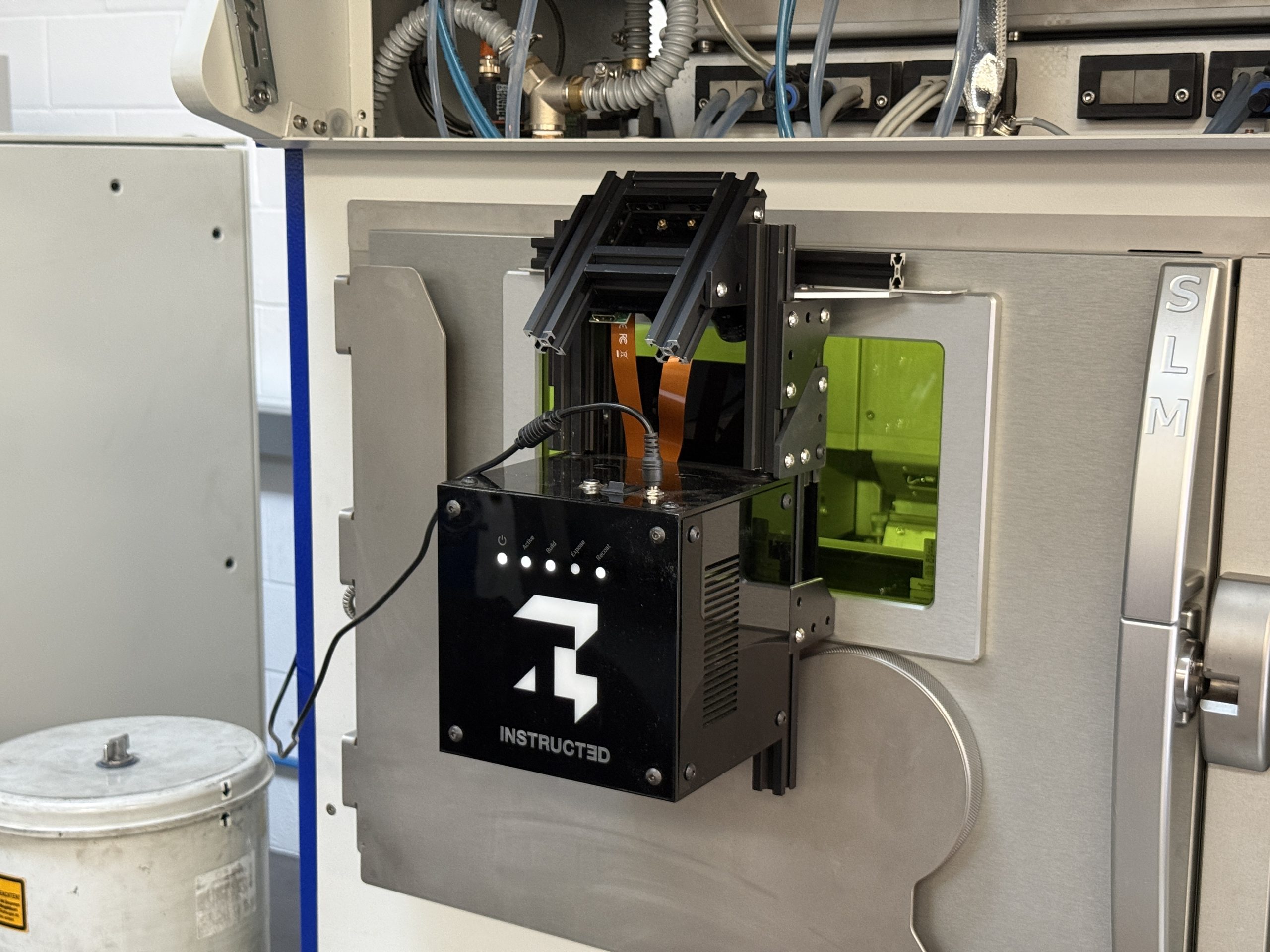
VertX serves as the sensory foundation of the platform. It is a high-fidelity, camera-based hardware solution that captures process data in real-time during the laser powder bed fusion (LPBF) process. Unlike expensive, overly complex sensor suites that can hinder machine throughput, VertX is designed for practicality and scalability.
AdditiveOS: The Intelligence Layer
The true power of the Instruct3D solution lies in AdditiveOS. This software platform ingests the data captured by VertX and translates it into actionable insights. It does not simply record visual data; it contextualizes it. By aligning real-time build observations with physics-based predictive models, the software alerts operators to potential anomalies before they manifest as catastrophic failures.
As Rob Snell, Co-Founder of Instruct3D, succinctly put it: "Cameras are part of the system, but they are not the story. The story is what we do with the data. By linking measured build behavior with physics-based prediction and learning workflows, we can help users understand the material reality of the build, not just observe the process."
A Four-Pillar Workflow: Predict, Build, Prove, and Learn
To bring order to the chaos of the AM build process, Instruct3D has codified its methodology into four distinct, cyclical phases:
- Predict: Before a single layer of metal is fused, the platform uses physics-based models to forecast where potential build issues may occur. This allows engineers to optimize parameters proactively, reducing the need for destructive physical testing.
- Build: During the printing process, the system monitors the thermal and geometric performance of the build against the predictive baseline.
- Prove: Post-build, the platform generates the evidence required for part verification. This creates a digital record—a "birth certificate" for the component—that provides the traceability required by highly regulated industries.
- Learn: The final phase is continuous improvement. The data gathered from each build is fed back into the system, refining the predictive models for future iterations and shortening the development cycle for new parts.
Strategic Implications: Redefining Metal AM Qualification
The implications of this launch are profound for manufacturers operating under strict certification requirements. By providing a pathway to digital qualification, Instruct3D is effectively lowering the barrier to entry for high-stakes production.
Comparison to Industry Alternatives
The landscape for AM quality assurance is becoming increasingly competitive. For example, the recent collaboration between Interspectral AB and Pankl Racing Systems AG highlights a similar industry-wide push toward data-driven quality control. Their "AM Explorer" platform excels at data fusion and anomaly detection.
However, Instruct3D differentiates itself through its "predictive-first" architecture. While many current market solutions focus on detecting errors during the build, Instruct3D’s emphasis on pre-build physics simulation provides a preventative layer that significantly reduces the trial-and-error burden. By combining sensor hardware with deep-tech physics simulations, Instruct3D provides a holistic "Additive Build Intelligence" category that is arguably more comprehensive than software-only monitoring tools.
Official Debut: Setting the Stage at ICAM 2026
Instruct3D will formally define and introduce the "Additive Build Intelligence" category to the global stage at ICAM 2026, held in Orlando, Florida, from September 28 to October 2.
Ben Thomas, Co-Founder and CEO of Instruct3D, is scheduled to deliver a presentation titled "Cost-Effective, Multi-Modal Sensors for Cross-Platform AM Part Verification" on the In-Situ Monitoring and Process Control track. The talk, scheduled for 10:30–10:50 in Regency Ballroom P, is expected to outline the technical architecture of the system and demonstrate how the company is moving beyond the "data swamp" to provide clear, actionable intelligence.
The Road Ahead: Scalability and Industrialization
The technology has already moved beyond the laboratory. With deployments currently active on multiple machines worldwide, the system has proven its utility across academic, contract manufacturing, and prime-contractor environments.
The strategy of utilizing low-cost, scalable sensor hardware combined with a robust software ecosystem suggests that Instruct3D is positioning itself not as a boutique consultancy, but as a standard-setting infrastructure provider. As Ben Thomas noted, "Metal AM does not need more disconnected data. It needs intelligence that helps manufacturers make better decisions before, during, and after the build."
By focusing on the repeatability of the process, Instruct3D is helping move the needle toward a future where metal 3D printing is treated with the same reliability as CNC machining or injection molding. For the aerospace and defense sectors, this is not just a software update—it is the missing link in the industrialization of additive manufacturing.
Conclusion: The Era of "Proven" Additive
As we look toward the next three years (2026–2029), the industry is shifting from a period of "experimental hype" to one of "institutional reliability." The launch of Additive Build Intelligence by Instruct3D is a testament to this maturity. By transforming the build process into a transparent, predictable, and provable workflow, Instruct3D is ensuring that the true potential of metal AM—the ability to create complex, high-value parts at scale—is finally unlocked.
For manufacturers struggling with the "valley of death" between prototype and production, the message from Sheffield is clear: the data is there, the physics are understood, and with the right intelligence, the metal AM process is ready to be mastered.
For those interested in the future of additive manufacturing software, 3D Printing Industry will host the AMA: Software 2026 event on October 22. This event will feature expert presentations, panel discussions, and live Q&A sessions exploring the software ecosystems that are currently shaping the trajectory of the global additive manufacturing market. Register here.