

Next-Generation Global Shutter Sensors Redefine High-Speed Industrial Inspection and 3D Metrology

By Editorial Staff
Published in Industrial Sensors & Vision Technology
Executive Summary: Main Facts
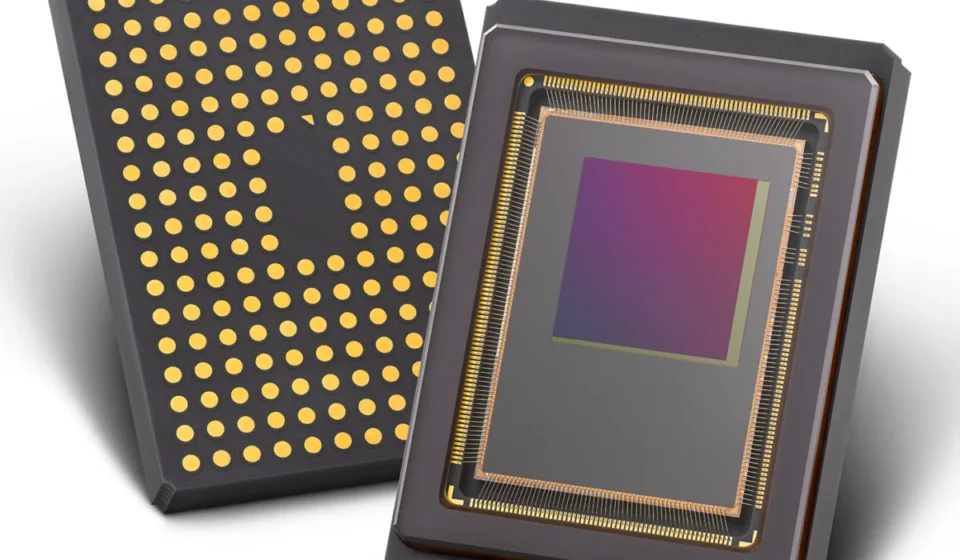
Teledyne e2v, a global leader in specialized imaging solutions, has expanded its high-performance machine vision portfolio with the introduction of the Flash™ 1K2 and Flash 8K CMOS image sensors. Engineered specifically for ultra-fast industrial inspection, motion analysis, and advanced 3D laser profiling, these cutting-edge sensors combine high frame rates with high-resolution capabilities.
The Flash 1K2 delivers an astonishing 3,000 frames per second (fps) at a 1K × 1K resolution, while the wider Flash 8K variant achieves 1,800 fps at an 8K × 1K resolution. Both devices are built around advanced 6 µm global shutter pixels, which eliminate motion artifacts by capturing the entire frame simultaneously. To address complex lighting and high-contrast industrial environments, the sensors support High Dynamic Range (HDR) modes of up to 100 dB. Furthermore, they incorporate flexible features such as multiple regions of interest (ROIs) and dynamic frame-to-frame programmability.
By employing a unified single-tap architecture across the entire Flash sensor family—which already includes established 2K × 1K and 4K × 1K models—Teledyne e2v has established a standardized development platform that drastically streamlines camera design and system integration for machine builders.
The Evolution of Machine Vision: A Chronological Overview
To fully appreciate the significance of the Flash 1K2 and Flash 8K sensors, it is necessary to examine the rapid evolution of high-speed industrial imaging over the past decade.
Early Milestones in High-Speed CMOS Technology
For many years, high-speed machine vision was dominated by specialized CCD (Charge-Coupled Device) sensors and early-generation CMOS architectures. While effective at capturing fast-moving events, these legacy systems suffered from severe trade-offs. Engineers were routinely forced to choose between ultra-high frame rates and acceptable spatial resolution. Achieving speeds in the thousands of frames per second typically required reducing the sensor’s active pixel array to a tiny fraction of its total size.
Furthermore, rolling shutter sensors—which expose rows of pixels sequentially rather than all at once—dominated cost-effective sensor categories. While rolling shutters worked well for static or slow-moving subjects, they introduced severe geometric distortion ("jello effects") when imaging objects moving at high velocities on modern manufacturing lines.
The Shift Toward Global Shutter and Standardization
As manufacturing speeds increased and automated optical inspection (AOI) became a prerequisite for quality control, the industry pivoted decisively toward global shutter CMOS technology. Developers required sensors that could capture crisp, undistorted images of fast-moving components, whether on a high-speed packaging line, a semiconductor wafer inspection station, or a dynamic 3D weld-profiling setup.
Over the last several years, Teledyne e2v invested heavily in scalable pixel designs and high-bandwidth read-out architectures. The introduction of the initial Flash variants (such as the 2K × 1K and 4K × 1K models) proved that single-tap architectures could deliver high-speed performance without sacrificing image clarity. The launch of the Flash 1K2 and Flash 8K represents the culmination of this engineering trajectory, filling critical performance gaps for applications demanding extreme temporal resolution coupled with wide-format imaging.
Technical Deep Dive: Supporting Data and Specifications
The engineering behind the Flash 1K2 and Flash 8K sensors reflects a meticulous focus on temporal resolution, dynamic range, and system-level flexibility. Below is a detailed breakdown of their core technical specifications and functional attributes.
| Feature / Specification | Flash 1K2 | Flash 8K |
|---|---|---|
| Native Resolution | 1K × 1K pixels | 8K × 1K pixels |
| Max Frame Rate | 3,000 fps | 1,800 fps |
| Pixel Architecture | 6 µm global shutter pixels | 6 µm global shutter pixels |
| Dynamic Range | Up to 100 dB (HDR modes) | Up to 100 dB (HDR modes) |
| Sensor Architecture | Single-tap scalable design | Single-tap scalable design |
| Advanced Controls | Multiple ROIs, frame-to-frame programmability | Multiple ROIs, frame-to-frame programmability |
The Advantage of 6 µm Global Shutter Pixels
The choice of a 6 µm pixel pitch strikes an optimal balance between light sensitivity and spatial resolution. In industrial environments, where exposure times are measured in microseconds, photon collection efficiency is paramount. The larger surface area of a 6 µm pixel captures more photons, resulting in a higher signal-to-noise ratio (SNR) even under constrained lighting budgets.

Crucially, the global shutter design ensures that every pixel on the silicon die starts and stops integration simultaneously. When inspecting components moving at meters per second, a rolling shutter introduces time skews between the top and bottom of an image, leading to skewed geometry. The global shutter completely neutralizes this artifact, ensuring metrology-grade accuracy.
High Dynamic Range (HDR) up to 100 dB
Manufacturing floors are notoriously challenging environments for optical sensors. Highly reflective metallic surfaces, polished silicon wafers, and dark carbon-fiber composites often appear in the same field of view. Standard linear sensors quickly saturate in bright areas while plunging shadowed regions into darkness.
The Flash series integrates sophisticated HDR modes capable of delivering up to 100 dB of dynamic range. By intelligently managing multiple exposures or utilizing specialized pixel-level compression techniques, the sensors preserve intricate details in both extreme highlights and deep shadows simultaneously. This capability ensures that downstream machine vision algorithms receive rich, unclipped image data, drastically reducing false-positive defect classifications.
Architectural Scalability and Frame-to-Frame Programmability
One of the most noteworthy engineering attributes of the Flash family is its single-tap architecture. Traditionally, scaling a sensor to higher resolutions or wider aspect ratios required entirely redesigning the read-out electronics, FPGA firmware, and interface protocols.
Teledyne e2v’s unified development platform allows camera manufacturers to design a single hardware baseline capable of supporting multiple sensors within the Flash ecosystem (from 1K2 up to 8K). This cross-compatibility significantly reduces Research and Development (R&D) overhead, shortens time-to-market, and simplifies maintenance for end-users.
Additionally, the sensors support multiple regions of interest (ROIs) and frame-to-frame programmability. System integrators can dynamically alter exposure times, gain settings, and active window locations on the fly between consecutive frames. This is particularly valuable in adaptive inspection scenarios where a system must inspect different sections of a complex part with varying optical properties at maximum speed.
Industry Perspectives and Official Responses
While formal press statements from Teledyne e2v highlight the overarching goals of efficiency and performance, industry analysts and machine vision experts have been quick to evaluate the practical impact of these new sensors.
Addressing the Demands of Advanced Metrology
Speaking on the release of the new sensors, product management representatives from Teledyne e2v emphasized the growing necessity for speed in modern smart factories.
"Modern industrial processes are pushing the boundaries of what automated systems can perceive," notes technical literature accompanying the Flash launch. "Inspectors and machine builders no longer just need to see faster; they need to capture uncompromised geometric data at rates that match the acceleration of modern production lines. The Flash 1K2 and Flash 8K provide the precise temporal and spatial fidelity required to eliminate bottlenecks in high-speed sorting, 3D laser triangulation, and inline metrology."
Perspectives from System Integrators
Independent machine vision integrators have expressed enthusiasm regarding the single-tap architecture and ecosystem standardization. In interviews with automation engineering forums, several lead designers noted that supporting diverse sensor resolutions usually mandates maintaining multiple distinct camera designs, each with unique power delivery, thermal management, and data-formatting requirements.
By standardizing the feature set and electrical interface across the 1K2, 2K × 1K, 4K × 1K, and 8K models, Teledyne e2v effectively lowers the barrier to entry for camera makers wishing to offer a scalable product family. An engineering team can develop a single high-speed camera platform and easily swap out sensor modules depending on whether the customer requires square aspect ratio imaging (Flash 1K2) or ultra-wide line-profiling coverage (Flash 8K).

Broader Implications for Industrial Automation and 3D Metrology
The introduction of the Flash 1K2 and Flash 8K sensors extends far beyond incremental component upgrades; it addresses critical capability gaps across several high-growth technological sectors.
1. Revolutionizing 3D Laser Profiling and Triangulation
3D laser triangulation relies heavily on projecting a laser line onto a moving target and capturing the deflected line with a high-speed camera. The accuracy of the resulting 3D point cloud is directly proportional to the frame rate and spatial resolution of the imaging sensor.
With the Flash 8K capable of capturing 1,800 fps at an 8K horizontal resolution, system builders can achieve unprecedented lateral resolution across wide parts—such as large automotive body panels, wide extruded plastics, or large-format PCB assemblies—without sacrificing line-scan speed. Similarly, the Flash 1K2’s 3,000 fps capability enables ultra-dense depth sampling for fast, small-scale components like micro-electronics and battery separators.
2. Enhancing Semiconductor and Electronics Inspection
The semiconductor manufacturing lifecycle is notoriously unforgiving. Defects invisible to the naked eye can cause catastrophic failures downstream. High-speed inspection systems must examine wafer surfaces, wire bonds, and ball grid arrays (BGAs) at blistering speeds.
The combination of global shutter technology, 100 dB HDR, and high frame rates enables these sensors to detect microscopic fractures, misalignment, and surface blemishes on highly reflective silicon and metallic substrates. The ability to program ROIs dynamically allows inspection software to focus exclusively on critical areas of interest, maximizing effective throughput.
3. Streamlining EV Battery Manufacturing
The global transition toward electric vehicles (EVs) has created an unprecedented demand for high-speed, high-precision battery manufacturing lines. Inspecting electrode coatings, separator films, and laser-welded tab connections requires reliable vision systems capable of operating at maximum production velocity.
Sensors like the Flash 1K2 and Flash 8K provide the exact temporal resolution needed to monitor high-speed laser welding processes in real time, detecting micro-porosities or weld irregularities before they compromise battery safety.
Conclusion and Future Outlook
Teledyne e2v’s introduction of the Flash 1K2 and Flash 8K CMOS image sensors marks a significant milestone in the evolution of machine vision technology. By merging ultra-fast frame rates (up to 3,000 fps), high spatial resolutions, robust 100 dB HDR capabilities, and a unified single-tap architecture, the company has delivered a versatile toolset tailored for the most demanding industrial applications.
As smart factories continue to accelerate toward higher levels of automation, autonomy, and zero-defect quality control, the demand for high-performance imaging components will only intensify. The standardization provided by the expanded Flash sensor family ensures that camera manufacturers and system integrators can deploy scalable, future-proof inspection solutions with confidence.