


Breaking the Cost Barrier: Agility Robotics Establishes the First Benchmark Pricing for Factory-Ready Humanoid Robots

INDUSTRIAL AUTOMATION — For decades, the theoretical promise of humanoid robotics has captivated science fiction fans and industrial engineers alike. The vision of a bipedal, general-purpose machine capable of navigating human-centric workspaces, manipulating legacy tools, and performing repetitive or hazardous tasks without fatigue has long been considered the holy grail of automation.
Yet, for production managers—particularly those operating within small and medium-sized enterprises (SMEs)—the conversation has never truly been about futuristic potential. It has always centered on a single, uncompromising metric: How much does it cost?
While numerous robotics startups have showcased impressive prototypes in controlled laboratory environments or secured high-profile pilot programs with automotive giants, the industry has suffered from a critical lack of financial transparency. True production-ready humanoid solutions have remained shrouded in NDA-protected contracts, custom integration fees, and speculative pricing.
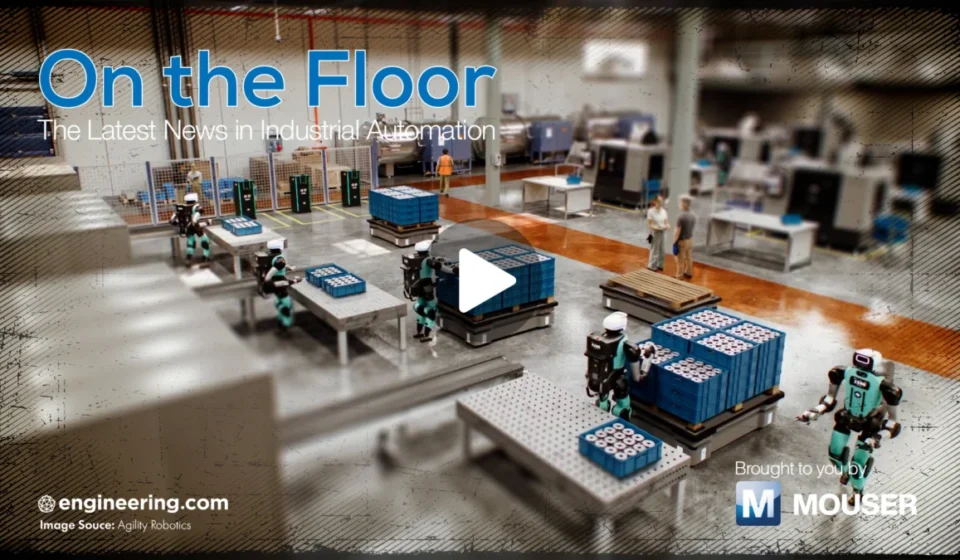
That paradigm shifted significantly when Agility Robotics stepped forward to establish formal benchmark pricing for industrial humanoid deployments. By lifting the veil on commercial costs and claiming a rapid return on investment (ROI), Agility is attempting to transition humanoid robotics from an expensive R&D novelty into a standard line-item on the modern factory balance sheet.
Main Facts
The announcement marks a watershed moment in the commercialization of advanced robotics. Agility Robotics has moved beyond the speculative phase of technology development, introducing concrete financial metrics for deploying its flagship humanoid robots into live industrial environments.
- The Core Offering: Agility Robotics has released baseline commercial pricing specifically tailored for industrial and manufacturing applications, targeting the grueling realities of warehouse logistics and assembly line work.
- The Target Market: While large-scale logistics operations and multinational conglomerates are obvious early adopters, the pricing structure has been designed to appeal to the broader market, including small and medium-sized businesses (SMBs) that have traditionally been priced out of bespoke automation.
- The Economic Proposition: Alongside the pricing revelation, the company has released internal projections indicating a rapid return on investment (ROI), driven by reductions in labor shortages, lower injury rates, and continuous, multi-shift operational capacity.
- The Paradigm Shift: This move effectively establishes the first industry standard for what a commercial humanoid robot should cost, transforming the sector from a nebulous frontier of high-tech exploration into a mature market driven by predictable capital expenditures.
Chronology: The Road to Commercialization
To understand the significance of Agility’s pricing announcement, it is necessary to retrace the rapid evolution of the humanoid robotics sector over the past decade. The journey from academic research projects to commercially viable factory workers has been accelerated by breakthroughs in artificial intelligence, actuator design, and edge computing.
Phase I: The Academic and R&D Era (2010–2018)
For many years, bipedal robotics was largely confined to university laboratories and heavily funded research initiatives, such as the DARPA Robotics Challenge. These early machines were marvels of engineering, but they were notoriously fragile, power-hungry, and tethered to external power supplies or tethered supercomputers. Cost was astronomical, and reliability was virtually nonexistent outside of pristine testing grounds. Humanoids were viewed as science projects rather than viable commercial assets.
Phase II: The Rise of Specialized Logistics (2019–2022)
Recognizing that full humanoids faced immense technical hurdles in balance and manipulation, the industry briefly pivoted toward wheeled or quadrupedal robots (such as Boston Dynamics’ Spot) or task-specific automated guided vehicles (AGVs). While these systems found success in structured environments, they struggled in facilities built specifically for human workers—spaces characterized by stairs, narrow aisles, and unstandardized heights. During this period, Agility Robotics quietly developed its foundational bipedal architecture, focusing heavily on mobility, efficiency, and structural durability.
Phase III: The Pilot Program Boom (2023–2024)
As machine learning models and neural networks matured, companies began deploying humanoid prototypes into real-world partner facilities. Major logistics providers and automotive manufacturers entered into exclusive, highly publicized pilot programs. However, these deployments were heavily subsidized or conducted under strict research partnerships. Pricing remained opaque, and production-readiness was frequently overstated. Production managers were left guessing about maintenance overhead, integration expenses, and expected lifespan.
Phase IV: The Transparency Milestone (Present)
Agility’s establishment of benchmark pricing signals the end of the "wild west" phase of humanoid deployment. By publishing clear cost parameters, the company is bridging the gap between innovative technology and traditional industrial procurement. Factories no longer have to wonder if humanoids are financially out of reach; the data is now on the table, allowing financial controllers to run legitimate cost-benefit analyses.
Supporting Data and Financial Metrics
Evaluating the financial viability of a humanoid robot requires looking past the initial sticker price and examining total cost of ownership (TCO) relative to human labor. While specific figures fluctuate based on deployment scale, software subscription tiers, and maintenance packages, the economic framework provided by industry analysts highlights several critical data points.
Capital Expenditure vs. Operating Expenditure
Historically, industrial automation required massive upfront capital expenditures (CapEx) for specialized, fixed-position robotic arms or custom gantry systems. These systems were rigid; if a factory changed its product line, the entire robotic infrastructure often had to be re-engineered.
Humanoid robots, by contrast, are designed to operate as a flexible operating expenditure (OpEx) or a hybrid capital asset. Because they utilize existing human infrastructure—walking through standard doors, operating standard push-carts, and interacting with off-the-shelf machinery—they eliminate the need for costly facility renovations.
Labor Cost Arbitrage and ROI Projections
The primary economic driver for industrial humanoids is the global crisis in manufacturing and logistics labor. Persistent shortages, high turnover rates, and rising hourly wages have squeezed profit margins across the supply chain.
- The Hourly Equation: When factoring in wages, healthcare, benefits, payroll taxes, training overhead, and lost productivity due to fatigue or injury, human labor represents a continuous, escalating operational cost.
- The Robot Alternative: By dividing the total cost of the humanoid robot (including maintenance, power, and software updates) across its operational lifespan and expected daily working hours, manufacturers arrive at an effective "hourly operating cost" for the machine.
- The Timeline: Agility’s data suggests that under standard multi-shift industrial operating conditions (e.g., 16 to 24 hours a day, six days a week), the return on investment can be achieved remarkably fast—often within a window that rivals or beats traditional fixed automation systems, particularly when factoring in the robot’s ability to seamlessly transition between different tasks without hardware reconfiguration.
| Cost Category | Traditional Human Labor | Industrial Humanoid Robot |
|---|---|---|
| Upfront Cost | Recruitment, onboarding, training | Capital purchase or Robot-as-a-Service (RaaS) fee |
| Operational Continuity | Limited by shifts, breaks, vacation, fatigue | Capable of multi-shift operation with minimal downtime |
| Facility Modification | None (built for humans) | None (utilizes existing human-centric workspaces) |
| Adaptability | High cognitive flexibility, requires retraining | High software-driven flexibility, rapid task-switching |
| Risk Exposure | Workers’ compensation, injury liability, turnover | Maintenance overhead, software licensing, deprecation |
Official Responses and Industry Reactions
The release of benchmark pricing has sent ripples throughout the industrial automation sector, eliciting diverse reactions from manufacturing executives, supply chain analysts, and competing robotics developers.
Manufacturing and Production Leadership
For plant managers at small and medium-sized businesses, the reaction has been a mixture of cautious optimism and intense scrutiny.
"For years, we’ve watched humanoid videos online and wondered if they were just expensive marketing gimmicks," notes a senior operations director at a mid-sized Midwest automotive parts supplier. "Having a concrete price point changes the entire discussion. It allows us to sit down with our CFO and actually model out whether a bipedal worker makes sense for our palletizing and material handling bottlenecks."
Competitors and the Robotics Ecosystem
Rival robotics firms are closely monitoring Agility’s strategy. Establishing a transparent price benchmark creates market pressure for competitors to either justify their own higher development costs or accelerate their path to mass-production manufacturing. Industry insiders note that while other humanoid developers possess impressive technological capabilities, Agility’s emphasis on commercialization and supply-chain readiness gives them a distinct first-mover advantage in defining market expectations.
Financial Analysts and Investors
Wall Street and venture capital firms view the announcement as a critical maturity milestone for the broader embodied AI sector. For years, investors have poured billions of dollars into humanoid startups based entirely on software demos and hardware promises. The transition to hard cost data proves that the industry is graduating from venture-backed experimentation to revenue-generating B2B commerce.
Implications for the Future of Work
The establishment of clear pricing for industrial humanoid robots carries profound implications that extend far beyond factory balance sheets, touching upon labor dynamics, workspace design, and the future evolution of global manufacturing.
1. Democratization of Advanced Automation
Historically, advanced robotics was the exclusive domain of Fortune 500 companies with massive engineering departments and deep capital reserves. By providing transparent, scalable pricing, companies like Agility Robotics are democratizing access to cutting-edge technology. Small and medium enterprises—which form the backbone of global manufacturing—can now begin integrating general-purpose automation to remain competitive against larger conglomerates.
2. Redefining the Human Workforce
A persistent concern surrounding the rise of humanoid robots is the displacement of human labor. However, industry advocates emphasize that current deployments are designed to address acute labor shortages rather than displace workers. In environments plagued by high turnover, repetitive strain injuries, and extreme working conditions (such as heavy lifting in non-climate-controlled warehouses), humanoids absorb the "3-D" tasks—jobs that are Dull, Dirty, and Dangerous.
As robots take over these baseline physical requirements, human workers are increasingly upskilled into supervisory, maintenance, programming, and quality-control roles.
3. The Shift Toward General-Purpose Factories
Because humanoid robots are not hard-coded to a single, repetitive motion like traditional industrial arms, their introduction paves the way for truly adaptable, software-defined manufacturing. A factory floor can theoretically change its output overnight simply by updating the cognitive software running its fleet of humanoid workers. This level of agility will become essential as consumer demands shift faster and supply chains face increasing volatility.
Conclusion
Agility Robotics’ establishment of benchmark pricing for industrial humanoids marks the definitive closing of science fiction’s opening chapter and the beginning of practical industrial reality. By replacing speculation with hard economic data, the company has answered the most critical question asked by production managers worldwide.
As these bipedal machines step out of the laboratory and onto the factory floor under clear financial terms, the manufacturing landscape stands on the precipice of a profound transformation—one where the cost of innovation is finally balanced by measurable, immediate value.