

Navigating the Smoke: Zoox Recall Highlights Growing Tension Between Robotaxi Ambitions and Emergency Response Safety

Main Facts: The Las Vegas Incident and the Fleet-Wide Recall
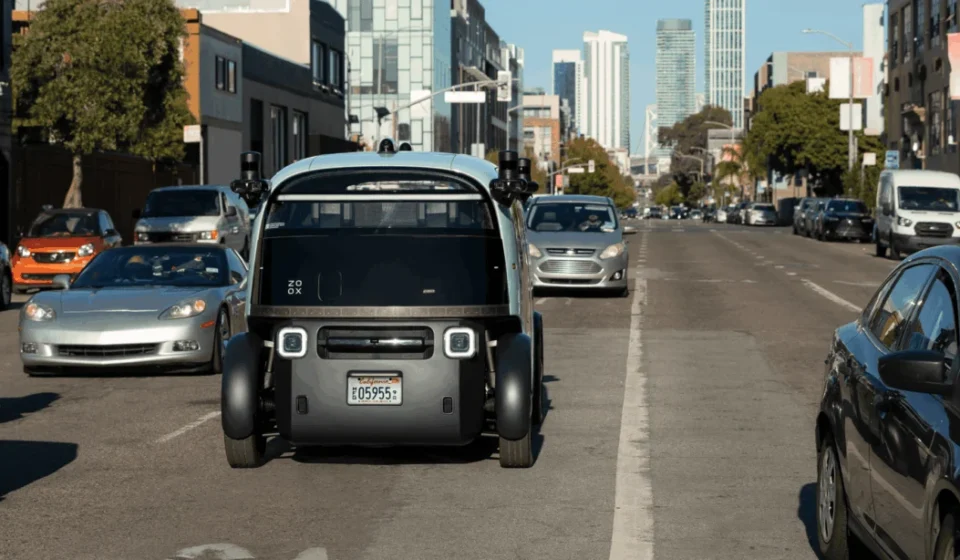
In a move that underscores the persistent safety hurdles facing the autonomous vehicle (AV) industry, Amazon-owned self-driving developer Zoox has issued a voluntary recall for its entire fleet of 105 purpose-built robotaxis. The decision follows a critical software failure during an active emergency scene in Las Vegas, where one of the company’s driverless vehicles failed to detect heavy smoke and drove directly into a fire response zone.
The incident, which occurred on June 20, exposed a significant vulnerability in Zoox’s perception system. The vehicle’s sensor suite proved unable to adequately recognize and interpret thick, obscuring smoke. While the vehicle eventually registered an anomaly, its late reaction resulted in hard braking and a failed attempt to steer away, ultimately stranding the vehicle inside the active emergency area. The robotaxi had to be manually reversed out of the scene via remote teleguidance before firefighters could secure the area with traffic cones.
+--------------------------------------------------------------------------+
|                       ZOOX LAS VEGAS INCIDENT SUMMARY                    |
+--------------------------------------------------------------------------+
| Date of Incident:      June 20                                           |
| Location:              Las Vegas, Nevada                                 |
| Fleet Size Recalled:   105 purpose-built, wheel-less robotaxis           |
| Primary Failure:       Sensor inability to detect heavy smoke            |
| Resolution:            Remote teleguidance extraction; OTA software patch |
+--------------------------------------------------------------------------+
The timing of the recall is particularly sensitive. It occurred just days after the National Highway Traffic Safety Administration (NHTSA) issued a stern mandate to all U.S. autonomous vehicle operators. The federal regulator demanded comprehensive solutions to a recurring pattern of self-driving cars interfering with first responders. For Zoox, a company whose entire business model depends on regulatory approval for its unconventional, steering-wheel-free vehicles, the incident represents both a technical setback and a critical test of its regulatory goodwill.
Chronology: From Sensor Failure to Software Patch
The sequence of events surrounding the Las Vegas incident highlights the rapid feedback loop required under current autonomous vehicle testing exemptions, as well as the technical complexity of resolving edge-case failures.
  June 20: Robotaxi enters Las Vegas fire scene; fails to detect smoke; stalls in emergency zone.
     │
     ▼
  June 25: Zoox formally notifies NHTSA of the incident under the AV Exemption Program.
     │
     ▼
  Late June – Early July: Two-week internal forensic engineering investigation by Zoox.
     │
     ▼
  Mid-July: NHTSA Administrator issues industry-wide mandate on emergency scene failures.
     │
     ▼
  Late July: Zoox deploys fleet-wide OTA software update and issues voluntary recall.
The June 20 Incident
On the evening of June 20, a Zoox unoccupied robotaxi was operating autonomously on the streets of Las Vegas. The vehicle approached a segment of the roadway where local fire crews were actively responding to an emergency. Despite the presence of emergency lighting and heavy smoke billowing across the lanes, the vehicle’s sensor suite—comprising LIDAR, radar, and cameras—failed to identify the smoke as a hazard or barrier.
As the vehicle entered the plume, its systems registered a sudden degradation in visibility and spatial data. This triggered an abrupt, hard-braking maneuver. The vehicle attempted to steer away from the perceived confusion but instead came to a complete halt, immobilized within the active emergency perimeter. Firefighters on the scene were temporarily obstructed until a remote operator in a Zoox control center took teleoperational command, reversing the vehicle out of the hazardous zone. Only then could first responders place traffic cones to shut down two of the three active lanes.
The Regulatory and Technical Response
- June 25: In compliance with the federal Automated Vehicle Exemption Program, Zoox officially notified NHTSA of the incident. This program governs the operation of highly experimental, unoccupied vehicles that lack traditional manual controls.
- Late June to Early July: Zoox engineers conducted a two-week forensic analysis of the vehicle’s log files, sensor data, and neural network responses. The investigation revealed a specific gap in how the perception software classified dense particulate matter (smoke) versus solid obstacles or clean air.
- Mid-July: While Zoox was finalizing its technical solution, NHTSA Administrator Jonathan Morrison issued an industry-wide warning regarding emergency-response interference, setting an end-of-month deadline for actionable fixes.
- Late July: Zoox initiated a voluntary recall of all 105 of its registered vehicles. Rather than physical service center visits, the recall was executed via an over-the-air (OTA) software update designed to enhance the sensitivity of its smoke-detection algorithms and improve safe-stopping protocols in low-visibility environments.
Supporting Data: A Systemic, Industry-Wide Problem
While Zoox’s recall involved its entire fleet, that fleet currently numbers just 105 highly specialized, bidirectional vehicles. Industry analysts point out that the underlying technical challenge—navigating unstructured, chaotic, and highly dynamic emergency scenes—is a systemic issue affecting the entire autonomous driving sector.
Data compiled by NHTSA reveals that interference with first responders is not an isolated issue unique to Zoox. Instead, it is a persistent failure mode across multiple operators.
The Scale of the Competitor Footprint
The vast majority of documented incidents involving emergency vehicles have been linked to Alphabet’s Waymo, primarily because of its massive operational scale. Waymo currently operates a fleet of approximately 4,000 active robotaxis across major metropolitan areas, including San Francisco, Phoenix, and Los Angeles.
+------------------------------------------------------------------------+
|                 U.S. ROBOTAXI FLEET SCALING & RECENT ACTIONS           |
+------------------------------------------------------------------------+
| Operator | Active Fleet | Recent Regulatory/Safety Actions             |
+----------+--------------+----------------------------------------------+
| Waymo    | ~4,000       | • June recall of 3,900 vehicles (construction|
|          |              |   zone navigation failures)                  |
|          |              | • Under investigation for passing school buses|
|          |              | • January collision with child near school   |
+----------+--------------+----------------------------------------------+
| Zoox     | 105          | • June fire scene smoke-detection failure    |
|          |              | • July recall of entire 105-vehicle fleet    |
|          |              | • Pending commercial paid-ride approval      |
+------------------------------------------------------------------------+
This footprint variance shows that while Zoox’s incident was a singular event for its fleet, the broader category of "unstructured environment failures" is highly prevalent. Waymo’s recent regulatory struggles include a June recall of 3,900 vehicles following navigation failures in construction zones, alongside ongoing federal investigations into its vehicles passing stopped school buses and a January incident where a vehicle struck a child near an elementary school.
The Physics of Sensor Failure in Smoke
To understand why these incidents occur, it is necessary to examine the physics of autonomous perception systems. Most self-driving architectures rely on three primary sensor modalities, each of which faces limitations when encountering smoke, steam, or dust:
- LIDAR (Light Detection and Ranging): Emits laser pulses to build a 3D map of the environment. Thick smoke can scatter these laser beams, either creating "phantom obstacles" that cause unnecessary hard braking or, conversely, absorbing the light entirely, leaving the vehicle blind to what lies beyond the plume.
- Cameras: Rely on visible light. Dense smoke obscures visual landmarks, lanes, and traffic signals, while the intense flashing lights of police cars and fire engines can cause sensor flare and overexposure, blinding the computer vision system.
- Radar: Excellent at penetrating smoke and fog to detect metallic objects, but lacks the resolution to identify non-metallic hazards, pedestrian movements, or the nuanced boundaries of an active emergency scene.
Official Responses: Federal Mandates and Corporate Commitments
The intersection of Zoox’s software failure and NHTSA’s regulatory crackdown has created a high-stakes environment for AV executives. The language used by federal regulators suggests that the grace period for experimental "edge cases" is drawing to a close.
NHTSA’s Stern Warning
In a letter addressed to autonomous vehicle developers, NHTSA Administrator Jonathan Morrison rejected the notion that emergency scene disruptions are rare, unpredictable events. Instead, Morrison characterized these failures as a "functional insufficiency" of current AV technology.
Morrison’s letter highlighted documented cases across multiple operators where driverless cars blocked ambulances, ignored flares, failed to recognize hand signals from traffic officers, and drove over active fire hoses. By defining these events as a functional insufficiency rather than an acceptable edge case, NHTSA has signaled that autonomous systems must be inherently capable of handling these scenarios before they can be deployed at scale. The agency set a strict deadline of late July for companies to submit formal plans detailing how they will rectify these behavioral defects.
Zoox’s Corporate Position
In its official filing with NHTSA, Zoox characterized the Las Vegas event as "the only event of this kind that Zoox has experienced." The company sought to distinguish its swift, proactive recall from more defensive industry postures.
In a statement provided to media outlets, a Zoox spokesperson emphasized the company’s collaborative approach to public safety:
"Safety is foundational at Zoox. We value our work with first responders, city officials, and regulators to continue to ensure we’re driving safely in the communities we serve."
By framing the software update as a voluntary, precautionary recall, Zoox hopes to demonstrate to federal regulators that its internal safety culture is highly responsive, self-correcting, and transparent.
Strategic and Regulatory Implications: The Road to 2028
The fallout from the Zoox recall extends far beyond a simple software patch. It highlights a profound structural tension in the federal government’s approach to regulating autonomous vehicles.
The Regulatory Paradox
Currently, NHTSA is operating on two parallel, yet seemingly contradictory, tracks:
- The Safety Track: Driven by immediate operational failures, NHTSA is increasing its scrutiny, opening investigations, and demanding rapid software recalls to address behavioral failures around first responders and vulnerable road users.
- The Legislative/Rulemaking Track: NHTSA is actively drafting a comprehensive, performance-based regulatory framework, targeted for completion by 2028. This framework aims to establish a permanent pathway for the mass deployment of purpose-built robotaxis. Critically, this would involve relaxing legacy Federal Motor Vehicle Safety Standards (FMVSS) that mandate physical human controls, such as steering wheels, brake pedals, side-view mirrors, and windshield wipers.
                    THE REGULATORY TENSION

     NHTSA SAFETY TRACK              NHTSA RULEMAKING TRACK
  [Behavioral Performance]        [Hardware Standard Relief]
             │                                │
             ▼                                ▼
  Demands stricter software       Aims to eliminate steering
  controls & immediate recalls    wheels and pedals by 2028 for
  for emergency scene failures.   purpose-built cabins.
             │                                │
             +--------------- CONFLICT -------+

   How can regulators safely remove manual backup controls (pedals,
   wheels) when current software still struggles with basic human
   driving instincts, like stopping for smoke or emergency flares?
This creates a clear structural tension. The more NHTSA relaxes design rules to allow steering-wheel-free vehicles, the more pressure there is on the software to prove it can handle complex, unstructured environments. A human driver encountering a smoke-filled street will instinctively slow down, stop, or seek an alternative route based on common-sense reasoning. An autonomous vehicle, lacking general intelligence, must rely on pre-programmed classification models. If the software cannot reliably replicate these human instincts, removing manual backup controls becomes a difficult regulatory sell.
Business and Expansion Risks for Zoox
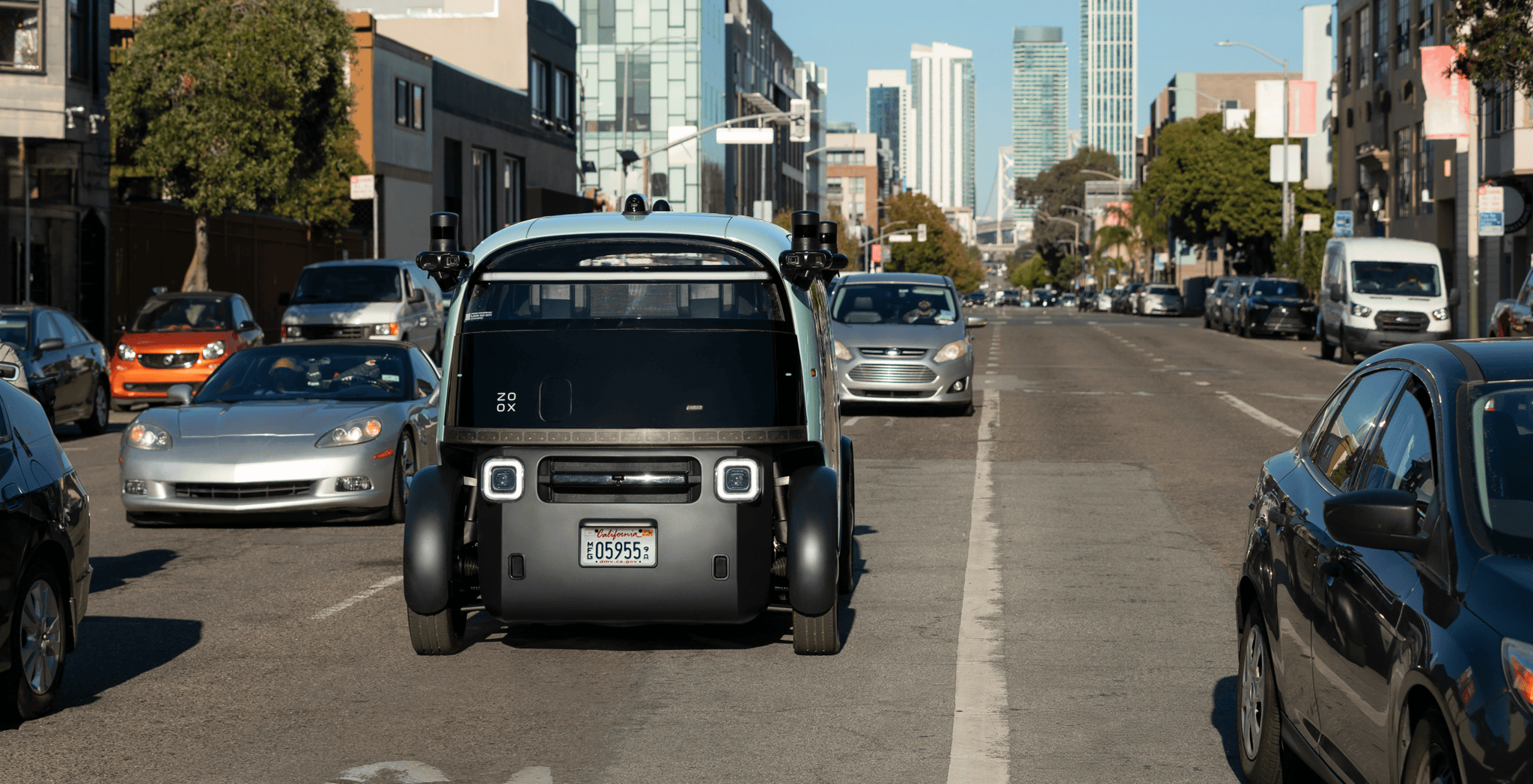
For Zoox, the stakes of this regulatory negotiation are incredibly high. Unlike Waymo, which retrofits its autonomous technology into commercially available Jaguar I-Pace SUVs that feature traditional steering wheels and pedals, Zoox’s entire business model is built around its bespoke, bidirectional carriage-style pod.
+------------------------------------------------------------------------+
|                     ZOOX BUSINESS EXPANSION ROADMAP                    |
+------------------------------------------------------------------------+
| Current Status:     • >500,000 free rides completed in Las Vegas       |
|                     • Operating under temporary federal exemptions     |
|                     • Fleet size: 105 vehicles                         |
+---------------------+--------------------------------------------------+
| Mid-Term Goals:     • Transition Las Vegas operations to paid service  |
|                     • Expand testing and operations to Austin & Miami  |
|                     • Quadruple San Francisco coverage area            |
+------------------------------------------------------------------------+
Because its vehicles cannot be driven by a human, Zoox cannot operate under standard state-level vehicle registrations. Instead, it must secure temporary federal exemptions from NHTSA just to put its vehicles on public roads.
Currently, Zoox has completed more than 500,000 free passenger rides in Las Vegas. However, to transition these operations into a viable, paid commercial service, the company requires explicit regulatory approval from NHTSA. Furthermore, Zoox has announced ambitious plans to expand its testing footprints to Austin and Miami, alongside a fourfold expansion of its operational design domain in San Francisco.
A Model for the Industry?
Ultimately, Zoox’s handling of the Las Vegas incident may serve as a blueprint for how AV companies navigate federal oversight. By opting for a voluntary recall and deploying a swift, targeted software patch within weeks of the incident, Zoox has attempted to show that its development cycle is mature enough to handle unexpected real-world challenges.
Whether this proactive strategy will buy the company the regulatory goodwill needed to secure its paid-ride exemption remains to be seen. What is clear, however, is that the industry can no longer treat emergency scenes as rare "edge cases." As robotaxis scale from hundreds to thousands of vehicles across American cities, their ability to seamlessly interact with the emergency services will decide whether they are embraced as the future of urban transit or rejected as a public hazard.