

The Software Bottleneck: Why Quantum Computing’s Next Leap Isn’t Just About Hardware

In the high-stakes, multi-billion-dollar global race to achieve fault-tolerant quantum computing, a quiet but profound consensus is emerging among the world’s leading high-performance computing (HPC) centers. For years, the narrative has been dominated by the physical hardware—the quest to stabilize more qubits, reduce noise, and achieve "quantum supremacy." However, a new report published today suggests that the industry’s greatest challenge has shifted. While quantum hardware is advancing at a breakneck pace, the software infrastructure required to translate complex scientific problems into actionable machine instructions is failing to keep up.
The report, titled HPC-Quantum-AI: Shaping the Next Compute Era, is a collaborative effort between French quantum startup Alice & Bob and the prominent analyst firm Hyperion Research. By synthesizing deep-dive interviews with directors and lead engineers from iconic research facilities—including Oak Ridge National Laboratory, Lawrence Berkeley National Laboratory, and Japan’s RIKEN—the study paints a sobering picture: the bottleneck is no longer the qubits; it is the compilers, the schedulers, and the "plumbing" of the software stack.
The State of Play: Hardware vs. Software Reality
"The quantum industry and the hardware have been progressing quite significantly," says Juliette Peyronnet, General Manager (U.S.) for Alice & Bob. "There have been tremendous investments and clear signals from the market. Adoption is accelerating. But one gap that is clearly identified here is in regard to the software stack. Hardware and quantum computers are not going to work in isolation; they are going to be hybrid resources integrated into the existing workflows of high-performance computing centers."
The central concern is that without standardized software interfaces, major supercomputing facilities risk squandering months—or even years—on custom, bespoke integration work. This "plumbing" crisis threatens to delay the deployment of quantum systems into the real-world environments where they are intended to provide value.
Chronology of the Quantum-HPC Integration
To understand the gravity of this shift, one must look at the recent evolution of the quantum landscape:

- 2020–2022: The Hardware Arms Race. The industry focused almost exclusively on qubit counts and basic coherence times. During this period, the goal was simply to prove that a quantum processor could function at all.
- 2023–2025: The Rise of Error Correction. As hardware matured, the focus shifted toward "logical qubits." The community recognized that noise was the enemy, leading to the development of early error-correction protocols.
- 2026: The Integration Phase. We have arrived at a point where the integration of quantum systems into classical HPC supercomputers is the primary hurdle. This is the era of hybrid computing, where the focus has pivoted from "can we build a quantum computer?" to "can we actually use one effectively within an existing data center?"
The Physics of the "Cat Qubit"
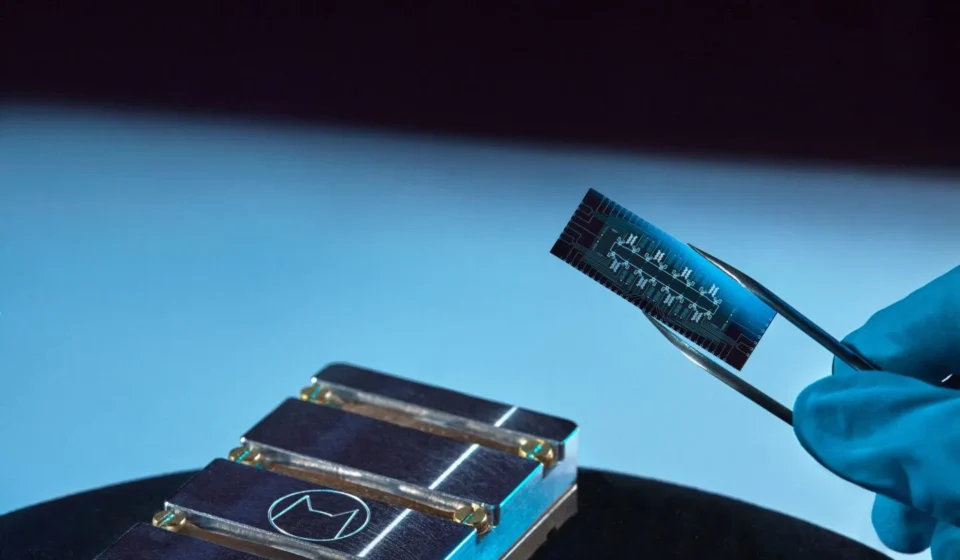
At the heart of Alice & Bob’s technical strategy is the "cat qubit," a superconducting technology designed to fundamentally change the math of error correction. Traditional quantum processors are notoriously fragile; they suffer from both bit-flip and phase-flip errors. To protect a single "logical" qubit from these disturbances, current error-correction schemes often require hundreds or even thousands of physical qubits, creating a massive scaling bottleneck.
Alice & Bob’s approach is to utilize cat qubits in conjunction with Low-Density Parity-Check (LDPC) error-correction codes. By designing the device so that bit-flip errors are naturally suppressed by the hardware itself, the company claims it can reduce the required physical hardware by up to 200 times compared to competing superconducting architectures.
"With Alice & Bob, the main change is that we only have one type of error to correct," explains Peyronnet. "In our platform, the bit-flip time is corrected through the design of the device itself. You collapse on one dimension the error-correction scheme, meaning that you need far fewer physical qubits for one logical qubit."
Recent laboratory results suggest this is more than just theory. Alice & Bob reported that their cat qubits remained stable against bit-flips for up to an hour, a monumental improvement over standard superconducting qubits that typically experience these errors in the millisecond range.
The Latency Trap: Bridging the Classical Divide
Even with a reduced hardware footprint, quantum computers cannot operate in a vacuum. The process of correcting phase-flips requires a classical computer to monitor and decode physical qubit measurements in real-time. In high-speed superconducting systems, this decoding process must occur within a "sub-10-microsecond window." If the classical controller fails to keep pace, the quantum processor stalls, and the entire calculation collapses.

This is where the software stack hits a "latency trap." The software must not only manage the quantum state but also orchestrate an incredibly high-speed feedback loop with classical hardware.
"They are going to have to leverage classical computing to perform some of their key operations internally within a quantum node," Peyronnet notes. "But they’ll also have to interact externally with a bunch of classical resources for performing useful applications. All of this software plumbing for the fault-tolerant regime—the machine that will actually deliver value—is not there yet."
To mitigate this, Alice & Bob is working closely with Nvidia, leveraging the CUDA-Q programming model. CUDA-Q is designed to facilitate heterogeneous backends, allowing developers to write code that interacts with both GPUs and quantum processors. However, Peyronnet is quick to temper expectations: "We work closely with Nvidia, but there is still a lot of development that needs to happen to make sure that the specificities of cat qubits are taken into account. A product is not just something you can plug into a quantum computer, and somehow all your problems are solved."
Official Perspectives: The Path to ROI
The financial outlook for quantum computing remains a complex mix of intense excitement and long-term patience. While venture capital and government funding have flowed into the sector in the billions, tangible Return on Investment (ROI) remains elusive.
Bob Sorensen, SVP of research and chief analyst for Quantum Computing at Hyperion Research, emphasizes that the goal of the new report is to provide a roadmap for this transition. "HPC end users everywhere are looking for guidance and insights for what it will take to integrate the computational power of quantum into the current and projected advanced computing ecosystem," says Sorensen. "This report covers the key issues required to successfully navigate that process by QC vendors and end users alike."

Industry leaders acknowledge that the "useful" era of quantum computing is still years away. Peyronnet suggests that the technology is currently in an "early adopter" phase, comparable to the state of artificial intelligence two to three decades ago.
"There is no return on investment today for anyone," admits Peyronnet. "This is still a technology that needs to mature in order to deliver value for enterprises. The first machines that will be useful won’t be for the general industry. They will be useful for a niche community of researchers specialized in specific problems where we can see overlap with what quantum computing can achieve."
Implications: The Case for Co-Design
If there is one takeaway for the global supercomputing community, it is that the "wait and see" approach is a liability. The report urges HPC centers to move away from the model of buying hardware in a box and toward a model of "co-design."
In a co-design environment, domain scientists, software developers, and hardware architects sit at the same table to design workflows before the hardware is even installed. This approach is already being tested in practice. Alice & Bob, for instance, is currently utilizing a $3.9 million award from the U.S. Department of Energy’s ARPA-E program to co-design a chemistry workflow alongside GE Vernova, Los Alamos National Laboratory, and the University of Michigan. The goal: to simulate rare-earth-free magnets, a task that currently eludes even the most powerful classical supercomputers.
The Strategic Imperative
The implications for HPC facilities are clear:

- Develop In-House Software Expertise: Facilities that rely solely on vendors for software integration will likely face significant delays.
- Focus on Hybrid Interoperability: Future-proofing means ensuring that local classical infrastructure is capable of handling the high-speed decoding requirements of future quantum nodes.
- Collaborative Ecosystems: The complexity of quantum-classical integration is too high for any single entity to solve alone. Building partnerships between academia, government labs, and private startups is the only viable path to progress.
As we look toward the 2030 horizon, it is clear that the quantum revolution will not arrive as a singular "eureka" moment. It will be built in the trenches of software development, through the tedious, iterative work of making quantum hardware compatible with the classical systems that currently power our world. The race to quantum advantage has entered its most difficult phase, but for those who successfully navigate the software bottleneck, the potential for breakthrough in material science, finance, and AI remains unparalleled.