




Unlocking the "Spooky" Secrets of the Universe: Quantum Entanglement at the Extreme Frontier

In the quiet, subterranean halls of the Large Hadron Collider (LHC) near Geneva, Switzerland, a team of international researchers has achieved a feat once thought impossible. By leveraging the violent, high-energy collisions of protons traveling at 99.99% the speed of light, physicists have successfully observed quantum entanglement—the phenomenon Albert Einstein famously derided as “spooky action at a distance”—in one of the most hostile environments imaginable.
The study, published in the prestigious journal Physical Review Letters, provides the most high-energy confirmation of quantum entanglement to date. By tracking the decay of Higgs bosons into pairs of Z bosons, researchers from the University of Oxford and the ATLAS collaboration have demonstrated that the fragile, counterintuitive laws of quantum mechanics are not merely confined to delicate laboratory setups involving chilled ions or laser-cooled photons; they are fundamental, robust, and omnipresent, even amidst the chaotic, high-temperature aftermath of the universe’s most powerful particle accelerator.
The Quantum Paradox: A History of "Spooky" Action
To understand the magnitude of this discovery, one must first appreciate the history of the phenomenon. Quantum entanglement occurs when two particles become so inextricably linked that the state of one instantly influences the state of the other, regardless of the distance separating them. When particles are entangled, their individual properties—such as spin or polarization—remain undefined until a measurement is made. Once measured, the "collapse" of the quantum wave function for one particle dictates the state of its partner instantaneously.
For decades, this "non-locality" challenged the classical view of reality. Albert Einstein, wary of any theory that seemed to violate the speed of light, famously dismissed the concept in 1935 as "spooky action at a distance." However, subsequent experiments—most notably those by John Bell in the 1960s and the 2022 Nobel Prize-winning work of Alain Aspect, John Clauser, and Anton Zeilinger—confirmed that entanglement is indeed a physical reality.
In the 21st century, the focus shifted from proving entanglement exists to harnessing it. Today, it serves as the backbone of the "second quantum revolution," fueling the development of quantum computers, which utilize entangled qubits to perform massive parallel calculations, as well as ultra-secure quantum cryptography and advanced sensor technologies. Yet, a fundamental question remained: Does this delicate connection hold up under extreme conditions, or does it vanish when subjected to the chaotic, high-energy environments of particle colliders?
Chronology of a Breakthrough: From Theoretical Physics to the LHC
The path to this discovery was neither linear nor simple. For years, the scientific community operated under the assumption that entanglement was a phenomenon restricted to low-energy, highly controlled laboratory settings. The transition to high-energy physics began in earnest when researchers started applying quantum information theory to the massive data sets generated by the ATLAS experiment at the LHC.
The journey toward this specific result can be traced back to several key milestones:
- 2012: The discovery of the Higgs boson at CERN provides a new "laboratory" for studying particle interactions. Scientists realize the Higgs boson can decay into pairs of Z bosons, offering a rare opportunity to study a particle system created at the highest energies ever achieved by humanity.
- 2023: A landmark experiment by the ATLAS collaboration, inspired by the theoretical work of Oxford’s Professor Alan Barr, demonstrates for the first time that entanglement can exist between top quarks—the heaviest known elementary particles. This success provided the proof of concept that collider environments could indeed be used as quantum laboratories.
- 2024: Building on the top-quark study, the team shifts focus to Z boson pairs produced by Higgs boson decay. Using the upgraded sensitivity of the ATLAS detector, they successfully reconstruct the spin states of these short-lived particles, providing definitive evidence of entanglement at energies reaching thirteen trillion electron volts.
Supporting Data: Observing the Invisible
The experimental design required to detect entanglement in Z bosons is a masterclass in modern physics. Because Z bosons exist for only a fraction of a second before decaying into pairs of electrons or muons, researchers cannot observe the bosons directly. Instead, they must work backward.
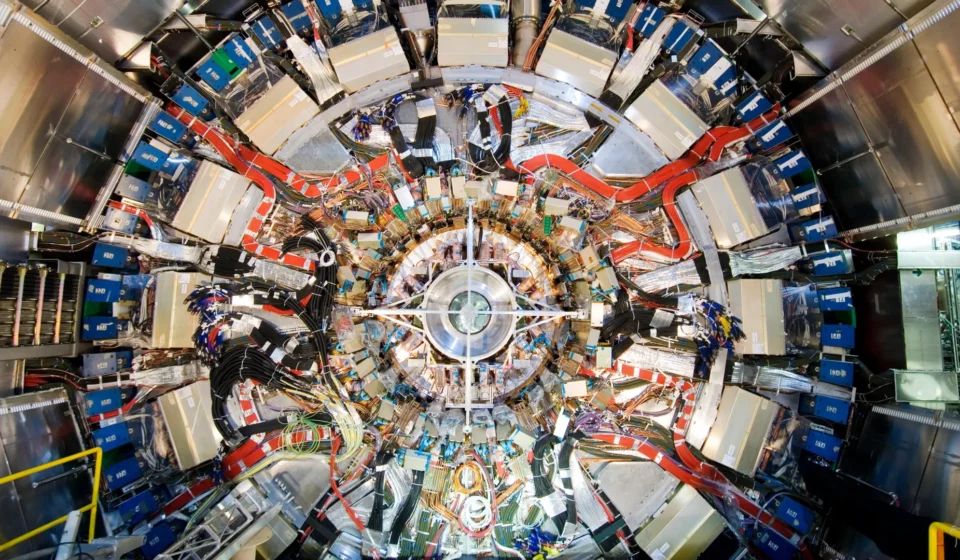
The ATLAS detector, a gargantuan device designed to record the debris of proton-proton collisions, captures the trajectories and energies of the electrons and muons resulting from the Z bosons’ decay. By analyzing the angular distribution of these decay products, physicists can mathematically reconstruct the "spin" or angular momentum of the original parent particles.
The data revealed a strong correlation in the spin states of the Z boson pairs—a correlation that could only be explained by quantum entanglement. Because these particles were created at such immense energies, the findings represent a "stress test" for quantum mechanics. The fact that the entanglement survived the intense force of the collision suggests that the quantum nature of the universe is far more resilient than previously hypothesized.
Official Responses and Expert Perspectives
Professor Alan Barr, a leading voice in this research, expressed profound excitement regarding the implications of the finding. "We’re used to thinking of entanglement as something delicate, seen in laboratory experiments with single photons," Barr noted. "Finding it alive and well among particles as heavy and short-lived as Z bosons, created in some of the most violent collisions we can produce on Earth, shows just how fundamental and robust this quantum effect really is."
Barr, who was instrumental in the construction of the LHC, has long advocated for using particle colliders as platforms for quantum information science. He emphasizes that this is not just about confirming old theories, but about finding new ways to probe the unknown. "It’s a nice reminder that the same strange rules of quantum mechanics that may one day power quantum computers are at work everywhere in nature, even at the extreme energies of the Large Hadron Collider."
The interdisciplinary nature of the project has drawn praise from both the scientific and philosophical communities. Professor Chris Timpson, from Oxford’s Faculty of Philosophy, highlighted the deeper questions involved: "Entanglement is both the most promising and the most puzzling aspect of quantum reality; these collider experiments detecting entanglement present a new frontier in investigations of the foundations of quantum mechanics."
Professor Daniela Bortoletto, the UK coordinator for the ATLAS detector’s pixel system upgrade, underscored the technical prowess required for such a result. "This measurement demonstrates the scientific power of the ATLAS collaboration and the unique capabilities of CERN’s Large Hadron Collider. Oxford researchers have played a leading role in developing these new approaches to studying quantum phenomena at the highest energies."
Implications: The Future of Particle Physics
The successful observation of entanglement in Z bosons is more than a technical victory; it marks a paradigm shift in how we approach particle physics. By importing techniques from quantum information science—the field that underpins quantum computing—physicists are developing new, highly sensitive statistical methods to sift through the petabytes of data generated by the LHC.
1. Probing Physics Beyond the Standard Model
The Standard Model of particle physics has served us well, but it remains incomplete, failing to account for dark matter, gravity, or the dominance of matter over antimatter in the universe. By using quantum entanglement as a diagnostic tool, researchers hope to uncover subtle patterns in particle interactions that may deviate from the Standard Model, potentially pointing the way toward "new physics."
2. The High-Luminosity Upgrade
The work does not stop here. CERN is currently undergoing an ambitious upgrade to become the High-Luminosity Large Hadron Collider (HL-LHC). This upgrade will drastically increase the number of collisions occurring at the interaction points, providing the ATLAS detector with significantly larger data sets. With this increased "luminosity," researchers will be able to perform even more precise tests of quantum phenomena.
3. Philosophical Foundations
Beyond the data and the hardware, this research reignites the philosophical debate regarding the nature of reality. If entanglement is a fundamental property that survives even at the highest energy scales, it suggests that the "spookiness" of the quantum world is not a quirk of small, cold systems, but a core architectural feature of the cosmos.
Conclusion
The collaboration between the University of Oxford and the ATLAS team at CERN has transformed the Large Hadron Collider into a unique laboratory for quantum information. By confirming that entanglement persists at the extreme energies of Higgs boson decay, these scientists have expanded the reach of quantum mechanics into the most violent realms of our universe.
As the team prepares for the next phase of experiments with the upgraded detector, the potential for discovery is immense. We are moving toward a future where the techniques used to build quantum computers may simultaneously provide the keys to understanding the fundamental laws that govern the birth and evolution of our universe. For now, the "spooky" action of quantum entanglement remains the most compelling mystery in science—a mystery that is proving to be as resilient as the universe itself.