



The Democratization of Dexterity: How 3D Printing is Disrupting the $70,000 Prosthetic Industry

In the high-stakes world of medical technology, a quiet revolution is taking place on the campus of Yale University. Alexia Quinn, a graduate student within the university’s prestigious Personalized Medicine & Applied Engineering (PMAE) master’s program, has successfully engineered a suite of six custom, 3D-printed hand prosthetics for a fraction of the cost of traditional medical hardware. The recipient, 26-year-old Jillian Accetta, an administrative assistant at Quinnipiac University, was previously fitted with a high-end, $70,000 prosthetic that failed to meet the demands of her daily life.
By leveraging additive manufacturing, Quinn has effectively bypassed the prohibitive costs and long lead times of the traditional prosthetics industry, proving that innovation in this space need not be synonymous with extreme financial burden.
Main Facts: A New Paradigm for Assistive Tech
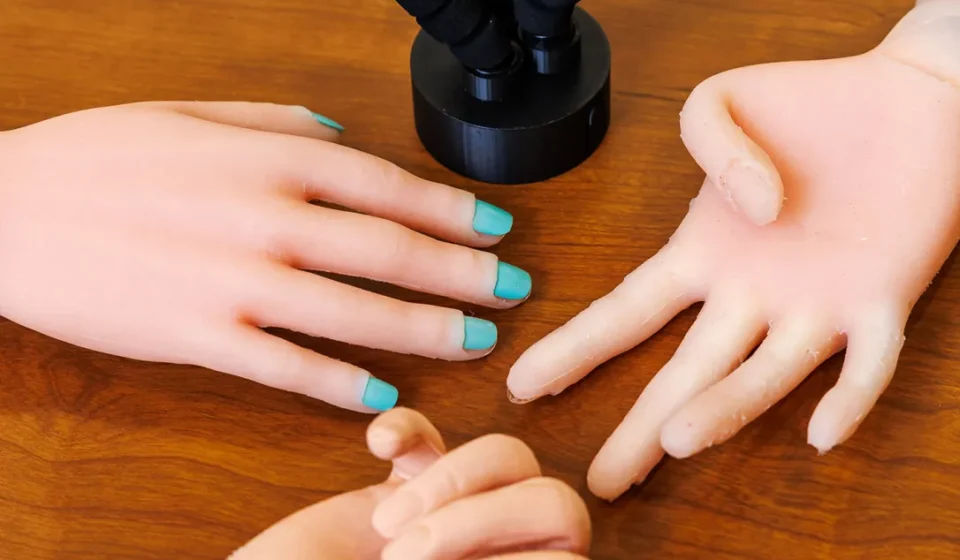
The core of the project lies in a departure from the "all-purpose" philosophy that governs most commercial prosthetics. Rather than attempting to create a single, heavy, and expensive robotic limb that promises everything but delivers little, Quinn designed a modular kit of six task-specific attachments. These devices click onto a single, comfortable socket worn on the user’s arm, allowing the wearer to swap tools in seconds.
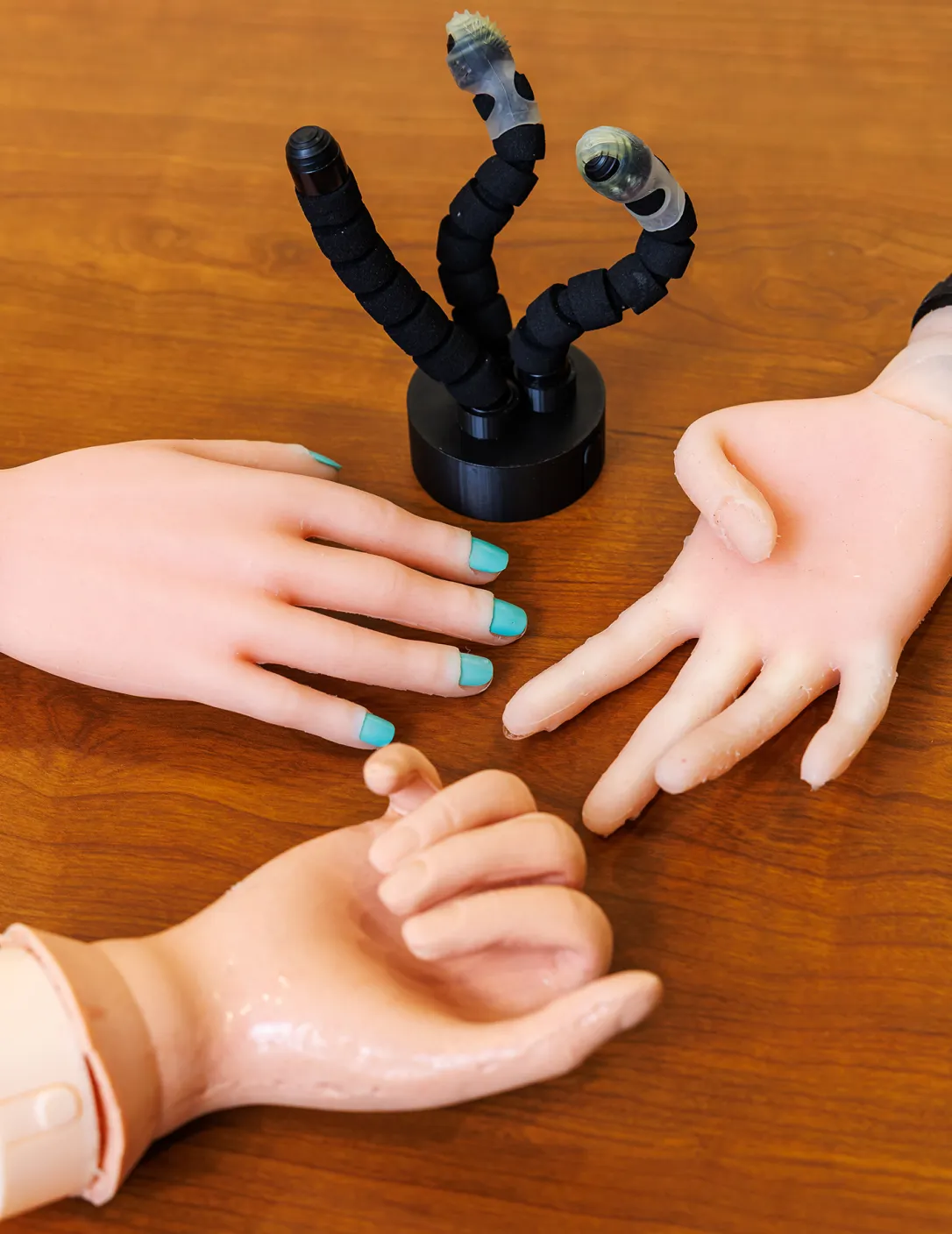
Each of the six attachments was designed with a specific mechanical purpose in mind, drawing inspiration from unconventional sources—ranging from bicycle cup holders to complex industrial grippers. The kit includes the “Squid,” which features tentacle-like manipulators for versatile grasping, and the “Church Hand,” an aesthetically refined version complete with painted, detachable fingernails for social settings.
The total cost for the entire set was a mere few hundred dollars, a stark contrast to the $70,000 price tag of Accetta’s previous device. More importantly, these tools can be printed in a matter of hours and modified just as quickly, offering a level of personalization and responsiveness that the traditional manufacturing model simply cannot match.
Chronology: From Clinical Frustration to Modular Success
The journey toward these prosthetics began with the identification of a significant gap in the market. Accetta, born with a limb difference where her right arm ends at the elbow, had long been dissatisfied with the “solutions” offered by the medical establishment.
The Failure of Conventional Models
At age 15, Accetta was fitted with a conventional, high-cost prosthetic. For years, she found it to be more of a hindrance than a help. The device weighed nearly two pounds, was cluttered with complex, fragile wiring and cables, and offered only a weak "pinch" grip. It was, in her own words, an object she felt no motivation to integrate into her life. It lacked the mechanical reliability and ergonomic comfort required for daily tasks.
The Collaborative Design Phase
When Accetta connected with Alexia Quinn through the Yale PMAE program, the approach shifted from one-size-fits-all to patient-centered co-design. The process involved:
- Needs Assessment: Quinn spent extensive time interviewing Accetta to understand the physical obstacles she faced in her office role and personal life.
- Iterative Prototyping: The pair tested various shapes and mechanical designs, with Quinn adjusting the CAD models based on real-time feedback from Accetta.
- Mechanical Refinement: Because the devices contain no electronics, the engineering focus was strictly on kinematics—ensuring each tool could grip reliably without requiring high muscle exertion or complex batteries.
- Deployment: The final kit was introduced to Accetta, who immediately found she could perform complex tasks, such as operating elevator buttons while carrying bags or navigating car dashboard controls—movements that were previously impossible or exhausting.
Supporting Data: Breaking Down the Cost and Utility Gap
The economic argument for 3D-printed prosthetics is compelling. The traditional prosthetics market is characterized by high barriers to entry, often relying on insurance-subsidized, mass-manufactured components that are rarely tailored to the specific biomechanical needs of the individual.
- Financial Disparity: A $70,000 prosthetic is often out of reach for many, and even when covered by insurance, it represents an enormous sunk cost for a device that may not be functional. A few-hundred-dollar 3D-printed set allows for "disposable" innovation; if a part breaks, it is reprinted for pennies, not repaired for thousands of dollars.
- Time Efficiency: Traditional prosthetics often require months of appointments, fittings, and calibration. Quinn’s process reduced this to a cycle of hours.
- Preventive Healthcare: Beyond convenience, there is a medical imperative. Doctors have warned Accetta that over-reliance on a single hand will cause accelerated physical degradation by age 30. By providing a comfortable, modular toolset, the project acts as a preventive health measure, helping to preserve the longevity of her existing limb.
Official Responses: The Engineering Perspective
For Alexia Quinn, the project was far more than an academic exercise. "I really wanted to make it work and be something that will actually help her in her life," Quinn stated. She admitted that the project was nerve-wracking; unlike a standard class assignment, the failure of this device would have a direct, negative impact on a real person’s quality of life.
The successful implementation provided an emotional and professional validation for the PMAE program. Watching Accetta navigate her environment with ease—pressing elevator buttons and driving with newfound confidence—confirmed that the engineering challenge was not just about the plastic, but about restoring a sense of agency to the user.
Accetta’s perspective echoes this, highlighting that the modularity is as vital as the function. Because the socket is lightweight and easy to remove, it doesn’t feel like an "external appendage" that must be endured all day. It is a tool to be used when needed, providing freedom rather than a sense of being "tethered" to a heavy medical device.

Implications: A Broader Shift in Healthcare
The success of the Yale project is not an isolated incident; it is part of a global movement toward the democratization of assistive technology.
The Automated Pipeline
The Yale project aligns with research from the Israel Institute of Technology, where scientists have developed an automated, scan-driven pipeline. By scanning a patient’s intact hand and using CAD software to mirror it for the limb-different side, they can produce highly personalized prosthetics for a fraction of the market price. Their use of low-cost scanners—assembled for approximately $40—demonstrates that the future of prosthetics lies in accessible, localized manufacturing rather than centralized industrial production.
The Role of Non-Profits
Organizations like e-NABLE have been instrumental in this shift, providing open-source, printable designs to families across the globe. By allowing parents to input measurements and download print-ready files, they have removed the "gatekeepers" of the prosthetic industry, proving that custom, functional limbs can be created in homes and schools everywhere.
The Future of Additive Manufacturing
The broader implication is that the prosthetic industry is facing a disruption similar to what the software industry experienced with open-source development. As 3D printing technology matures, we are seeing a move away from costly, slow, "one-size-fits-all" hardware toward a model of "cheap, fast, and personalized."
For individuals like Jillian Accetta, this shift means more than just a lower price tag. It means the difference between having a device that sits in a closet and having one that becomes a part of their identity. The Yale project stands as a testament to what is possible when engineering talent is coupled with empathy and the power of additive manufacturing. As this technology continues to scale, it promises to reshape not only how prosthetics are made but who has access to them, effectively leveling the playing field for millions worldwide.