

Precision Redefined: Delta Motion Unveils Advanced Trapezoid Waveform Command for RMC Controllers

In the demanding world of industrial testing and high-precision automation, the ability to generate complex, repeatable, and adaptive motion profiles is the cornerstone of reliability. Delta Motion, a leader in high-performance motion control solutions, has announced a significant expansion of its RMC Motion Controller capabilities: the introduction of the Trapezoid Waveform Command.
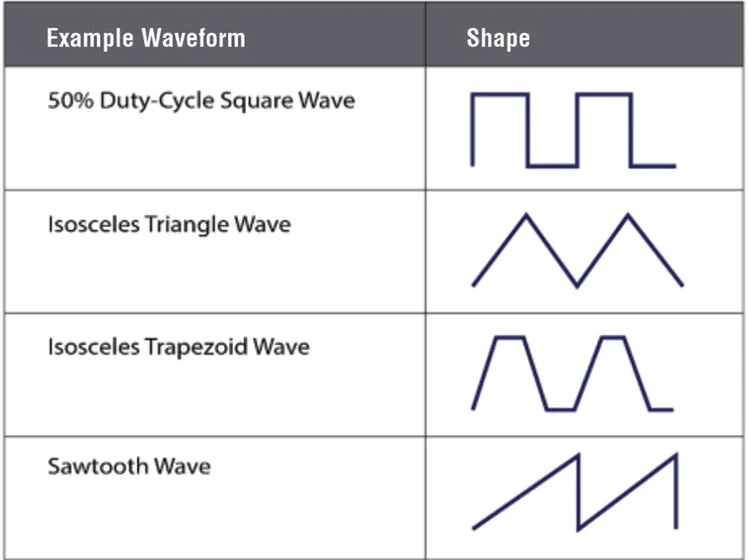
This new feature provides machine builders and test engineers with an unprecedented level of control, enabling the generation of trapezoidal, triangular, sawtooth, and square wave motion profiles for both position and force-based applications. By embedding these capabilities directly into the RMC hardware, Delta Motion is effectively eliminating the bottlenecks traditionally associated with PLC-based motion generation.
The Core Innovation: Moving Beyond Traditional Sequences
For years, engineers tasked with fatigue, durability, or material testing have faced a significant hurdle: how to create complex, cyclic motion profiles without overwhelming the primary PLC or sacrificing deterministic performance. Traditionally, this required crafting individual motion segments or developing custom waveform generation algorithms in the PLC, which can be both time-consuming and prone to jitter due to scan-time limitations.
The Trapezoid Waveform Command fundamentally changes this paradigm. By offloading waveform generation to the RMC controller’s firmware, Delta Motion ensures that the motion profile is executed with high-speed, deterministic precision that is completely independent of the PLC scan time or fieldbus network latency.
Versatility in Waveform Design
The new command suite complements Delta’s existing sinusoidal and curve waveform offerings. Engineers can now select the specific waveform best suited for their application—from the smooth, harmonic transitions of a sine wave to the sharp, aggressive edges of a square wave. The command is fully parameterized, allowing for precise control over:
- Amplitude and Offset: Defining the scale and range of the motion.
- Frequency: Controlling the speed of the cycle.
- Segment Timing: Independent adjustments for rise time, high time, fall time, and low time.
This granular control is not static. Unlike traditional, rigid motion sequences, the parameters of the Trapezoid Waveform Command can be modified on the fly. Operators can adjust the amplitude, offset, phase, or even the waveform shape itself while the motion is active, without needing to stop the machine. This "live-tuning" capability is invaluable for R&D labs and production facilities that require rapid iterations during test cycles.
Chronology of Development: From Customer Demand to Engineering Reality
The genesis of the Trapezoid Waveform Command is a testament to Delta Motion’s commitment to user-centric engineering. According to company leadership, the feature was not developed in a vacuum but was a direct response to the evolving needs of their global client base.
Phase 1: The Identified Gap
Over the past several years, users operating RMC75, RMC150, and RMC200 controllers in testing environments began requesting a more streamlined method for generating cyclic force and position profiles. While the RMC controllers were already highly regarded for their precision, the requirement to write complex logic to emulate trapezoidal motion in the PLC was cited as a major pain point.
Phase 2: Internal Prototyping
Delta’s engineering team prioritized the integration of this feature directly into the RMC firmware. The challenge was to ensure that the new command could handle both position and force control without requiring distinct programming architectures. By maintaining a unified command structure, the team ensured that the transition from a position-controlled test to a force-controlled test would be seamless for the end-user.
Phase 3: The Adaptive Control Integration
A critical milestone in the development process was the implementation of adaptive amplitude control. The team recognized that in material testing—where the specimen’s stiffness often changes as it approaches failure—a static command would fail to maintain the desired force levels. By adding an adaptive algorithm, the controller can now dynamically compensate for these fluctuations, a feature that significantly improves the accuracy of long-term durability testing.
Phase 4: Final Rollout and Integration
Following rigorous field testing with select partners, the Trapezoid Waveform Command was integrated into the latest update of the RMCTools software suite. This ensures that current users of the RMC75, RMC150, and RMC200 platforms can access the new functionality without requiring a hardware overhaul.
Supporting Data: Technical Capabilities and Specifications
To understand the impact of this update, one must look at the technical specifications of the RMC platform. The RMC line has long been known for its deterministic nature, but the Trapezoid Waveform Command elevates its utility in the following ways:
Adaptive Force Control
In fatigue and durability testing, the specimen dynamics are rarely constant. As a material begins to degrade, its modulus of elasticity may shift, causing the force response to change even if the displacement remains constant. The RMC’s adaptive control algorithm monitors the peak force output and automatically adjusts the waveform amplitude in real-time. This ensures the integrity of the test data throughout the entire duration of the cycle, preventing under-testing or over-stressing of the specimen due to environmental or structural variables.
Dynamic Morphing
Perhaps the most sophisticated aspect of this command is its ability to transition between waveforms over time. Engineers can program a "morphing" sequence where, for instance, a square wave gradually shifts its duty cycle, or a triangle wave transitions into a sawtooth profile over a specific number of cycles or seconds. This allows for complex stress testing that simulates real-world, unpredictable wear-and-tear conditions.

Compatibility
The command is native to the following controllers:
- RMC75: Ideal for single-axis applications requiring high-precision positioning.
- RMC150: Optimized for multi-axis synchronization and complex motion tasks.
- RMC200: The flagship controller for high-density, multi-axis testing systems.
All programming, tuning, and monitoring are managed via the RMCTools interface, which provides a visual representation of the waveform, allowing engineers to verify the output before executing the cycle.
Official Responses and Industry Impact
The introduction of this command has been met with positive feedback from the engineering community, particularly those in the hydraulic and electromechanical testing sectors.
Steve Nylund, CEO of Delta Motion, emphasized the strategic importance of this release during his recent comments on the company’s innovation roadmap. "Delta’s controllers are increasingly valued for custom testing applications. Customers often find the cost to be a fraction of other high-end solutions, and the RMC controllers much easier to adapt to special requirements," Nylund stated.
He further highlighted the collaborative nature of the product development process, noting, "Many of our product enhancements come directly from customer feedback, and the Trapezoid Waveform Command is a perfect example of this—a practical, high-impact feature that simplifies application development while providing the precision our users expect."
The consensus among industry analysts is that this move reinforces Delta Motion’s position as a provider of "industrial-grade research tools." By lowering the barrier to entry for complex motion generation, Delta is enabling smaller firms to perform high-fidelity testing that was previously reserved for organizations with massive R&D budgets.
Implications for Future Testing Applications
The integration of the Trapezoid Waveform Command is poised to have a lasting impact on several key industrial sectors:
1. Fatigue and Durability Testing
By providing an easy-to-configure, deterministic way to cycle test parts, Delta is helping manufacturers shorten their validation cycles. The ability to simulate real-world usage patterns—such as the rapid acceleration and deceleration inherent in square or trapezoidal waves—allows for more accurate predictions of component lifespan.
2. Hydraulic and Electromechanical Actuator Characterization
For companies manufacturing actuators, the ability to perform repeatable characterization is vital. The new command allows engineers to generate standard test profiles, ensuring that every unit produced meets the same strict performance standards.
3. Production Cycle Simulation
In automated manufacturing, simulating the production cycle is essential for bottleneck identification. The RMC controller can now act as a high-fidelity simulator, recreating the exact timing and force profiles of a production line to stress-test secondary components or assembly processes.
Conclusion: A New Standard for Motion Control
Delta Motion’s introduction of the Trapezoid Waveform Command is more than just a software update; it is a fundamental improvement in how industrial testing is performed. By moving complex motion generation from the PLC to the dedicated motion controller, Delta has provided a more robust, accurate, and user-friendly solution for the most demanding applications.
As the industrial sector moves toward "Industry 4.0" and more rigorous, data-driven testing, tools like the RMC Motion Controller—and features like the Trapezoid Waveform Command—will be essential for engineers looking to balance cost, complexity, and precision. Whether it is for high-stakes fatigue testing or standard industrial automation, Delta Motion continues to prove that they are at the forefront of motion control technology.
For those looking to integrate these capabilities, the latest version of RMCTools is available via the company’s official portal at deltamotion.com.