






New Trade Barriers: U.S. Implements Sweeping Tariffs on 60 Nations Over Forced Labor Concerns

By Phil Neuffer
Published July 23, 2026
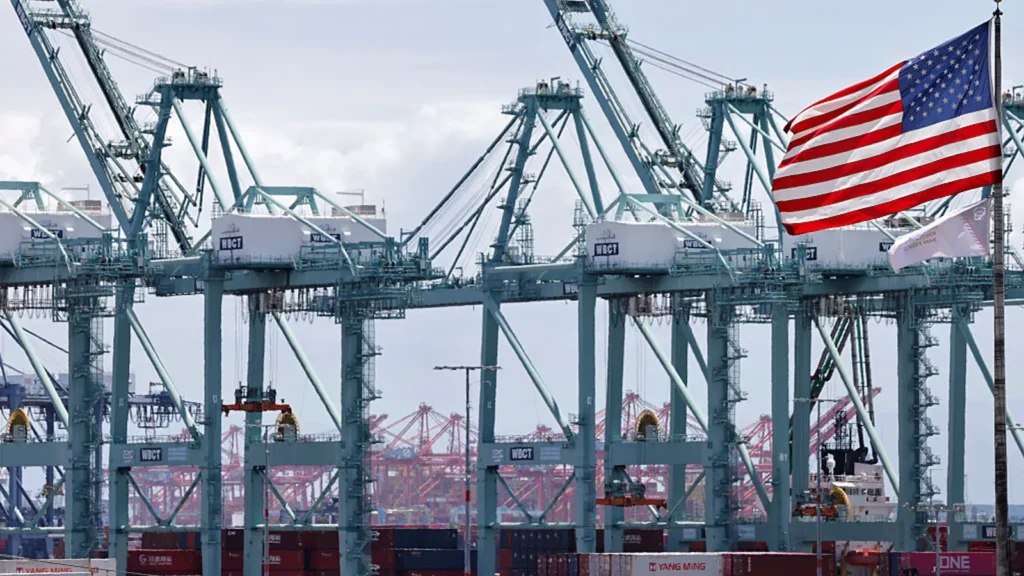
In a move that marks a significant escalation in U.S. trade policy, the Trump administration has finalized a sweeping tariff regime targeting imports from 60 global trading partners. The new duties, enacted under Section 301 of the Trade Act of 1974, are set to take effect this Friday, creating a seismic shift in global supply chain economics. The levies are specifically designed to penalize nations that the U.S. Trade Representative (USTR) has deemed insufficient in their efforts to identify, prevent, and eradicate forced labor within their manufacturing sectors.
The announcement comes at a critical juncture in international trade, as the U.S. prepares to sunset a temporary, broad-based 10% global tariff that was instituted earlier this year following a Supreme Court decision that invalidated previous emergency-power-based duties. As the clock runs out on those Section 122 levies, the new forced-labor-related tariffs will serve as the next phase of the administration’s "America First" trade strategy.
The Core Mandate: Targeting Forced Labor in Global Supply Chains
The U.S. Trade Representative, Jamieson Greer, has been the primary architect of this policy. Following a rigorous investigation launched in March 2026, the USTR concluded that 60 major trading partners had failed to adequately implement or enforce regulations prohibiting the entry of goods produced through forced labor into the U.S. market.
According to a USTR fact sheet released concurrently with the Federal Register filing, the reach of these tariffs is unprecedented. The administration estimates that the affected goods account for approximately 99.4% of total U.S. imports. The policy imposes a two-tiered structure, with countries subject to either a 10% or 12.5% tariff rate.
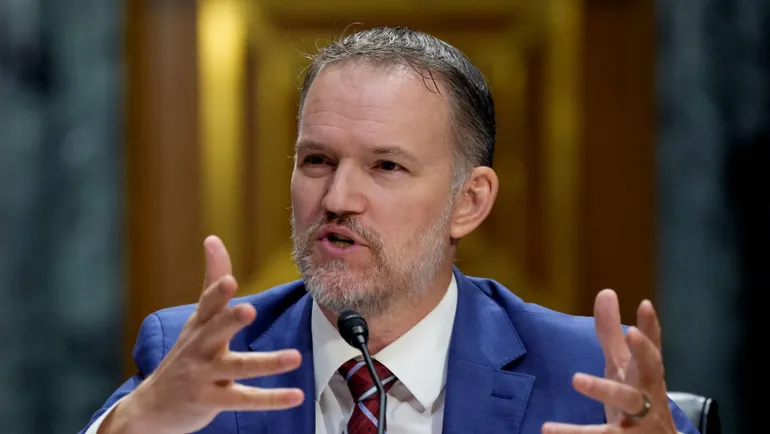
While the geopolitical implications are significant—affecting major economies such as China, the European Union, and Mexico—the administration has framed the move as a moral and economic imperative. "Despite longstanding international consensus that this practice must be eliminated, the prevalence of forced labor persists worldwide and has even escalated in recent years," the USTR stated.
Chronology of the Trade Pivot
The road to this Friday’s implementation has been defined by rapid-fire legal and policy adjustments.
- March 2026: The U.S. launches a comprehensive Section 301 investigation into the forced labor practices of key global trading partners.
- Early 2026: The Supreme Court invalidates previous tariffs imposed under the International Emergency Economic Powers Act (IEEPA), forcing the administration to pivot.
- Spring 2026: In response to the court ruling, the administration implements a temporary 10% global tariff under Section 122, which is scheduled to expire this Friday, July 24, 2026.
- June 2026: USTR Jamieson Greer formally proposes the new forced-labor-based tariff structure following the findings of the March probe.
- July 2026: The U.S. imposes specific, separate levies on imports from Canada and Brazil, further complicating the trade landscape.
- July 23, 2026: The Federal Register filing is released, detailing the specific 10% and 12.5% tariff rates and providing a roadmap for implementation.
The overlapping nature of these tariffs—the expiration of the Section 122 duties and the onset of the Section 301 forced-labor levies—has created significant confusion among importers, who are currently navigating a rapidly shifting regulatory environment.
The "Net of MFN" Complexity
One of the most nuanced aspects of the new policy is the "net of Most-Favored Nation (MFN)" provision. For trading partners with existing MFN agreements—such as the European Union, Japan, and South Korea—the new tariffs will not necessarily be additive.
According to the official filing, the tariff charged will be calculated as the difference between the new rate and the existing MFN duty. Effectively, this means that for these specific nations, the combined total of the Section 301 duty and the MFN rate will not exceed the 10% or 12.5% threshold, unless the existing MFN duty already surpasses that amount.

Industry experts are closely monitoring this mechanism. Pete Mento, director of global trade advisory services at Baker Tilly, emphasized the potential impact of this calculation in a recent LinkedIn post. "Those three words—‘net of MFN’—may end up being the biggest story in the entire announcement," Mento noted. "If it works the way it appears, this isn’t simply another tariff stacked on top of existing duties. It could fundamentally change how the Section 301 duty is calculated for those products."
Exemptions and Exceptions
Recognizing the potential for economic disruption, the administration has included a list of exemptions. To stabilize critical supply chains, the U.S. will exempt:
- Agricultural Goods: Numerous food and raw agricultural products have been excluded to mitigate inflationary pressure on the U.S. food supply.
- Section 232 Overlap: Goods already subject to existing Section 232 levies (such as steel and aluminum) are largely shielded from the new, additional duties to avoid double-taxation on strategic materials.
- Targeted Country Exemptions: The policy includes specific carve-outs, such as certain textiles from Malaysia and specialty whiskey from the United Kingdom, acknowledging the unique trade relationships or specific industry impacts.
Furthermore, a "grace period" has been established: goods that were loaded onto a vessel prior to Friday and are entered for consumption by July 28 will not be subject to the new charges, providing a brief window for shipments already in transit.
Official Responses and Strategic Implications
The administration’s stance remains firm: the use of tariffs is a necessary tool to enforce human rights standards globally. However, the policy is not without its critics. Business groups have expressed concern over the cumulative effect of these tariffs on manufacturing costs and consumer prices.
The interaction between these new forced-labor tariffs and the recently imposed duties on Canada and Brazil remains a point of ambiguity. The administration has yet to issue specific guidance on how these levies will stack, leaving many firms in the automotive and energy sectors—which rely heavily on cross-border trade with these nations—in a state of uncertainty.

Furthermore, the U.S. is not finished with its trade investigations. A separate Section 301 probe into global manufacturing capacity is currently underway. Launched during the same week as the forced labor investigation, this second probe could lead to yet another round of duties in the coming months.
Looking Ahead: A New Normal for Global Trade?
As the global business community adjusts to this latest development, the long-term implications are becoming clear. The U.S. is increasingly using its market power to dictate global standards, forcing trading partners to choose between reform and economic isolation.
For supply chain managers, the "new normal" involves constant vigilance and a sophisticated understanding of how overlapping trade laws—Section 301, Section 232, and the "net of MFN" calculations—interact. The volatility of the last few months suggests that the era of stable, predictable trade policy is over, replaced by a dynamic and often reactive regime that prioritizes strategic enforcement over traditional trade liberalization.
As the Friday deadline approaches, companies worldwide are scrambling to assess their exposure. Whether these tariffs will successfully compel the international community to adopt more stringent forced labor bans remains to be seen. What is certain, however, is that the cost of doing business with the United States has undergone a fundamental transformation that will reverberate through global markets for years to come.