Closing the Loop: SDU’s Bold Bid to Revolutionize Metal 3D Printing with Industrial Waste

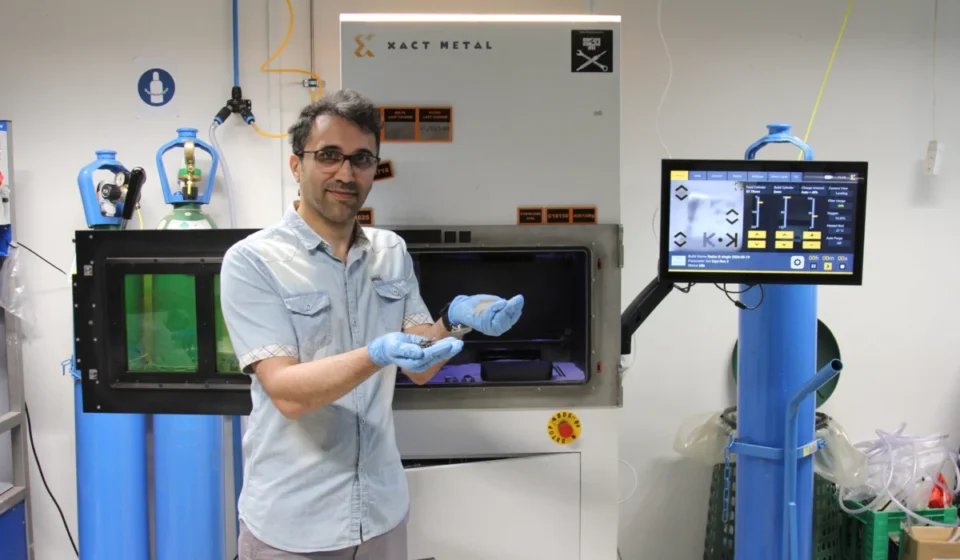
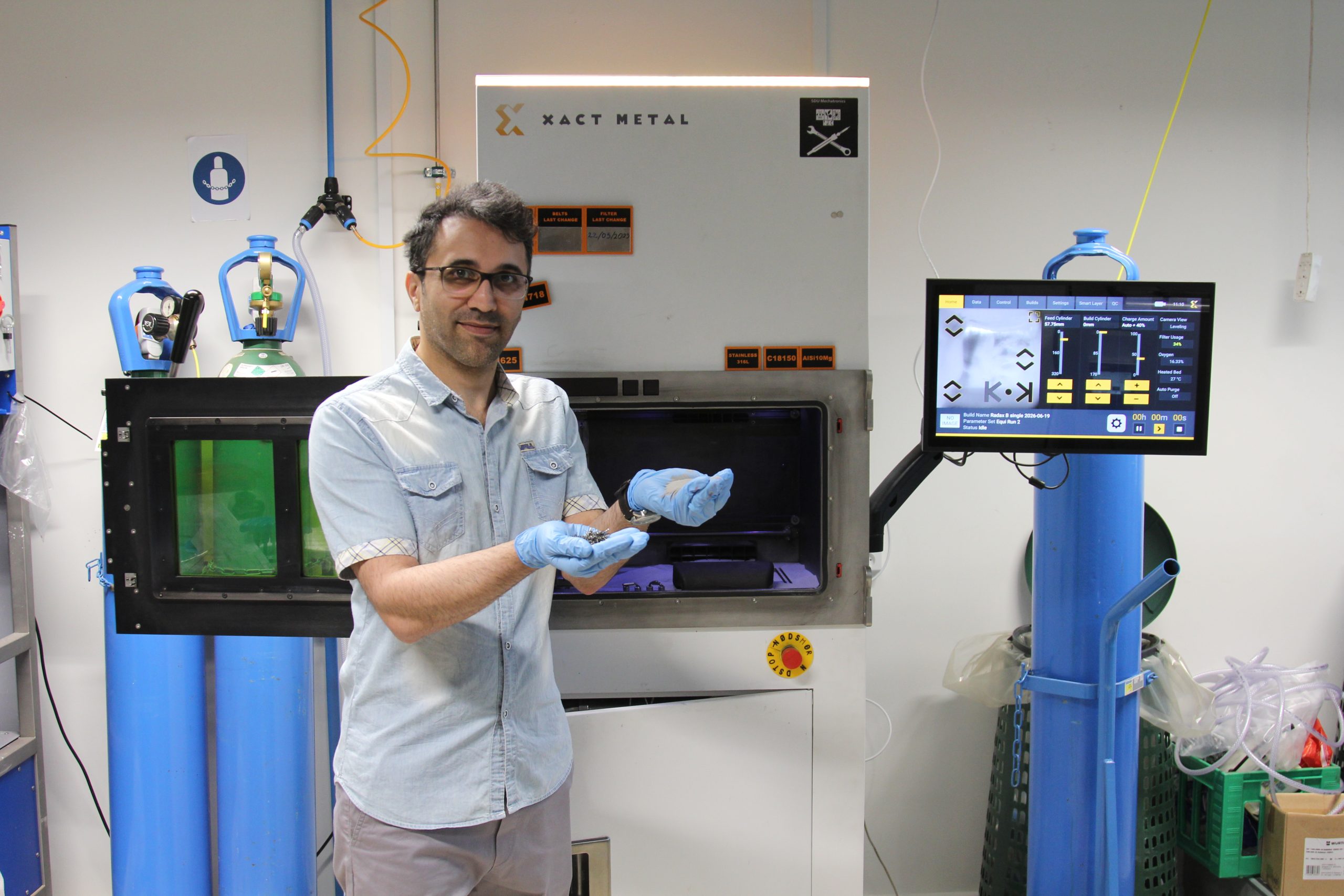
In a move that could redefine the economics of additive manufacturing (AM), Associate Professor Mohammad Malekan of the University of Southern Denmark (SDU) has secured a prestigious Sapere Aude Research Leader grant from the Independent Research Fund Denmark. His mission: to determine whether the "dirty" metal by-products discarded by European factories can be transformed directly into high-quality feedstock for 3D printing, effectively bypassing the energy-intensive and chemically demanding purification processes currently required for metal recycling.
As European manufacturers grapple with raw material scarcity and volatile supply chains, Malekan’s research arrives at a pivotal moment. By treating industrial waste as a strategic resource rather than a liability, the project seeks to establish a truly circular ecosystem that promises to slash costs, lower environmental footprints, and fortify the continent’s industrial autonomy.
Main Facts: The "Dirty Powder" Challenge
The global manufacturing sector generates millions of tons of metal chips, shavings, and swarf—remnants of CNC machining and turning operations. Traditionally, these materials are treated as low-value waste, often hauled away at a cost to the manufacturer or sold for minimal profit to be melted down into basic ingots.
Current recycling pathways for these materials are notoriously inefficient. Because industrial scrap is typically saturated with cutting oils, lubricants, and coolant residues, it requires extensive chemical washing and thermal processing before it can be converted into the high-purity, spherical powder required for laser-based metal 3D printing.
Malekan’s research, based at SDU’s Institute of Mechanical and Electrical Engineering, aims to challenge the necessity of these purification steps. By investigating how these "dirty" powders behave during the printing process, his team hopes to develop a streamlined methodology that allows for direct upcycling. The core hypothesis is that advanced metallurgical control and intelligent process monitoring can compensate for minor impurities, rendering intensive cleaning redundant.
Chronology: From Industrial Waste to Scientific Frontier
The journey toward this research began with a growing awareness of the widening gap between Europe’s reliance on imported raw materials and its massive internal production of industrial scrap.
- Pre-Grant Phase: Malekan and his team spent months analyzing the chemical composition of common industrial waste streams. They observed that while the physical geometry of these chips was irregular, the underlying material quality—the chemical integrity of the alloy—remained high.
- The Grant Award: Recognizing the high-risk, high-reward nature of the proposition, the Independent Research Fund Denmark awarded Malekan the Sapere Aude Research Leader grant. This funding is specifically earmarked for researchers with the potential to establish independent, world-class research groups.
- The Launch: The project has officially commenced at SDU, with the recruitment phase for a postdoctoral researcher, a PhD student, and a research assistant now underway.
- Future Milestones: The team plans to spend the next 18 months refining the "dirty-to-powder" conversion process, followed by extensive print testing and structural analysis of the resulting components.
Supporting Data: The Industrial Context
The urgency of this project is underscored by current geopolitical and economic realities. Europe’s dependence on external suppliers for specialized metal powders makes the continent’s manufacturing sector vulnerable to market fluctuations and trade restrictions.
The Rise of Circularity
The shift toward circularity is not merely an environmental goal; it is a survival strategy. While SDU is looking at the research side of "dirty" recycling, commercial players are already proving that scrap-to-powder conversion is a viable industrial pursuit:
- 6K Additive’s UniMelt: This plasma-based technology has already demonstrated the ability to convert machined millings and turnings into industry-ready powders. Their work with Siemens Energy on nickel superalloys has set a precedent for how high-value scrap can be upcycled into critical components.
- Continuum Powders: Having raised $36 million, this firm is scaling production of 100% recycled feedstock, highlighting the massive venture capital interest in closing the loop for the metal supply chain.
- Defense Backing: The US Department of Defense’s $23.4 million investment in 6K Additive’s capacity expansion highlights that governments view scrap recovery as a national security issue, not just a green initiative.
Malekan’s project occupies a unique space in this landscape. While firms like 6K and Continuum focus on refining existing, high-volume industrial recycling, SDU is investigating whether we can go one step further: reducing the chemical intensity of the recycling process itself.
Official Responses and Theoretical Implications
"Europe has limited access to raw materials, while at the same time producing large amounts of metal waste," says Associate Professor Mohammad Malekan. "We need to become better at viewing waste as a resource. If we can reuse materials that already exist within our industrial value chains, we can both reduce waste and decrease our dependence on imported raw materials."
The implications of this research are profound. If the team succeeds, the cost of metal 3D printing powder could drop significantly. Furthermore, individual manufacturers could theoretically implement "closed-loop" systems on-site: machining a part, collecting the waste, and feeding it into an in-house metal printer to create a new component.
AI-Assisted Materials Science
The project is not just a study of metallurgy; it is a study of digital integration. By utilizing machine learning and numerical simulation, the team intends to predict how trace impurities from lubricants will affect the microstructure of the printed metal. This "digital twin" approach allows for the simulation of material behavior under various conditions, enabling the researchers to compensate for impurities through precise laser parameters and cooling rates.
"What makes this project unique is that we are investigating whether these materials can be used without first cleaning them with large quantities of chemicals," Malekan notes. "If that proves possible, recycling could become simpler, cheaper and more environmentally friendly."
Future Outlook: A New Paradigm for Manufacturing
The project is structured to address the full life cycle of the material. By building a team that blends expertise in AI, material science, and additive manufacturing, SDU is creating a prototype for how universities can bridge the gap between academic research and industrial application.

The Role of Artificial Intelligence
The inclusion of AI is the project’s secret weapon. Traditional material science relies on slow, iterative testing. By contrast, Malekan’s team will use machine learning to map the relationship between "dirty" powder inputs and the mechanical properties of the finished print. This will eventually allow for a "certification" process, where manufacturers can be confident that a part printed from recycled chips meets the rigorous safety standards required for aerospace or medical applications.
Bridging the Gap
The success of this project could fundamentally alter the "buy-to-fly" ratio in industries like aerospace. Currently, much of the material removed during machining is lost. By converting that material back into powder, the industry could theoretically achieve a near-zero-waste manufacturing cycle.
As Malekan prepares to build his research environment, the eyes of the European industrial sector will be watching. The challenge is clear: the industry has the material, it has the demand, and it has the technology. What it lacks is the bridge between the two. The SDU project, if successful, will serve as that bridge, proving that the future of additive manufacturing lies not just in new materials, but in the intelligent recovery of the ones we already have.
Conclusion
The Sapere Aude grant is more than just funding; it is a mandate to rethink the industrial value chain. By challenging the status quo of chemical purification, Professor Malekan is not only pursuing a scientific goal but also a vision for a more resilient, localized, and sustainable European manufacturing sector.
As the project progresses, the data generated will likely influence both environmental policy and manufacturing standards. In a world where raw materials are increasingly scarce, the ability to turn yesterday’s shavings into tomorrow’s high-tech components is not just a clever engineering trick—it is the cornerstone of the next industrial revolution.
3D Printing Industry remains committed to tracking the progress of this project and other circular initiatives as we move toward the industrialization of additive manufacturing in 2026 and beyond.