




Hydraulic systems have long been the muscle behind modern industry. From the precision movements of plastics processing and metal forming to the raw power required in heavy machinery and automated assembly lines, hydraulics remain an irreplaceable technology. Renowned for their exceptional power density, rugged reliability, and consistent performance, these systems are now at the center of a critical transformation: the push for industrial energy efficiency.
As global manufacturing faces mounting pressure to reduce carbon footprints and lower operational costs, the hydraulic sector is undergoing a paradigm shift. Engineers and manufacturers are no longer choosing between power and efficiency; they are leveraging advanced digital integration, smarter control strategies, and innovative hardware to achieve both.
The Dynamics of Energy Consumption in Hydraulic Systems
At its core, a hydraulic system is an energy conversion machine. It transforms electrical or mechanical energy into fluid power, which is then translated back into mechanical work at the actuator. This multi-stage process is inherently subject to energy losses—primarily through heat generation, internal leakage, and pressure drops.
Understanding System-Level Efficiency
Energy consumption in hydraulics is often misunderstood as a simple matter of component efficiency. In reality, it is a product of system architecture. Historically, engineers prioritized "design margins"—over-sizing pumps and motors to ensure that a system would never falter under peak loads. While this guaranteed reliability and stability, it often resulted in systems that consumed excessive energy during periods of low demand.
In the modern context, efficiency is being redefined. It is no longer just about the energy rating of a single valve or pump; it is about how effectively the entire system responds to dynamic, real-time load requirements. By moving away from "fixed-capacity" designs, the industry is reducing the energy wasted by systems running at full power when only a fraction is needed.
Chronology: From Mechanical Dominance to Intelligent Systems
The evolution of hydraulic efficiency has not happened overnight. It is the result of decades of incremental technical milestones:
- 1980s–1990s: The Era of Constant Flow. Systems relied on fixed-displacement pumps and constant-speed motors. Efficiency was low, as excess fluid was simply bypassed back to the tank, generating significant heat.
- 2000s: The Rise of Proportional Controls. The introduction of proportional valves allowed for better flow regulation, reducing unnecessary throttling losses and improving control precision.
- 2010s: Variable Speed Drive (VSD) Integration. The mass adoption of VSDs revolutionized the industry by allowing motors to adjust their speed based on the load, directly addressing the waste associated with constant-speed systems.
- 2020s: The Digital and Electrohydraulic Revolution. Today, the integration of sensors, IoT, and AI-driven predictive maintenance is enabling "smart" hydraulic systems that communicate with the plant’s central nervous system, optimizing energy use on a millisecond-by-millisecond basis.
Technological Pillars of Modern Efficiency
The current wave of innovation is defined by three major technological developments that allow hydraulics to maintain their competitive edge while meeting stringent sustainability mandates.
1. Variable Speed Drives (VSDs)
VSDs have become the standard for energy-conscious machine builders. By decoupling the electric motor from the constant speed of the power grid, a hydraulic power unit (HPU) can match its output precisely to the application’s demand. During idle periods or low-load cycles, the VSD slows the motor down, resulting in massive reductions in electricity consumption—often saving 30% to 50% compared to traditional configurations.
2. Load-Sensing and Pressure-Compensated Systems
These systems act as the "brain" of the hydraulic circuit. They monitor the operating conditions in real-time, adjusting pressure and flow to match the specific needs of the load. In applications where demand is highly variable, such as heavy lifting or fast-cycle manufacturing, these systems ensure that no energy is wasted by maintaining unnecessary pressure levels.
3. Electrohydraulic Systems and Servopumps
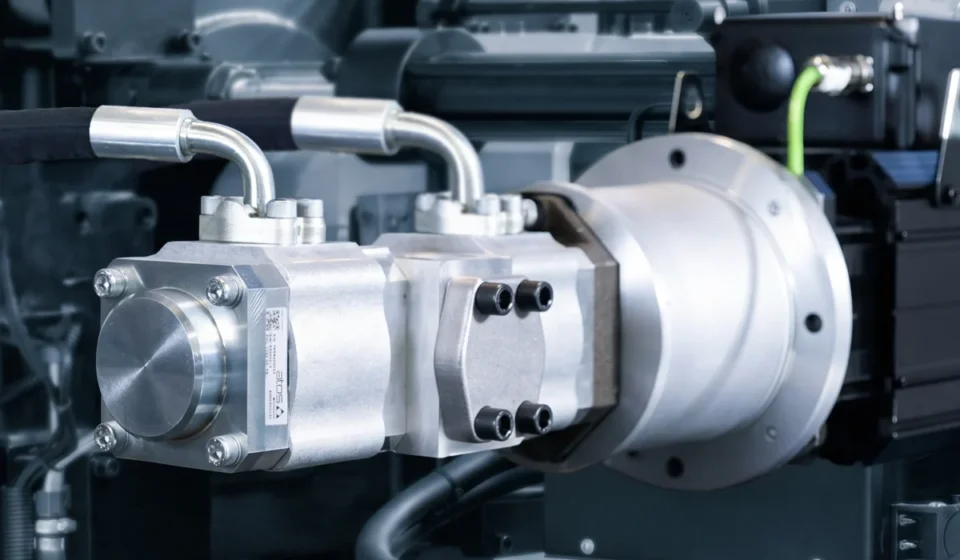
The integration of electronic control with hydraulic hardware—often called "Electrohydraulics"—is perhaps the most significant development in the field. Companies like Atos are leading this charge with advanced servopumps. By merging high-performance hydraulic actuators with digital feedback loops, these systems provide unprecedented levels of accuracy. The diagnostic capabilities inherent in these systems also allow for proactive maintenance, preventing energy-draining leaks and friction-related losses before they occur.
Supporting Data and Performance Metrics
The shift toward efficiency is supported by clear, quantifiable data. Studies across industrial applications show that moving from traditional constant-flow systems to modern electrohydraulic architectures results in a significant reduction in total cost of ownership (TCO).
- Energy Savings: Through the implementation of VSDs and intelligent control, industrial plants have reported electricity savings of up to 40% on hydraulic power units.
- Thermal Efficiency: Improved control strategies lead to less heat generation. Reduced heat means less reliance on cooling systems (chillers and heat exchangers), which are themselves high-energy consumers, creating a positive "cascading" effect on energy savings.
- System Longevity: Optimized operation reduces the mechanical stress on components, extending the service life of seals, hoses, and valves by an estimated 15–20%.
The Role of Industry Leadership: Perspectives from Atos
As a leader in the field, The Atos Group has been instrumental in bridging the gap between traditional hydraulic power and digital intelligence. Their approach centers on the "System-Oriented Perspective." Rather than looking at a valve or a pump in isolation, Atos emphasizes the interaction between the application’s duty cycle and the hydraulic power unit.
By utilizing sophisticated digital modeling and simulation tools, they can map out the precise energy requirements of a manufacturing process long before the machine is built. This ensures that the hydraulic system is perfectly sized—neither over-engineered to the point of waste, nor under-engineered to the point of failure.
Implications: The Future of Industrial Automation
The transition to energy-efficient hydraulics has profound implications for the global manufacturing sector.
A Component of the "Smart Factory"
Hydraulics are no longer seen as a separate, "legacy" technology. With the advent of Industry 4.0, hydraulic systems are becoming active, data-producing nodes within the smart factory. Sensors embedded in valves and pumps now feed data into AI-driven machine learning models. These models can predict, for instance, when a filter is beginning to clog or when a seal is losing pressure, allowing for maintenance to be performed during scheduled downtime rather than during a costly, unplanned outage.
Sustainability as a Competitive Advantage
Regulatory frameworks are becoming increasingly strict regarding industrial energy usage. Companies that proactively upgrade their hydraulic systems are not only meeting compliance requirements but are also insulating themselves against rising energy prices. Furthermore, sustainable manufacturing is increasingly a prerequisite for winning contracts with OEMs who have their own strict ESG (Environmental, Social, and Governance) mandates.
The Hybrid Future
The future of hydraulics is likely to be "hybrid." We are seeing an increase in systems that combine the high-force density of hydraulics with the rapid, clean response of electric actuators. This combination offers the best of both worlds: the extreme force required for heavy industrial tasks and the energy efficiency and digital connectivity of pure electric systems.
Conclusion
Energy efficiency in hydraulics is no longer an optional "extra"—it is the baseline for modern industrial design. Through the adoption of variable speed drives, electrohydraulic servopumps, and AI-driven diagnostic tools, the industry is proving that it can evolve to meet the challenges of the 21st century.
By balancing the core strengths of hydraulics—power, precision, and durability—with the necessity of energy conservation, manufacturers can continue to rely on this foundational technology for decades to come. The path forward is clear: a smarter, more integrated, and more efficient approach to fluid power that supports both the operational goals of the factory floor and the sustainability goals of our global society.
As we look toward the future, the hydraulic system stands ready to remain the silent, powerful heart of industrial progress, now beating with a new, energy-efficient rhythm.