




In the history of consumer technology, few promises have been as enduring—or as elusive—as the autonomous home robot. For decades, the vision of a "Rosie the Robot" from The Jetsons has served as the gold standard for domestic convenience. While robotic vacuum cleaners and smart speakers have made incremental progress, the true "holy grail"—a machine capable of tidying a room, folding a shirt, and making a bed—remained confined to the realm of science fiction.
That narrative shifted significantly this week as San Francisco-based startup Weave Robotics officially introduced Isaac 1, a mobile humanoid robot designed specifically for the complexities of the modern home. Priced at $7,999, Isaac 1 represents one of the most aggressive attempts to date to bring sophisticated bimanual manipulation and autonomous navigation into the consumer market.
Main Facts: A New Tier of Household Automation
Isaac 1 is not merely an iterative improvement on the robotic vacuum; it is a fundamental shift in how robotics interacts with the domestic environment. Unlike its predecessors, which were largely limited to floor-level tasks, Isaac 1 is a wheeled humanoid equipped with two arms and a telescopic torso.
Technical Specifications and Pricing
Weave Robotics has positioned Isaac 1 as a "high-end appliance" with a price tag to match. The robot is available for an upfront purchase of $7,999, or via a subscription model of $449 per month. This dual-pricing strategy is designed to lower the barrier to entry for early adopters while providing a recurring revenue stream for the company to fund ongoing AI training and software updates.
The robot’s hardware is a study in functional domestic design:
- Variable Height: The robot can adjust its stature from a compact 3 feet (0.9 m) to a full 5 feet 9 inches (1.7 m). This allows it to transition from picking up toys on the floor to reaching items on high shelves or working at kitchen counter height.
- Mobility: It utilizes a stable, wheeled base rather than the complex (and often unstable) bipedal legs seen in laboratory humanoids. This choice prioritizes reliability and battery efficiency.
- Manipulation: Two arms ending in two-finger parallel grippers are optimized for "soft" tasks—handling fabric, picking up small objects, and arranging items.
- Battery Life: Isaac 1 boasts an impressive eight-hour runtime, with a fast-charging cycle of only two hours.
Core Functionalities
The robot’s primary value proposition lies in its ability to perform "untidy" tasks. Weave Robotics highlights four key capabilities:

- Folding Laundry: The robot can process a basket of clothes, folding items into neat stacks.
- Tidying Rooms: It identifies misplaced objects and returns them to designated locations.
- Making Beds: A task that requires significant reach and coordination.
- Putting Away Toys: Navigating the unpredictable clutter of a playroom.
Chronology: From Isaac 0 to the Mobile Future
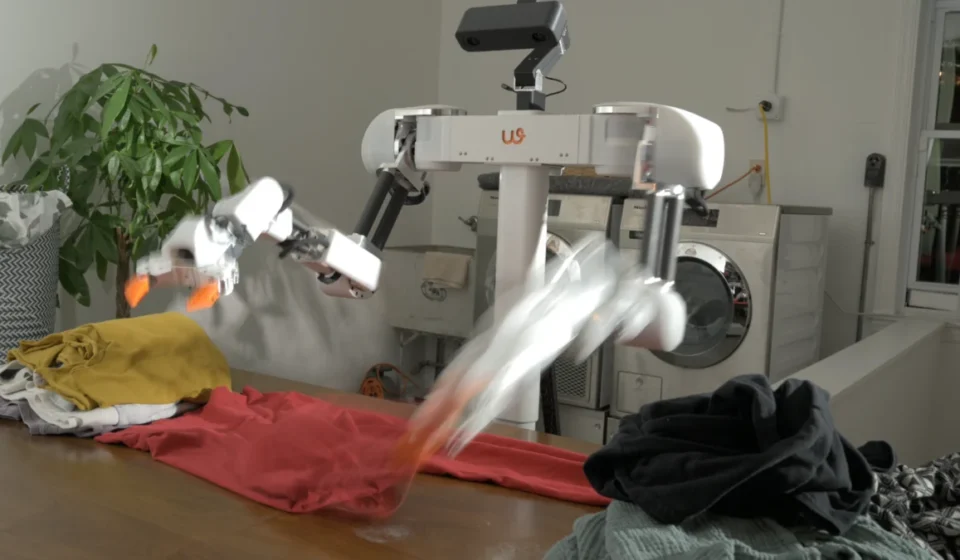
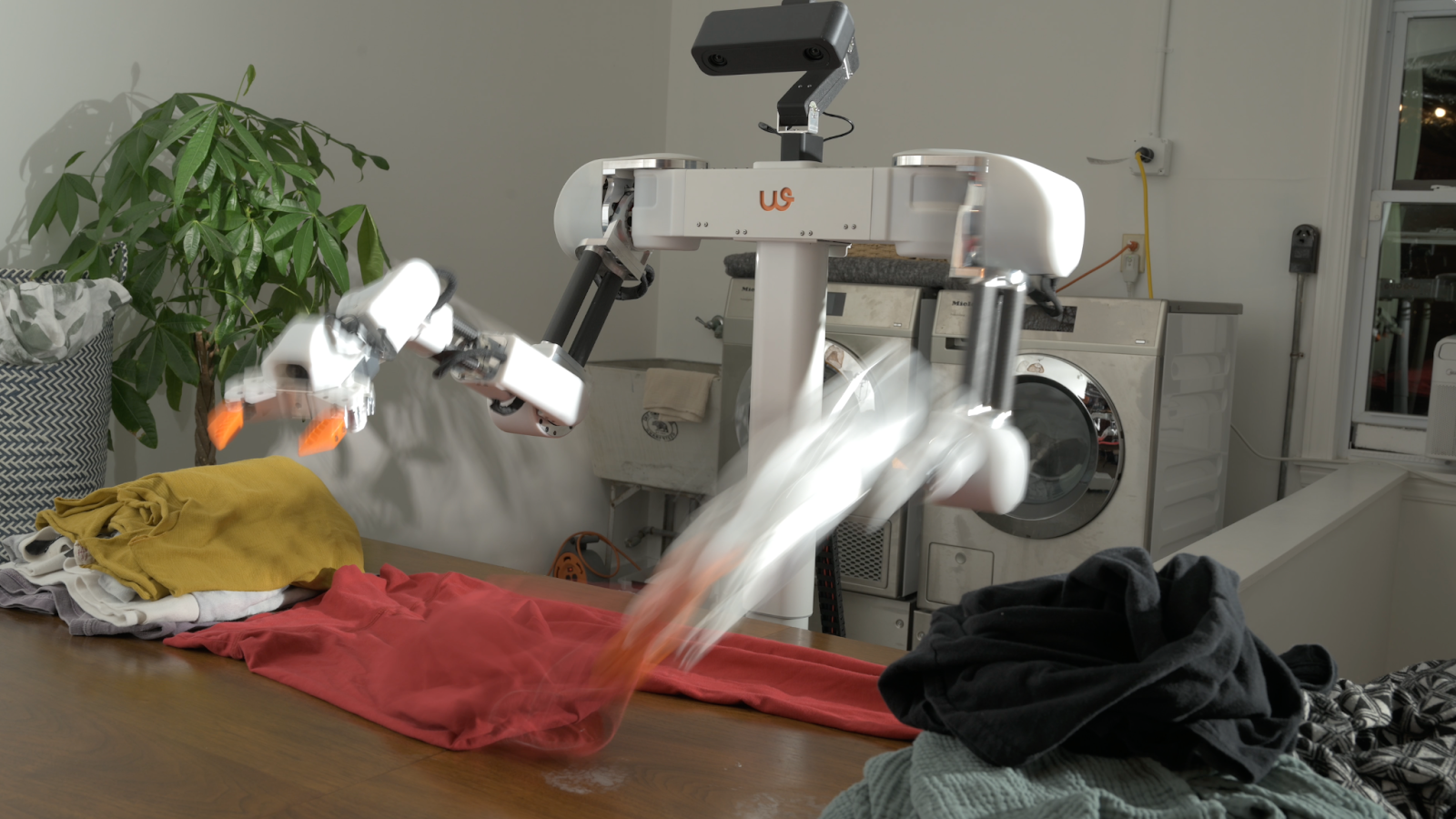
The journey to Isaac 1 began with a much more specialized predecessor: Isaac 0. While Isaac 1 is a general-purpose mobile assistant, Isaac 0 was a stationary, bimanual manipulator focused almost exclusively on the Herculean task of laundry.
The Isaac 0 Beta Phase
Weave Robotics initially deployed Isaac 0 within the San Francisco area to serve as a real-world testbed. By focusing on laundry—one of the most difficult tasks for AI due to the deformable nature of fabric—the company was able to gather massive datasets on cloth manipulation.
"Isaac 0 can be installed in an afternoon and gets the job done from Day 1," the company stated during the retrospective of their development cycle. Early customers would place the robot near a desk or laundry station, plug it into a standard outlet, and leave it to work for 30 to 90 minutes. This phase was crucial for training the AI models that now power the more versatile Isaac 1.
The Shift to Mobility
Following the success of the stationary model, Weave Robotics recognized that for a robot to be truly useful, it needed to go to the mess, rather than having the mess brought to it. The development of Isaac 1 involved integrating the manipulation intelligence of Isaac 0 with a mobile, telescopic chassis and advanced computer vision for navigation.
The company plans to begin deliveries of Isaac 1 this fall, marking the transition from a localized pilot program to a broader consumer rollout.
Supporting Data: The Intelligence Under the Hood
The success of Isaac 1 rests on its ability to perceive and interact with a highly unstructured environment—the human home. Unlike a factory floor, where every bin is in a fixed location, a home is a dynamic obstacle course.

Autonomous Navigation and Computer Vision
Isaac 1 utilizes a suite of cameras and sensors to map the home. It does not require specialized markers or "beacons." Instead, it uses SLAM (Simultaneous Localization and Mapping) technology to understand room layouts and identify furniture. This allows it to move autonomously from its charging station to a bedroom, complete a task, and return to charge without human intervention.
The "Fabric-First" Design Philosophy
One of the most striking aspects of Isaac 1 is its physical appearance. In a market often dominated by "industrial-chic" metal or "sci-fi" plastic, Isaac 1 is wrapped in soft fabric. This is a deliberate engineering and psychological choice.
- Safety: The fabric wrapping provides a cushion, reducing the risk of damage to furniture or injury to humans/pets during accidental contact.
- Weight Reduction: Using soft materials for the outer shell keeps the robot’s overall mass lower, improving battery life and mobility.
- Aesthetics: The "cartoon-like" face and soft exterior are designed to bypass the "Uncanny Valley" and make the robot feel like a friendly household appliance rather than a piece of intrusive surveillance tech.
Official Responses: Privacy and the User Experience
Aware of the privacy concerns inherent in a camera-equipped robot roaming a private residence, Weave Robotics has integrated several "privacy-first" hardware features.
Physical Privacy Safeguards
"Privacy is not just a software toggle; it’s a physical reality with Isaac," a company spokesperson noted during the launch.
- Camera Shutters: Isaac 1 features physical shutters on its head cameras. These shutters are visible to the user, providing an immediate, "at-a-glance" confirmation of whether the robot is actively "seeing" or if its vision is physically blocked.
- The Charging Privacy Screen: The charging station includes a physical screen that hides the robot from view while it recharges. This ensures that when the robot is off-duty, it is neither observing the room nor being observed by the residents.
Remote Access and App Integration
Users manage the robot via a companion smartphone app. Through this interface, owners can schedule cleaning sessions, designate "no-go zones," and even remotely access the robot’s cameras to check on their home. This remote-access feature is presented as a security and convenience benefit, allowing users to "check in" while they are at work or traveling.
Implications: A Watershed Moment for Home Robotics
The launch of Isaac 1 comes at a pivotal time for the robotics industry. While companies like Tesla (with Optimus) and Figure are focusing on general-purpose bipedal humanoids for industrial use, Weave Robotics is betting that the home is the next frontier.
The Economic Argument
At $7,999, Isaac 1 is significantly more expensive than a high-end dishwasher or refrigerator, but it is remarkably cheap for a humanoid robot. For comparison, most research-grade humanoid platforms cost upwards of $50,000 to $100,000. By utilizing a wheeled base and simplified grippers, Weave has managed to bring the price point down to a level that affluent "early adopters" can justify.
If Isaac 1 succeeds, it could validate the "Robot-as-a-Service" (RaaS) model for the home. The $449 monthly subscription suggests that the value of the robot is not just in the hardware, but in the continuous AI improvements that allow it to handle new types of laundry, new toy shapes, and more complex tidying tasks over time.
The Challenge of Reliability
The ultimate test for Isaac 1 will be its "intervention rate." For a home robot to be successful, it must work autonomously 99% of the time. If a user has to "rescue" the robot every time it gets a sock caught in its wheels or fails to grasp a silk pillowcase, the convenience factor evaporates. Weave’s decision to keep early Isaac 0 customers close to their San Francisco headquarters suggests they are acutely aware of the need for high-touch support during these early stages.
Conclusion: The New Roommate
As deliveries begin this fall, the tech world will be watching closely. Isaac 1 is more than just a gadget; it is a test case for the integration of AI-driven physical labor into our daily lives. If Isaac can truly handle the mundane, repetitive chores that consume hours of human time every week, Weave Robotics may have just introduced the most important home appliance since the washing machine.
For now, Isaac 1 stands as a bold, soft-wrapped bridge between the industrial robots of the past and the autonomous companions of the future. Whether it becomes a household staple or a niche luxury item remains to be seen, but the era of the domestic humanoid has officially moved from the laboratory to the living room.
Weave Robotics is currently accepting orders for Isaac 1, with the first wave of consumer units expected to ship in late 2024. The company will also be a featured presenter at the upcoming RoboBusiness 2026 conference, where they are expected to discuss the scaling of domestic AI models.