





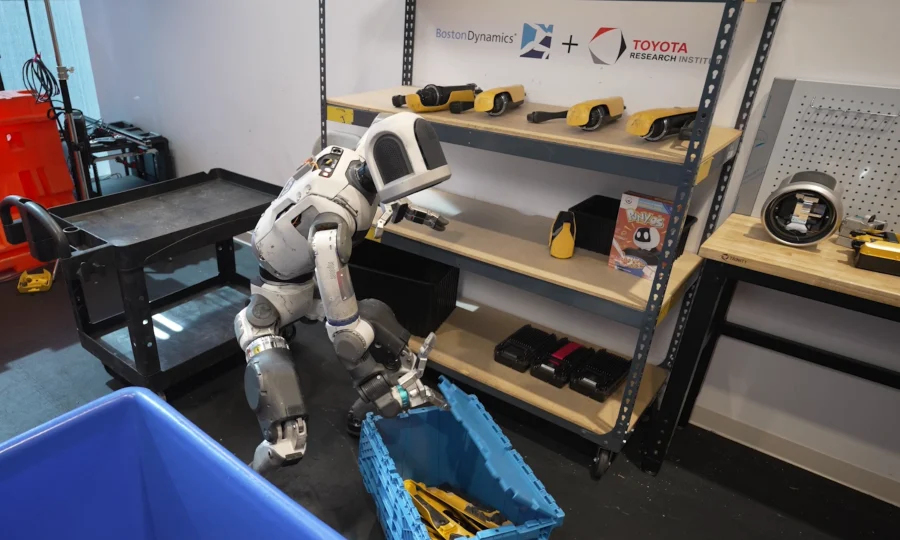
The Humanoid Industrial Revolution: Boston Dynamics and Hyundai Launch Advanced Robotics Center in Georgia

ELLABELL, GA — In a milestone development that signals a profound shift in modern manufacturing, Boston Dynamics has officially transitioned its advanced robotics center at the Hyundai Motor Group Metaplant America (HMGMA) in Ellabell, Georgia, from pilot testing to full, continuous operations. The strategic launch serves as the crucible for the deployment of the next-generation Atlas humanoid robot, laying the groundwork for a massive, automated overhaul of global automotive manufacturing.
Following Boston Dynamics becoming a wholly owned subsidiary of Hyundai in July, the new facility represents more than just a localized integration of hardware; it is the physical blueprint for how human workers and artificial intelligence-driven humanoids will share factory floors in the decades to come. With ambitious timelines targeting repetitive parts sequencing, heavy lifting, and eventually complex component assembly by 2030, the Georgia facility stands at the bleeding edge of industrial automation.
Main Facts: The Georgia Metaplant Initiative
The newly operational robotics center inside Hyundai’s Georgia Metaplant is designed to act as an intensive test bed, proving ground, and training facility. Its primary mission is to refine the operational parameters of Boston Dynamics’ electric-powered Atlas humanoid robots before they are scaled across Hyundai’s extensive network of automotive manufacturing plants worldwide.
The partnership leverages Hyundai’s massive manufacturing footprint and financial backing alongside Boston Dynamics’ decades-long leadership in dynamic robotics and artificial intelligence. The immediate scope of the initiative focuses on offloading ergonomic hazards and monotonous labor from human employees—specifically targeting grueling tasks such as heavy lifting, material handling, and parts sequencing.
However, the ambitions of the parent company extend far beyond the automotive sector. Boston Dynamics has confirmed that it will begin exploring commercial use cases for Atlas in alternative industry sectors, such as logistics, warehousing, and hazardous materials handling, as early as next year. This multi-industry deployment strategy highlights a broader economic reality: humanoid robotics are transitioning rapidly from academic laboratories and viral video spectacles into commercially viable industrial workhorses.
Chronology: From Acquisition to Full Operations
The path to the full operational status of the Ellabell robotics center is part of a fast-tracked corporate and technological evolution:
- January: Hyundai Motor Group unveils a sweeping manufacturing strategy to restructure its global production environments, aiming to safely integrate advanced artificial intelligence and humanoid robotics into human-centric assembly lines.
- June: Boston Dynamics quietly initiates pilot operations at the HMGMA robotics center in Ellabell, GA, conducting initial trials of the Atlas platform under real-world factory conditions.
- July: Hyundai completes its transition, making Boston Dynamics a wholly owned subsidiary, thereby streamlining the pipeline from robotics research and development to mass industrial deployment.
- Recent Weeks: Having successfully navigated the pilot phase, Boston Dynamics transitions the Ellabell center into full, continuous operations, utilizing real-time feedback loops to train Atlas units on live production lines.
- The Near Future (Next Year): Boston Dynamics plans to officially begin exploring cross-industry deployment models, testing Atlas capabilities in non-automotive sectors.
- By 2030: The company targets full factory readiness for Atlas to perform complex, dexterous component assembly alongside human technicians.
Supporting Data: Scale, Investment, and Production Targets
The scale of Hyundai’s bet on humanoid robotics is staggering, backed by massive capital expenditures and aggressive manufacturing quotas that dwarf previous industry benchmarks.
According to corporate disclosures, Hyundai is investing $8.67 billion globally to expand its robotics and artificial intelligence capabilities. A cornerstone of this financial commitment is the planned deployment of 25,000 Atlas units across the automaker’s factories worldwide over the next few years.
To supply this unprecedented fleet, Hyundai is establishing a dedicated U.S. manufacturing facility capable of producing a staggering 30,000 robots per year. This localized production strategy is designed to insulate the supply chain from geopolitical disruptions while rapidly driving down the unit cost of advanced humanoids through economies of scale.
Furthermore, the data gathered at the Georgia Metaplant—spanning battery efficiency, payload capacity, walking stability on diverse industrial flooring, and AI response times—is being directly channeled into training large behavior models (LBMs). These models allow Atlas to generalize skills, meaning a robot trained to sort a specific automotive bracket in Ellabell can rapidly adapt to handling different components in a completely different facility with minimal reprogramming.
Official Responses and Industry Perspectives
Industry leaders have been quick to emphasize that the integration of Atlas is designed to augment, rather than eliminate, the human workforce. The focus remains squarely on safety, ergonomics, and operational resilience.
"We have established a clear strategy to optimize our supply chain, production, testing, and deployment capabilities for Atlas," said Zack Jackowski, chief product and technology officer at Boston Dynamics. "The robotics center reinforces our ambition to create a future where robots amplify human potential by making work safer and more productive."
By taking over high-strain, repetitive physical labor, human workers can be elevated to supervisory, quality control, and problem-solving roles that require human cognitive flexibility, emotional intelligence, and critical thinking.
Manufacturing analysts point out that the collaboration between Boston Dynamics and the Toyota Research Institute (TRI)—which recently achieved concurrent breakthroughs in artificial intelligence and robotics research—signals a broader collaborative ecosystem forming around industrial AI. While corporate rivals, these entities recognize that the foundational hurdles of generalized robotic manipulation require shared theoretical advancements in machine learning.
Implications: The Future of Manufacturing and Labor
The full-scale launch of the Boston Dynamics robotics center at the Hyundai Metaplant carries profound implications for the future of global labor, supply chain economics, and industrial design.
1. Re-Engineering the Factory Floor
Traditional automotive assembly lines are rigid, heavily reliant on fixed automation (such as heavy robotic arms bolted to the floor for specific, repetitive spot-welding or painting tasks). Humanoid robots like Atlas introduce unprecedented flexibility. Because Atlas is bipedal and possesses human-like reach and manipulation capabilities, factories no longer need to be entirely redesigned around specialized machinery. Humanoids can navigate legacy workspaces designed for people, using existing stairwells, narrow corridors, and standard tool interfaces.
2. Addressing the Labor Shortage
Across North America, Europe, and East Asia, manufacturing sectors face severe labor shortages driven by aging populations and a cultural shift away from manual trades. The promise of deploying tens of thousands of humanoid units offers a viable bridge over the looming labor gap, ensuring that production capacities can expand despite shrinking available workforces.
3. Economic and Geopolitical Shifts
With Hyundai establishing a U.S. facility capable of churning out 30,000 robots annually, the United States is positioning itself not just as a consumer of advanced automation, but as a primary manufacturing hub for the next industrial revolution. This localization of robotics manufacturing mirrors the ongoing trends in semiconductor fabrication and electric vehicle battery production, underscoring a strategic shift toward domestic technological self-reliance.
4. Ethical and Workforce Considerations
As humanoids transition from controlled test environments into active workspaces, questions surrounding workforce transition, safety protocols, and labor rights will inevitably take center stage. Ensuring transparent communication, robust safety interlocks, and comprehensive upskilling programs for human employees will be vital for corporations pursuing aggressive automation strategies.
Conclusion
The opening of the robotics center at Hyundai’s Georgia Metaplant marks a definitive turning point. We have crossed the threshold from speculative science fiction into the practical, industrial deployment of humanoid intelligence. As Boston Dynamics and Hyundai refine the operational capabilities of Atlas in Ellabell, the lessons learned here will echo across global manufacturing, rewriting the rules of how physical goods are built in the 21st century.