



Bridging the Quantum Divide: Researchers Simulate the Birth of Matter in a Laboratory

In a milestone for both quantum computing and high-energy physics, an international team of researchers—spearheaded by the Duke Quantum Center (DQC)—has successfully used a trapped-ion quantum simulator to observe the elusive phenomenon of "string breaking." This breakthrough, published September 23 in the journal Nature Physics, offers a revolutionary method for peering into the fundamental nature of matter, mimicking processes that typically require the extreme energy scales of the Large Hadron Collider or the chaotic environments of the early universe.
Main Facts: The Physics of Confinement and Creation
At the heart of the experiment lies one of the most profound mysteries in particle physics: the nature of quarks. Quarks, the fundamental building blocks of protons and neutrons, are never found in isolation. They are perpetually "confined" by the strong nuclear force, a phenomenon that acts much like a rubber band connecting two objects. As you pull the objects apart, the tension—and the energy stored within the "string" connecting them—increases.
According to Einstein’s mass-energy equivalence, $E=mc^2$, if you pull that "string" hard enough, the energy stored in the field eventually becomes so great that it is no longer energetically favorable to keep stretching. Instead, the system undergoes a process called "string breaking," where the energy spontaneously converts into mass, creating a new pair of particle-antiparticles. This effectively "snaps" the original string, resulting in two separate, stable systems.
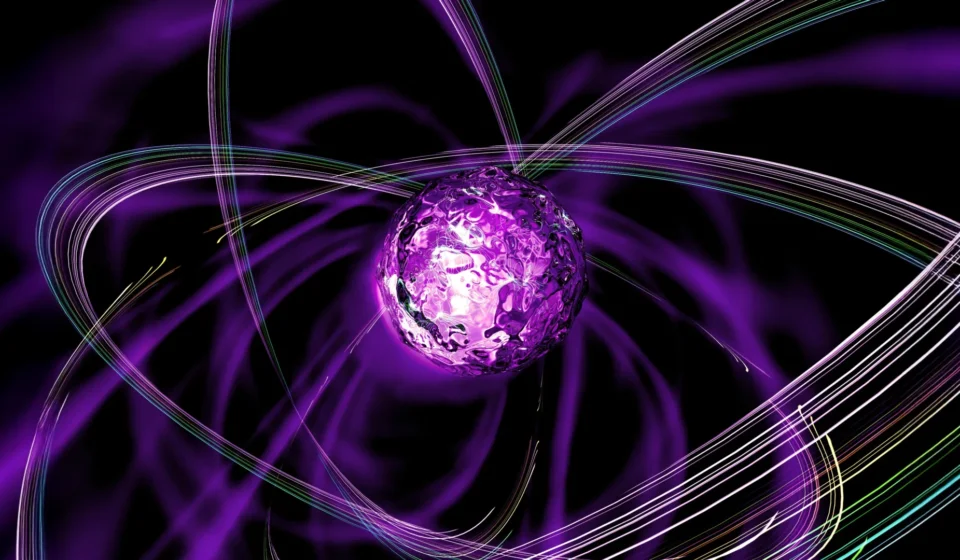
The Duke-led experiment utilized a chain of 13 trapped ions to act as a programmable quantum simulator. By manipulating these ions with high-precision laser beams, the team created a controlled, out-of-equilibrium environment that perfectly mirrored the mathematical model of quark confinement and string breaking.
Chronology of the Research
The path to this discovery was a multi-year effort involving a coalition of institutions, including the University of Maryland (UMD), Oxford University, the California Institute of Technology, Cornell University, and KU Leuven.
- Conceptualization: The team sought to bridge the gap between abstract theoretical models of high-energy physics and the practical, controllable hardware of trapped-ion quantum computing.
- Design and Calibration: Researchers encoded the string-breaking model into the quantum architecture. This required an intricate setup where the 13 trapped ions were subjected to precise laser pulses to simulate the interaction forces between particles.
- Execution: The system was prepared in an "out-of-equilibrium" state. By observing how the system evolved over time, researchers could track the creation of effective charges and the subsequent snapping of the simulated string.
- Validation: To ensure the integrity of their quantum findings, the team ran identical models on classical supercomputers. The alignment between the classical calculations and the quantum simulation confirmed that the trapped-ion platform was accurately capturing the quantum dynamics.
- Publication: The final peer-reviewed study appeared in Nature Physics on September 23, arriving alongside two other significant studies from separate teams that explored similar physics using superconducting circuits and neutral atom arrays.
Supporting Data and Technical Architecture
The experiment’s success hinges on the unique ability of trapped-ion quantum computers to serve as simulators. Unlike universal quantum computers, which are designed for general-purpose calculation, quantum simulators are engineered to mimic the specific Hamiltonian—the total energy—of physical systems.
The "string" in this experiment was represented by the correlations and entanglement between the 13 ions. By adjusting the laser beams, the researchers could tune the "potential" of the system, forcing the ions to replicate the behaviors of quarks.
One of the most compelling aspects of the study is the validation process. While classical computers can currently simulate a 13-ion system, the complexity of these calculations grows exponentially as more particles are added. A classical computer would quickly reach a "wall" where the required memory and time to solve the quantum equations exceed the limits of physical hardware. The quantum simulator, however, scales much more gracefully, suggesting that as the DQC team increases the number of ions, they will soon be able to probe regimes of physics that are entirely inaccessible to traditional supercomputing.
Official Responses: Insights from the Pioneers
The research, led by Christopher Monroe, the Gilhuly Family Presidential Distinguished Professor at Duke, marks a turning point in how physicists approach the "Big Bang."
"Quantum computer simulations provide the best platform to investigate complex questions like matter formation, short of having witnessed the Big Bang itself," Monroe stated. He emphasized that these findings signal a marked development in the field, moving beyond mere proof-of-concept experiments toward providing meaningful insights into subatomic dynamics.
Arinjoy De, the paper’s lead author and currently a production machine lead at QuEra Computing, reflected on the interdisciplinary nature of the work. "Working at the intersection of quantum simulation and high-energy physics is incredibly exciting," De said. "By simulating quark confinement and string-breaking phenomena in a controlled lab environment, we’re opening up new pathways for experimental investigations into the behavior of matter at its most fundamental level."
Zohreh Davoudi, an associate professor of physics at UMD, highlighted the long-term utility of these models. "As a physicist, it is incredibly exciting to investigate the conditions of the early universe in an atomic-level computing machine," she remarked. "Even the slightest insights from an out-of-equilibrium physics model will guide us in the future."
Implications for the Future of Physics
The implications of this research extend far beyond the observation of string breaking. This experiment is a validation of the "Quantum Advantage" in basic science. By demonstrating that different quantum platforms—trapped ions, superconducting circuits, and neutral atoms—can all yield consistent results for complex physical phenomena, the scientific community has established a robust new standard for verification.
Scaling to the Unknown
The immediate future for this research involves increasing the "depth" and "width" of the quantum simulations. As researchers add more ions and lengthen the duration of the simulations, they expect to model more complex interactions, such as those involving gauge fields—the forces that mediate interactions between particles in the Standard Model of physics.
The Big Bang in a Box
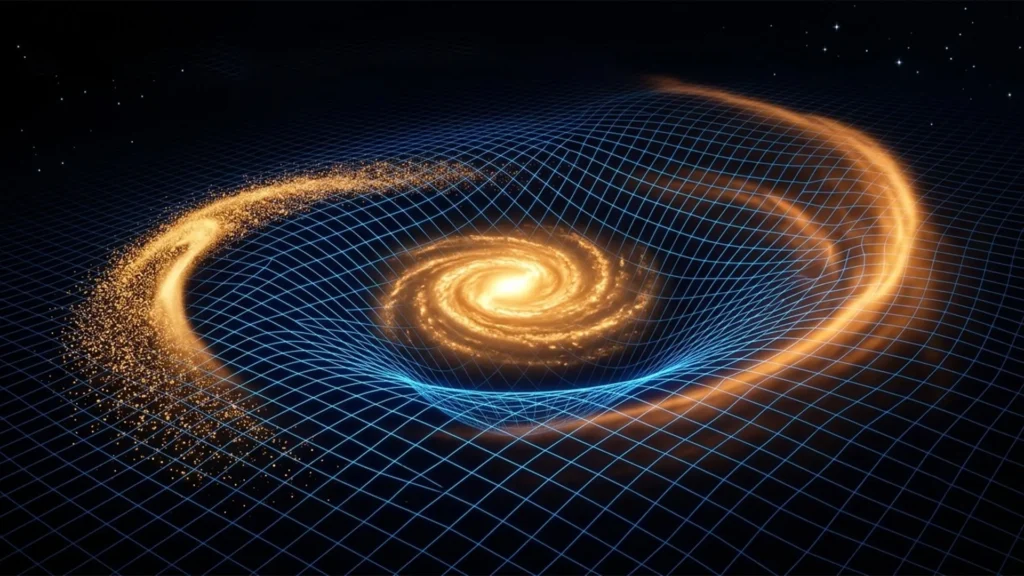
The ultimate goal is to simulate the conditions of the early universe. Moments after the Big Bang, the universe was a dense, hot plasma of quarks and gluons. Understanding how this plasma cooled and condensed into the matter we see today is one of the "Holy Grails" of physics. Because this environment is impossible to recreate on Earth, quantum simulators represent the only feasible path forward.
A Multi-Platform Ecosystem
The fact that teams using Google’s superconducting circuits and QuEra’s neutral atom hardware produced similar findings is a significant boost for the quantum industry. It suggests that the field is maturing; rather than competing for dominance, these platforms are now being benchmarked against one another to solve specific, high-value scientific problems.
In conclusion, the work led by the Duke Quantum Center demonstrates that we are entering an era where quantum computers are no longer just future-gazing machines or optimization tools for finance and logistics—they are becoming high-precision laboratory instruments. By "snapping" quantum strings in a controlled lab, scientists have unlocked a new window into the architecture of the universe, proving that the most profound questions about our origins can, and will, be answered at the atomic scale.
The research was supported by the Department of Energy (DE-SC0020312, DE-SC0025341, DESC0019040, DE-SC0024220, DE-SC0020271), the National Science Foundation (OMA-2120757), the Air Force Office of Scientific Research, the Defense Advanced Research Projects Agency, and Amazon Web Services.