



Beyond Copper: The Breakthrough of Theta-Phase Tantalum Nitride in Thermal Management

As any seasoned hardware engineer will attest, the primary objective of a heat sink is deceptively simple: to act as a thermal bridge that transports heat from a high-density source to a dissipation environment—the metaphorical “away” where a thermal load no longer threatens the integrity of the system. While this remains the fundamental goal, the materials used to execute this task have remained stagnant for decades. For years, the thermal engineering industry has relied on a reliable but binary choice: the high conductivity of copper or the lightweight, cost-effective versatility of aluminum.
However, a revolutionary discovery by a collaborative research team—led by the UCLA Samueli School of Engineering and involving experts from Argonne National Laboratory (ANL) and several international institutions—is poised to disrupt this long-standing status quo. The team has identified a metallic material, theta-phase tantalum nitride ($theta$-TaN), that exhibits the highest thermal conductivity ever recorded in a metal. With a thermal conductivity (TC) of approximately 1,100 W/m-K, this material performs nearly three times more efficiently than copper.

The Traditional Thermal Landscape: Why We Need More Than Copper
In the realm of electronics, thermal management is governed by three primary mechanisms: conduction, convection, and radiation. Engineers prioritize conduction—the transfer of heat through solid materials—as the first line of defense for integrated circuits (ICs).
Copper has long been the gold standard for these applications due to its thermal conductivity of roughly 400 W/m-K. Aluminum, while possessing a lower conductivity (ranging from 167 to 237 W/m-K depending on the alloy), is favored in consumer electronics for its superior strength-to-weight ratio. While exotic materials like diamond boast exceptional thermal conductivities reaching 3,000 W/m-K in synthetic, ultra-pure forms, their prohibitive cost and manufacturing complexity limit them to niche roles, such as thin interposer layers for high-performance processors.

The discovery of $theta$-TaN represents a "Goldilocks" solution: a metallic material that bridges the gap between the affordability of traditional metals and the extreme efficiency of diamond-based solutions.
Chronology of a Scientific Milestone
The path to discovering the thermal superiority of $theta$-TaN was rooted in theoretical physics rather than trial-and-error experimentation.

Phase I: Theoretical Modeling
The journey began with advanced theoretical modeling. Researchers theorized that the unique hexagonal atomic structure of $theta$-TaN—where tantalum atoms are precisely interspersed with nitrogen atoms—could facilitate an unusual efficiency in heat transport. Standard metallic heat conduction is typically hampered by "electron-phonon scattering," where the free-moving electrons that carry heat collide with the atomic vibrations (phonons) that also carry heat. Theoretical calculations suggested that $theta$-TaN might exhibit a significantly weakened interaction between these two heat-carrying mechanisms.
Phase II: Verification and Advanced Imaging
To validate these theories, the UCLA-led team utilized a suite of high-end analytical tools. The validation process was exhaustive:

- Electron Diffraction and Microscopy: Used to confirm the crystalline integrity of the samples.
- Synchrotron-based X-ray Scattering: Performed at the Department of Energy’s Advanced Photon Source (APS) at Argonne National Laboratory. This facility provided the high-resolution inelastic X-ray scattering needed to observe phonon behavior.
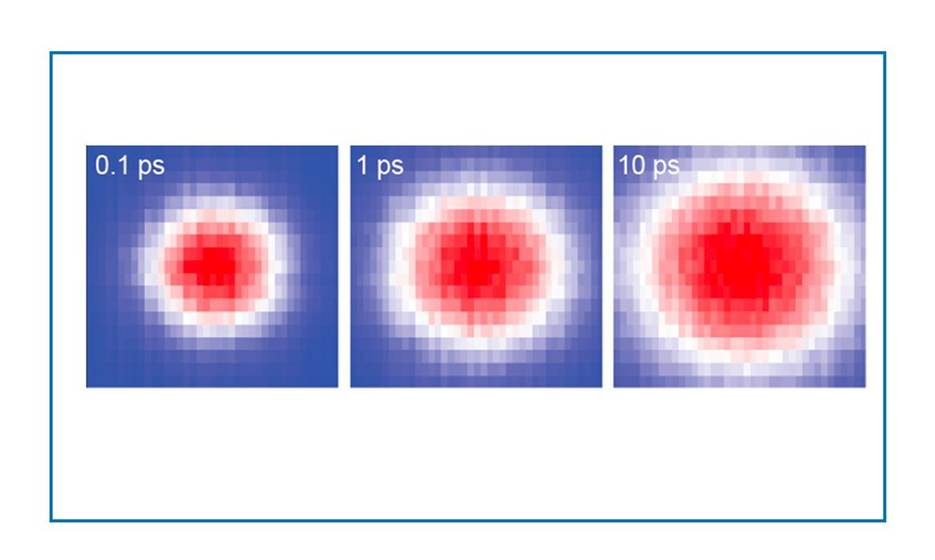
- Ultrafast Optical Spectroscopy: Used to map the movement of heat over picosecond timescales, capturing the "thermal pulse" as it dissipated through the lattice.
Phase III: Measurement and Publication
Following successful verification, the team measured the thermal conductivity of $theta$-TaN crystals across a temperature range of 150 K to 600 K. The results confirmed that the material’s performance was not a localized anomaly but a fundamental property of its crystal lattice. The research was subsequently published in the journal Science, confirming that $theta$-TaN is, by a wide margin, the most thermally conductive metal discovered to date.
The Physics of Heat: Understanding Phononic Elegance
To understand why $theta$-TaN outperforms copper, one must move beyond classical heat transfer and into the world of solid-state physics. In most metals, heat flow is limited by the "resistive" nature of electron-phonon coupling.

In $theta$-TaN, the lattice structure creates a distinctive "phonon band structure." This structure features a large acoustic-optical gap and "phonon bunching," which effectively suppresses phonon-phonon scattering. In essence, the material acts like a high-speed highway for phonons. Because the electron-phonon coupling is exceptionally weak, heat flows through the lattice with minimal resistance.
As noted in the research, the phonons in $theta$-TaN behave collectively, almost like a fluid. This creates a state of "hydrodynamic phonon transport," where momentum is conserved over long distances, and heat flows in coherent, laminar streams rather than colliding with the lattice walls. This "phononic elegance" allows the material to remain thermally conductive even as temperatures rise, providing a level of stability that traditional copper alloys struggle to maintain.

Official Responses and Collaborative Insights
The research was not a solo endeavor. Co-led by graduate students under the guidance of Professor Hongjie Hu at UCLA Samueli, the study involved a diverse cohort of global experts. Contributors included:
- U.S. Department of Energy (Argonne and Lawrence Berkeley National Laboratories): Provided the critical synchrotron facilities and expertise in inelastic X-ray scattering.
- Tohoku University (Japan): Assisted in the high-resolution structural analysis.
- UC Irvine Materials Research Institute: Provided additional characterization support.
While the primary findings have been restricted behind academic paywalls, the consensus among the research community is that this discovery is a landmark for materials science. Dr. Hongjie Hu’s team has emphasized that while $theta$-TaN is not intended to replace the bulk copper heat sinks in your desktop computer, it is a game-changer for high-heat-flux applications.
Implications for Future Technology
The implications of this discovery are profound, particularly as the semiconductor industry faces the "thermal wall." As chips become smaller and more power-dense, the bottleneck is no longer just the cooling system, but the interface between the silicon and the heat sink.
1. Advanced Heat Spreaders
Just as diamond films are used in high-end RF and power electronics, $theta$-TaN could be manufactured into ultra-thin interposers. By placing a layer of $theta$-TaN between a processor die and a conventional copper heat sink, engineers could drastically reduce the thermal resistance of the interface, allowing heat to spread more uniformly before it even reaches the cooling block.

2. High-Performance Computing (HPC)
In AI-accelerated data centers, where rack power densities are skyrocketing, even a 10% reduction in thermal resistance can lead to significant energy savings in cooling infrastructure. $theta$-TaN provides a path to manage these densities without the extreme cost of synthetic diamond manufacturing.
3. Electric Vehicles and Power Electronics
The transition to wide-bandgap semiconductors (like Silicon Carbide and Gallium Nitride) in EV drivetrains demands superior thermal management. $theta$-TaN’s ability to conduct heat at high temperatures makes it a prime candidate for power-module packaging, where thermal fatigue is a leading cause of device failure.
Conclusion: A New Frontier in Materials Engineering
The discovery of theta-phase tantalum nitride serves as a reminder that even in a mature field like thermal management, the laws of physics still hold surprises. While we are years away from seeing $theta$-TaN in commercial consumer products, its identification as a record-breaking conductor of heat opens a new chapter for mechanical and electrical engineers.
By manipulating the phonon landscape at the atomic level, the team at UCLA and Argonne has shown that the future of cooling isn’t just about bigger fans or more complex liquid loops—it is about finding the right material to make the heat "want" to leave the source. As we continue to push the boundaries of processing power and energy density, materials like $theta$-TaN will likely become the unsung heroes of the next generation of technological hardware.
For those looking to dive deeper into the mathematics of this discovery, the work highlights the importance of the phonon mean free path and acoustic-optical gaps—parameters that will undoubtedly become part of the standard lexicon for thermal engineers in the coming decade. The "mystical place called away" just got a little closer.