




Reclaiming the Factory Floor: How On-Site Wood Waste Recycling Transforms Manufacturing Operations

BIRMINGHAM, Mich. — For modern manufacturing and assembly facilities, efficient space utilization is directly tied to profitability. Every square foot dedicated to non-revenue-generating activities—such as inventory staging, waste accumulation, or material storage—represents a hidden operational tax. Among the most pervasive and underestimated spatial drains in heavy and light manufacturing alike is the humble wooden pallet.
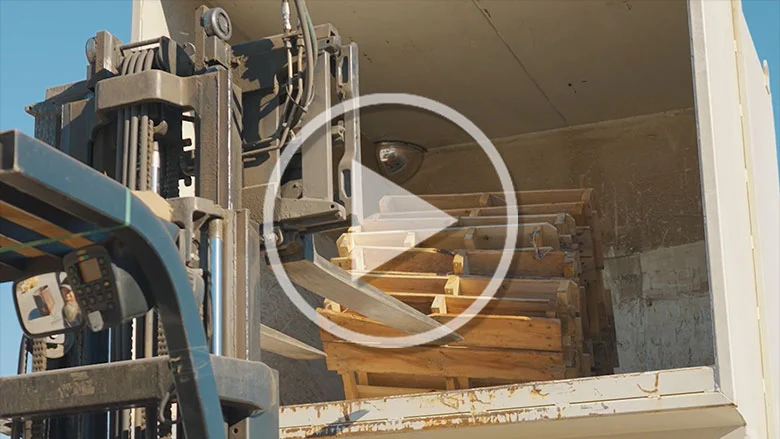
Discarded pallets, crates, and specialized crating lumber can quickly accumulate into mountains of industrial debris. For facilities generating a steady, high-volume stream of wood waste, the traditional approach of stockpiling materials for off-site removal has long been accepted as an inevitable cost of doing business. However, a growing number of forward-thinking operations are challenging this paradigm.
Recent implementations of advanced, on-site wood recycling systems are proving that wood waste does not need to be a spatial liability or a recurring monthly expense. According to industry experts Brad and Jake Boulware of Boulware Equipment, integrating a localized processing system can yield dramatic results: reclaiming tens of thousands of square feet of valuable manufacturing real estate while simultaneously eliminating five-figure monthly disposal overheads.
Main Facts: The Anatomy of an Industrial Wood Waste Crisis
To understand the magnitude of the problem solved by on-site processing, one must examine the logistical footprint of traditional pallet management. In a typical mid-to-large-scale manufacturing or distribution plant, raw materials arrive daily stacked on wooden pallets. Finished goods are subsequently loaded onto another set of pallets for outbound shipment.
Over time, pallets suffer structural wear and tear. Once a pallet is deemed structurally compromised or non-compliant with shipping standards, it enters the waste stream.
Without an immediate processing mechanism, plants generally resort to one of two inefficient strategies:
- The Outdoor Yard Dump: Accumulating broken pallets in outdoor trailers or designated yard spaces, where they occupy valuable acreage, create fire hazards, and attract pests.
- The Indoor Stockpile: Storing whole pallets inside the facility while waiting for external haulers or recyclers to schedule a pickup.
According to data shared by Boulware Equipment, the spatial cost of the latter approach can be staggering. One unnamed manufacturing facility was found to be dedicating approximately 25,000 square feet of prime manufacturing space solely to the stockpiling of whole pallets while waiting for external removal.
In terms of capital efficiency, dedicating a quarter of a hundred thousand square feet to idle trash is a profound misallocation of resources. That footprint is equivalent to multiple high-output assembly lines, automated guided vehicle (AGV) charging stations, or lucrative kitting and packaging zones.
By shifting from an accumulation model to an immediate, on-site processing model, facilities can fundamentally alter their operational economics. The newly deployed recycling infrastructure requires a mere 2,000 square feet, allowing the aforementioned facility to reclaim roughly 23,000 square feet of usable manufacturing space. Furthermore, the elimination of recurring hauling and landfill fees resulted in direct savings of approximately $15,000 per month.
Chronology: The Evolution of Industrial Waste Management
The transition from passive waste accumulation to active, closed-loop on-site recycling did not happen overnight. It is the result of decades of escalating economic pressures, tightening environmental regulations, and technological advancements in industrial shredding and sorting machinery.
Phase 1: The Era of the Open Dumpster (Late 20th Century)
Historically, industrial wood waste was treated as refuse. Broken pallets and custom wooden crates were tossed into large open-top roll-off dumpsters or piled into designated corners of the plant yard. During this era, tipping fees were relatively low, and environmental compliance standards focused primarily on preventing overt pollution rather than material circularity. Wood was simply buried in landfills alongside municipal solid waste.
Phase 2: The Rise of Third-Party Pallet Haulers (Early-to-Mid 2000s)
As landfill costs escalated and corporate sustainability initiatives began to take root, manufacturers sought alternatives to dumping. A robust secondary market emerged, populated by third-party pallet recyclers who would collect whole pallets—sometimes for free, or occasionally for a nominal rebate—repair them, and resell them into the supply chain.
While this model diverted wood from landfills, it introduced a new vulnerability: market dependency. Manufacturers became tethered to the schedules, pricing models, and logistical capacities of external haulers. If a local recycler experienced a downturn in demand, or if transportation costs spiked, the manufacturer was left holding the bag—and the pallets.
Phase 3: The Circular Economy and On-Site Processing (Present Day)
Today, manufacturers face a complex triad of challenges: skyrocketing real estate costs, aggressive corporate ESG (Environmental, Social, and Governance) targets, and volatile supply chain conditions.
Recognizing these pressures, equipment manufacturers began developing robust, highly integrated size-reduction and sorting systems designed to fit directly within the factory footprint. Instead of waiting for a third party to haul away bulky, whole pallets, modern facilities can now feed damaged wood waste directly into automated systems as soon as it is generated. This modern approach treats wood waste not as a disposable burden, but as a secondary raw material stream.

Supporting Data: Operational Impact and Material Lifecycle
The financial and spatial figures associated with on-site wood recycling tell a compelling story, but the mechanical and material mechanics of these systems explain how the value is unlocked.
Spatial and Financial Breakdown
- Initial Footprint Required: ~2,000 square feet
- Space Reclaimed: ~23,000 square feet (from an initial 25,000 sq. ft. footprint)
- Monthly Savings: ~$15,000 in eliminated disposal and hauling costs
- Processing Velocity: Immediate processing upon classification as waste, preventing backlogs
The Mechanical Separation Process
Modern on-site wood processing systems are engineered to handle the harsh realities of industrial waste, which frequently includes stray fasteners, steel banding, and embedded metal plates.
When pallets, crates, and skids are fed into the system:
- Size Reduction: Heavy-duty industrial shredders or grinders break down the bulky wooden structures into manageable chips or fragments.
- Ferrous Metal Separation: Over-band magnets and specialized magnetic separators automatically pull embedded nails, staples, screws, and metal banding out of the wood stream. This metal is collected independently for scrap metal recycling.
- Clean Wood Output: The resulting wood chips are cleaned, sized, and prepared for downstream commercial markets.
Downstream Applications for Recovered Wood
The processed wood material does not go to waste. Because the automated separation systems ensure a clean, metal-free product, the output can be marketed across a diverse array of industries:
- Landscaping Mulch: Colored or natural wood chips utilized for residential and commercial groundskeeping.
- Biomass Fuel: High-efficiency wood fuel utilized by industrial boilers, power plants, and co-generation facilities.
- Industrial Absorbents: Specialized wood flour or granular products used to soak up spills in machine shops and manufacturing floors.
- Recycled Composites and Engineered Wood: Raw inputs for particle board, medium-density fiberboard (MDF), and plastic-wood composite decking materials.
Official Industry Insights: Navigating Market Volatility
According to Brad and Jake Boulware of Boulware Equipment, one of the most under-appreciated risks of traditional pallet management is vulnerability to market fluctuations.
Speaking on the operational realities of dealing with external vendors, Jake Boulware highlights that the pallet market is far from static. Economic shifts, changes in regional industrial output, and fluctuating supply and demand dynamics can rapidly alter the landscape.
"Pallet-market conditions can change, potentially leaving a manufacturer with material that a local recycler no longer wants," Jake Boulware explains.
When a local recycler suddenly stops accepting whole pallets—due to an oversupply of inventory, labor shortages, or changes in their own operational focus—the manufacturer faces an immediate bottleneck. Pallets begin to stack up against loading docks, spill over into active production lanes, and create severe safety and fire hazards.
By implementing an on-site recycling system, a manufacturer effectively insulates itself from these external shocks. Whether local recyclers are buying or buying-not, the plant maintains total control over its waste stream. The material is processed instantly, reduced to a high-value commodity (wood chips and scrap metal), and prepped for end-markets that are typically far more diversified and stable than the used-pallet resale market.
Implications for the Future of Manufacturing
The success of on-site wood waste recycling signals a broader evolution in how industrial facilities view waste management. No longer viewed merely as a back-of-house utility function, waste handling is increasingly recognized as an integral component of lean manufacturing and facility optimization.
1. Maximizing Revenue per Square Foot
As commercial real estate prices climb, every square foot of a manufacturing plant must justify its existence. Reclaiming 23,000 square feet of floor space—as achieved by the facility highlighted by Boulware Equipment—allows plant managers to expand production lines, introduce automation cells, or increase finished goods buffer stock without expanding the physical building footprint.
2. Strengthening ESG and Sustainability Metrics
Corporate sustainability reports are under intense scrutiny from investors, customers, and regulatory bodies. Diverting 100% of wood waste from landfills, capturing and recycling embedded metals, and feeding clean wood chips back into the circular economy provides measurable data points that significantly enhance a company’s environmental profile.
3. Risk Mitigation and Operational Autonomy
Supply chain resilience is a top priority for industrial leaders. By eliminating reliance on third-party haulers to manage bulky waste, manufacturers remove a potential point of failure from their operations. Control over waste processing ensures a clean, safe, and predictable facility environment regardless of external market disruptions.
Ultimately, the transformation of wood waste management from a spatial burden into an efficient, value-generating process exemplifies the core tenet of modern industrial engineering: turning operational waste into operational wealth.


